
Last updated November 2, 2026
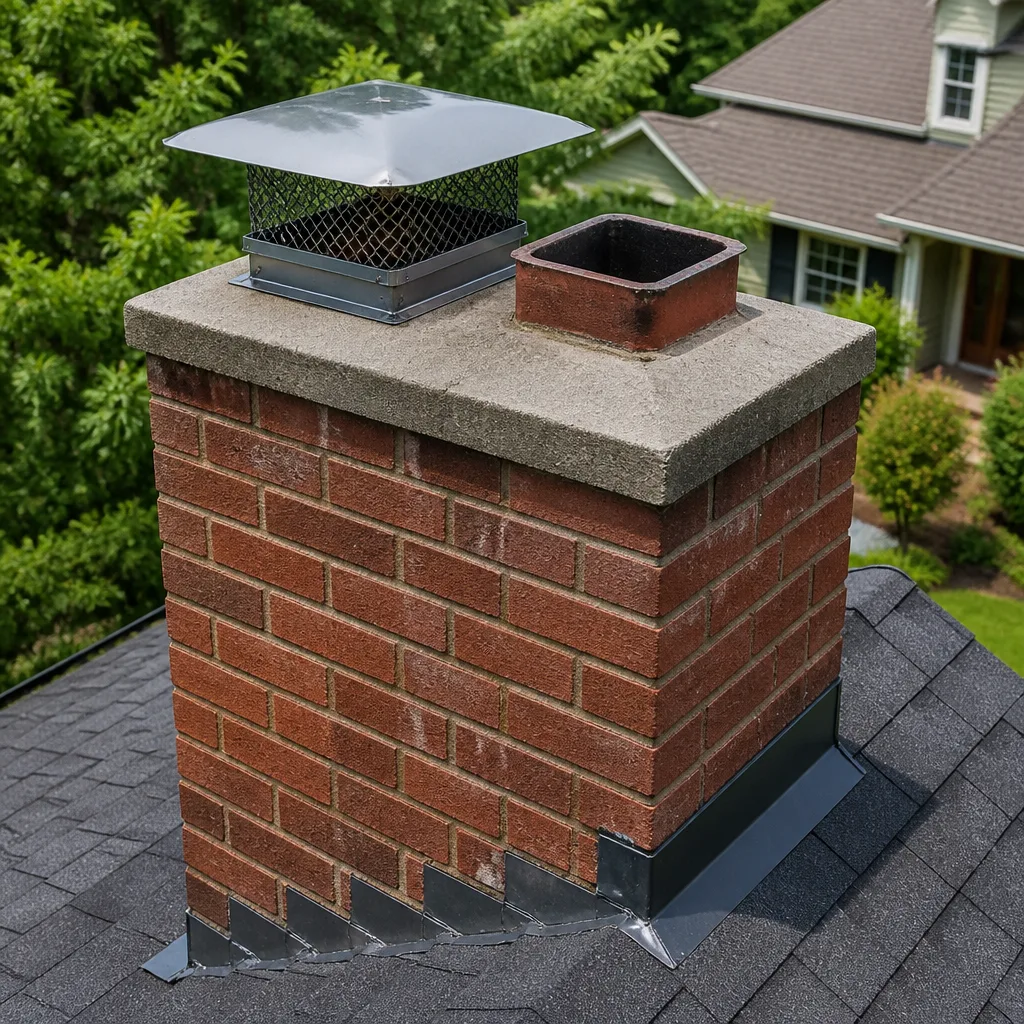 Sweep & inspection
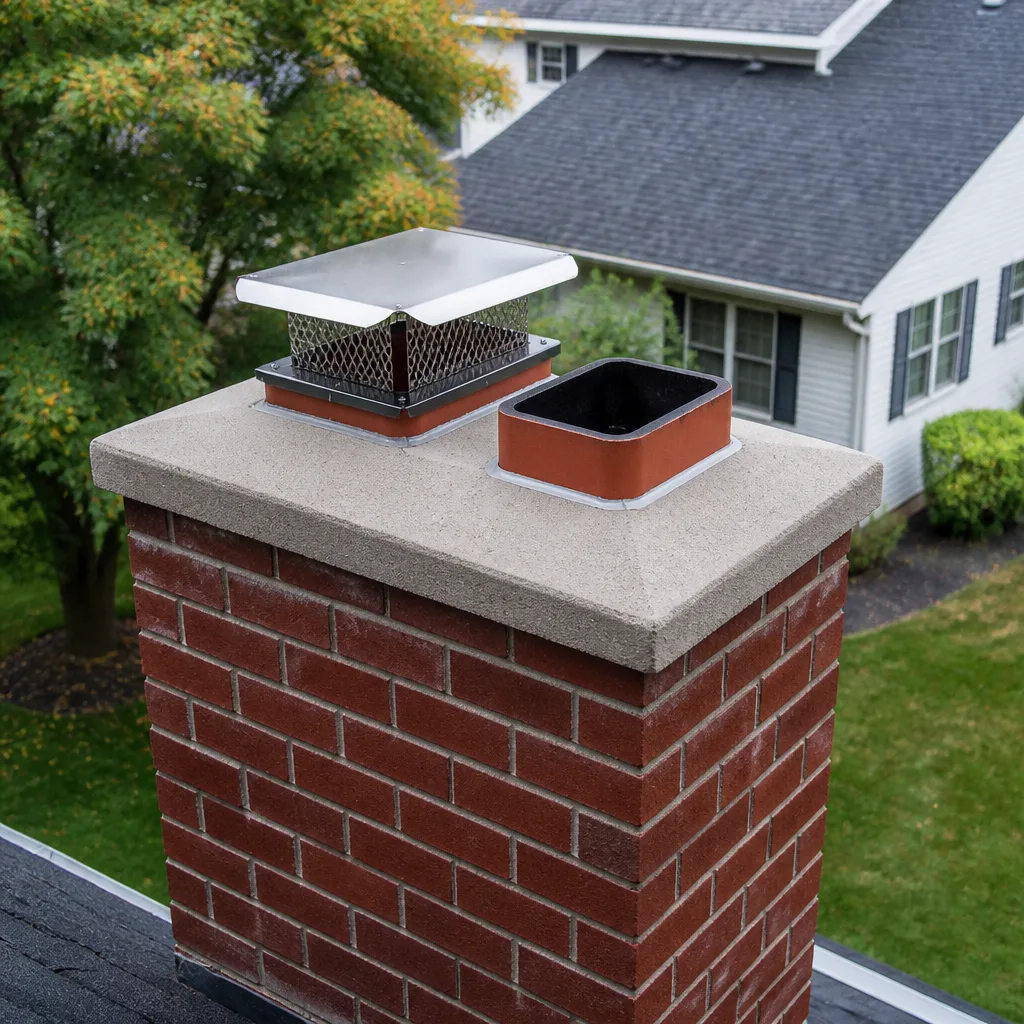 Caps & crowns
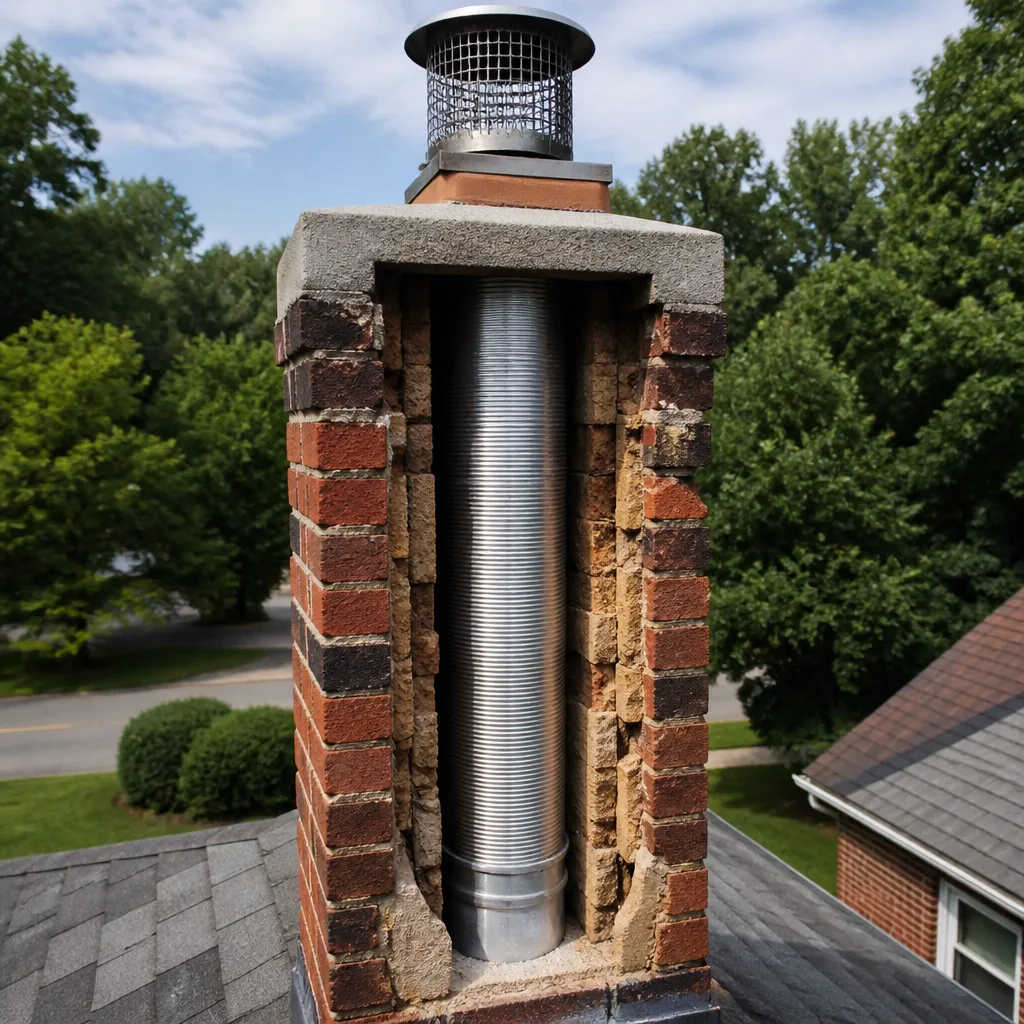 Flue relining
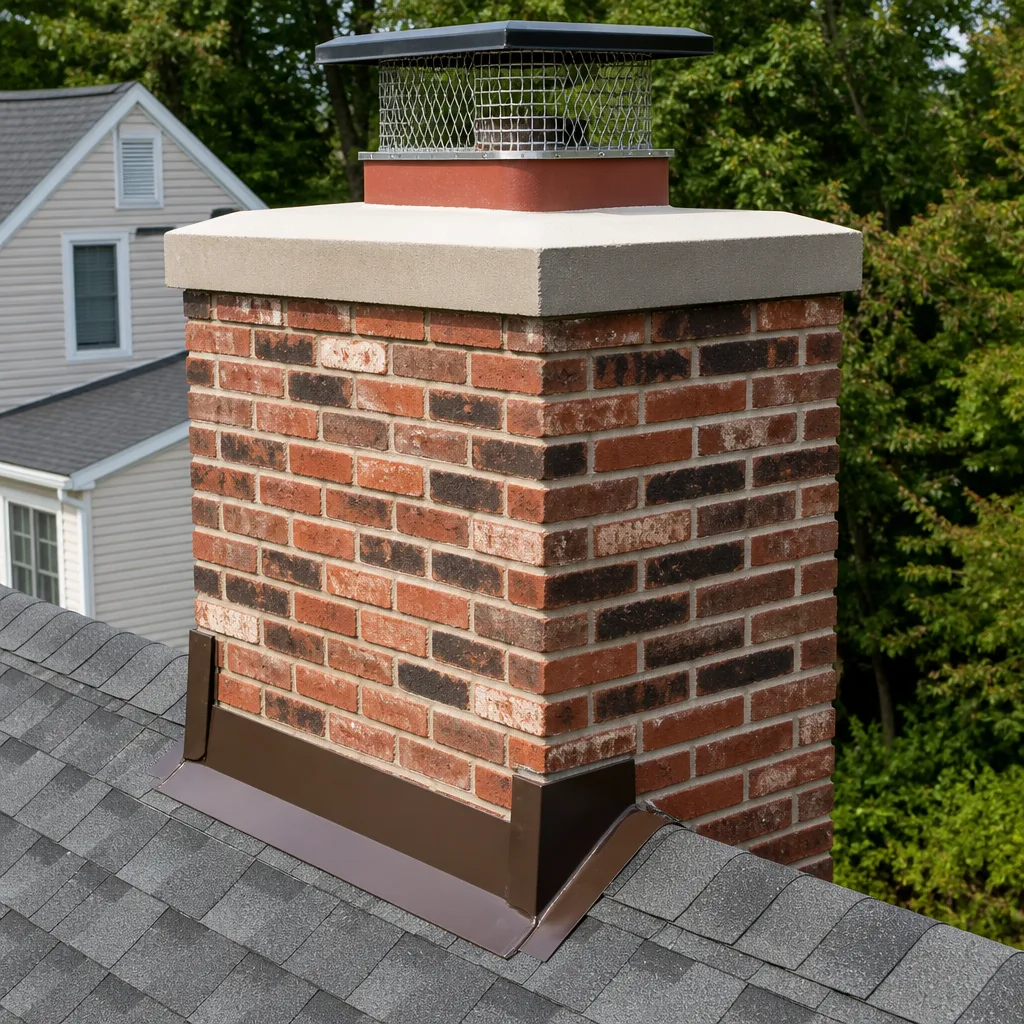 Masonry repair
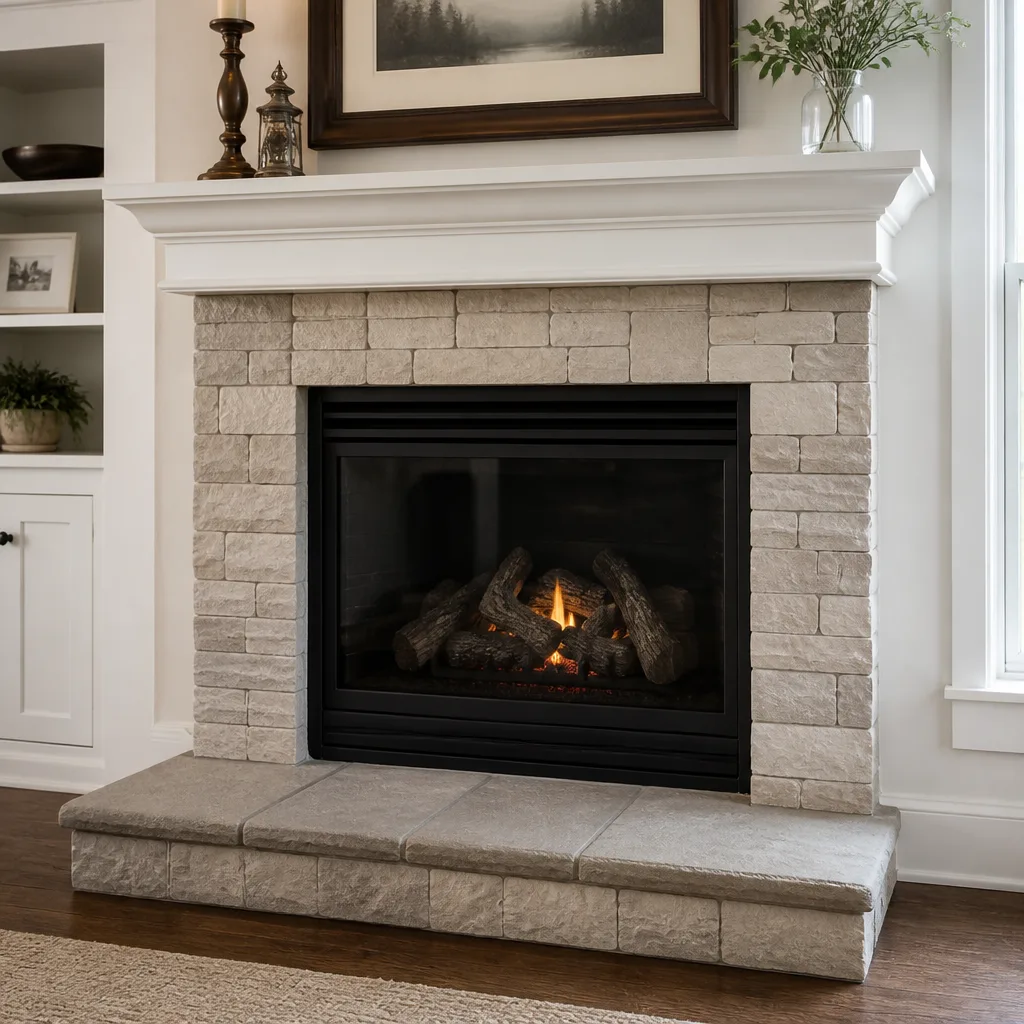 Gas fireplace service
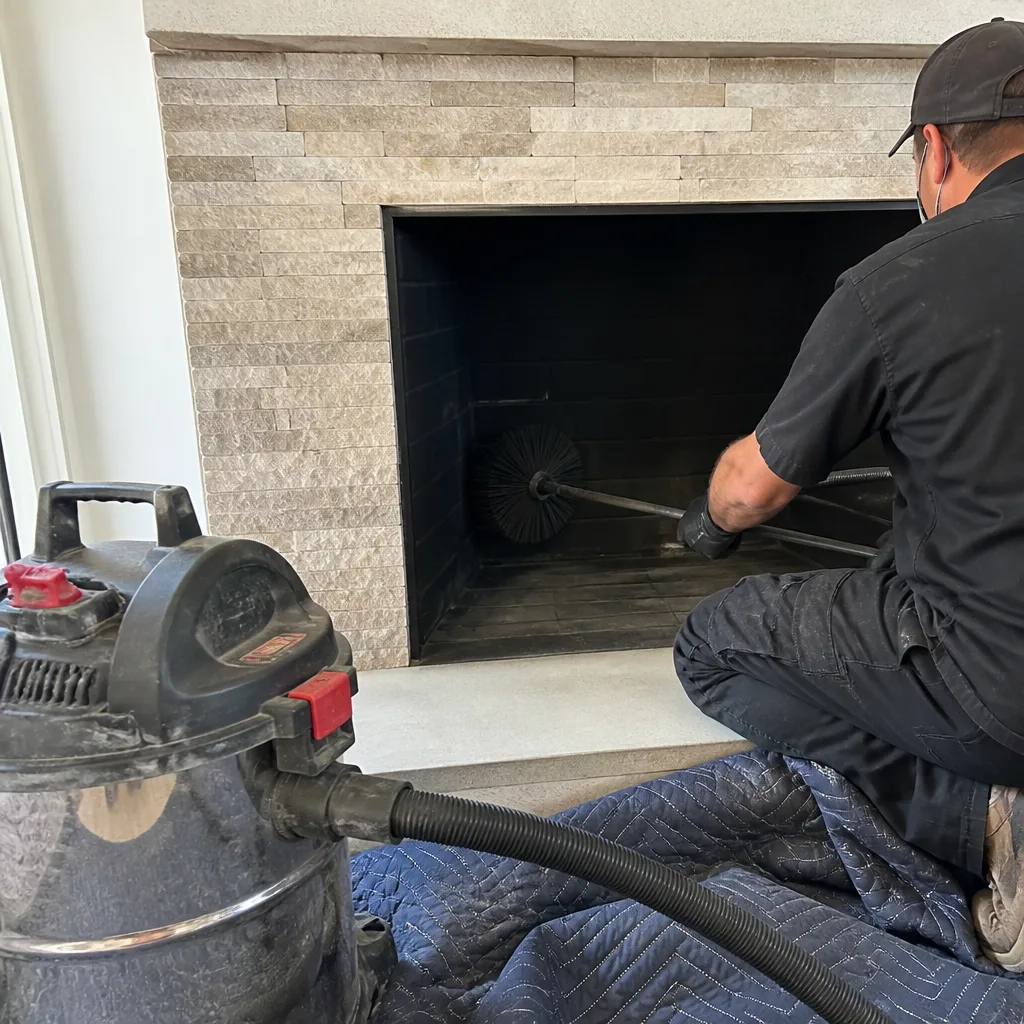
Level 1 sweep and inspection to the NFPA 211 annual standard - flue, crown, cap, and flashing checked and photographed
Chimney sweep logs do not sweep chimneys. They loosen some creosote - which then falls where a brush and vacuum still have to collect it.
Chimney Sweep Troubleshooting: Common Problems and How to Fix Them
If your fireplace smokes into the room, nine out of ten online forums will tell you to open a window. That advice works for exactly one of the four actual causes of backdraft, and guessing wrong can make the underlying problem worse. We clean and repair chimneys in Pocket, CA, and we see this pattern constantly: homeowners spend weeks trying fixes that address the wrong issue because nobody explained how a chimney specialist actually reads symptoms. This guide walks through the diagnostic sequence we use on every call, the difference between problems that look identical on the surface, and which fixes belong in your hands versus ours.
Quick Answer
Chimney problems fall into predictable categories: draft failure, moisture intrusion, creosote buildup, liner damage, and mechanical wear. Each has a specific diagnostic order: draft pressure first, then liner condition, then cap and crown, then creosote. Smoke during a fire and smoke smell when nothing is burning are two different problems with different causes, and the fix is not the same for both. Most importantly, about half of the chimney issues we see in Pocket homes are caused by negative air pressure in the house, not by anything wrong with the chimney itself.
Styles & brands we work with
- Sweep & inspection
- Caps & crowns
- Flue relining
- Masonry repair
- Gas fireplace service
Table of Contents
- Draft Pressure Problems: The Real Culprit Behind Most Smoke Backdraft
- Smoke Smell Without a Fire: What It Actually Points To
- Damper, Cap, or Negative Pressure: How to Tell Them Apart Without Climbing on the Roof
- Creosote Buildup: What’s Normal, What’s Not, and What to Do About It
- Chimney Liner Problems: Cracks, Gaps, and the Whistling Warning Sign
- Water in the Chimney: Stains, Spalling, and the Cap That Isn’t Doing Its Job
- Chimney Noises: The High-Pitched Whistle That Means More Than Wind
- DIY Fixes vs. Professional Repairs: An Honest Breakdown
- Common Mistakes to Avoid
- When to Call a Professional
- Frequently Asked Questions
Draft Pressure Problems: The Real Culprit Behind Most Smoke Backdraft
Draft is the movement of air up the chimney. It works because hot air rises, and a fire generates a lot of hot air quickly. When the draft fails, smoke spills into the room instead of going up the flue. Simple on paper, but in practice, draft failure has four distinct causes. The order matters: we check house pressure before we ever look at the flue, because in Pocket and the surrounding neighborhoods, airtight houses with modern windows and insulation create negative pressure that overwhelms even a perfectly good chimney. The house becomes a vacuum, and the chimney becomes the path of least resistance for outside air to come in, not for smoke to go out. Opening a window to equalize pressure works when this is the cause, and it costs nothing to try. But if the cause is something else, that same open window fixes nothing and convinces the homeowner the chimney is the problem when it isn’t.
The other three causes are a cold flue, an obstructed flue, and an undersized flue. A cold flue happens in winter: the air inside the chimney is heavier than the air outside, and it sinks instead of rising. You can preheat the flue by holding a lit piece of rolled newspaper up into the throat of the fireplace for a minute or two before lighting the main fire. An obstructed flue means something is blocking the path: a bird nest, animal entry, significant creosote accumulation, or a deteriorated flue tile that collapsed inward. This is where a camera inspection saves time and guesswork. An undersized flue is a building-code issue, usually seen in older Pocket homes where the current fireplace, insert, or stove was added without resizing the flue. The fix is rebuilding or relining the flue to match the appliance, not adjusting how you burn wood.
Smoke Smell Without a Fire: What It Actually Points To
A fireplace that smells like smoke when nothing has burned for days is a fundamentally different problem than smoke backdraft during a fire. Backdraft is a draft mechanic. Constant smoke smell is a moisture mechanic. Creosote, the tar-like byproduct of wood combustion, absorbs moisture from the air. When humidity rises, which happens often in Pocket’s mild but damp Sacramento Valley winters, creosote releases volatile compounds that smell exactly like smoke. The fix is not deodorizing spray. It’s a thorough chimney sweeping that removes the creosote layer, usually paired with checking the flue for cracks that let in more outside air and moisture. We’ve swept chimneys in Pocket where the homeowner had been burning scented candles and running air purifiers for a year, and the smell vanished permanently the day the creosote came out.
The second cause is negative pressure pulling chimney air down into the house when the chimney is not in use. This happens in homes with strong exhaust systems: range hoods, bathroom fans, or a dryer vent that’s pulling hard. The exhaust fan creates a low-pressure zone, and the path of least resistance for the smoky residue inside the flue is back into the living room. The fix is addressing the pressure imbalance, which may mean adding a make-up air vent or adjusting when exhaust fans run. The third cause is a missing or damaged chimney cap, which allows moisture in, which escalates creosote smell. The fourth, and least common but most serious, is a deteriorated liner that’s absorbed decades of creosote into the masonry itself. In that case, the smell is coming from the brick, not the flue, and the solution is rebuilding or relining. For a full chimney service that covers both the sweep and the repair, our Chimney Sweep in Pocket page explains how we handle both sides of that job.
Damper, Cap, or Negative Pressure: How to Tell Them Apart Without Climbing on the Roof
Three common culprits get blamed for chimney draft problems: a damper that won’t seal, a chimney cap that’s clogged or damaged, and negative house pressure. Here’s how we tell them apart from inside the house, and how you can too.
Step 1: Establish whether the house is fighting the chimney
Turn off the heat or AC. Close all windows and exterior doors. Turn off the range hood, bathroom fans, and anything else that exhausts air. Light a match or a piece of newspaper and hold it inside the fireplace throat, near the damper opening. If it pulls upward cleanly, the draft is functional. If it wavers, hangs, or puffs back into the room, the problem is either an obstructed flue or a pressure imbalance.
Step 2: Open the nearest window
Open a window in the same room as the fireplace about two inches. If the match suddenly draws well, you have a negative pressure problem. The house is starving the chimney for air, and the fix is either a make-up air solution or, in some Pocket homes, simply cracking a window while burning. This is one of the most common findings we see in homes built or weather-sealed in the last two decades.
Step 3: Look at the damper, not just its opening
If the draft is still weak with the window open, reach your head into the fireplace opening with a flashlight. Look up past the damper into the flue. A damper that’s rusted open, stuck halfway, or packed with soot will restrict the flue opening. A damper that won’t fully close in the off-season is also a primary source of room air loss and moisture entry. Dampers are repairable, and most standard cast-iron dampers can be replaced without rebuilding the entire firebox.
Step 4: The cap is the last thing you check from the ground, but the first thing a sweep checks from the top
Chimney caps serve three jobs: keep rain out, keep animals out, keep sparks in. A cap that’s missing mesh, or a cap screen that’s clogged with creosote and debris, restricts draft and invites animals. From the ground, you can often see if a cap is entirely missing using binoculars. But a partly clogged screen is only visible from the roof, and it’s one of the most common non-obvious draft killers we find in Pocket. Our Meadow Chimney Sweep home page covers the full sweep process, including cap inspection as part of every service call.
Creosote Buildup: What’s Normal, What’s Not, and What to Do About It
Every wood fire produces creosote. It condenses as smoke cools against the relatively cooler flue walls, especially in exterior chimneys or under moist conditions. Pocket’s climate, with its damp winter mornings and cool nights, creates condensation conditions inside chimneys that accelerate creosote accumulation compared to drier regions. But “some buildup is normal” does not mean “ignore it.” Creosote exists in three stages: Stage 1 is flaky soot that brushes away, Stage 2 is tar-like and requires mechanical removal, and Stage 3 is a hardened, glazed deposit that can require chemical treatment and aggressive removal techniques. Stage 3 is also the fuel that makes a chimney fire burn at temperatures that crack flue tiles and separate metal seams.
Signs you have more creosote than you should include: visible black, shiny, or gummed residue when you look up the flue with a flashlight; smoke that drifts lazily instead of being pulled strongly upward; and a campfire-like smell that persists long after the fire is out. The schedule for professional cleaning depends on burn frequency and the moisture content of your wood, but as a baseline, any actively used wood-burning fireplace in Pocket should be swept at least once per burn season. If you burn softwood, unseasoned wood, or pressboard, you’re building the problem faster than hardwood burners do. A professional sweep removes what brushing cannot, and a camera inspection after the sweep confirms there’s no Stage 3 glazing left behind. Dryer vents have the same accumulation problem in a different form, and we treat Dryer Vent Cleaning in Pocket with the same fire-safety discipline as any chimney job.
Chimney Liner Problems: Cracks, Gaps, and the Whistling Warning Sign
A chimney liner is the inner barrier between the fire and the masonry. Clay tile liners are standard in older construction. Metal liners are common in newer builds and in retrofits. Both fail over time. Clay tiles crack from thermal expansion and contraction, from moisture freeze-thaw cycles, and from previous chimney fires that got hot enough to fracture the tile without destroying the house. Cracks allow heat, gas, and creosote vapor to infiltrate the chimney structure and, in severe cases, the adjacent framing. The first sign homeowners notice is often not visual. It’s the whistle.
A high-pitched whistle when wind blows across the chimney top, especially on breezy days, is frequently produced by a hairline crack in a flue tile. The crack acts like the mouthpiece of a whistle: wind passes over the gap, the gap vibrates, and the sound carries down the flue and into the living room. Not every whistle is a cracked tile; some are from cap geometry or damaged crown edges. But the “windy day whistle” from the chimney, particularly one that changes pitch as the wind direction shifts, is a stronger indicator of flue damage than most homeowners realize. The confirmation requires a camera inspection, which is the only reliable way to see interior liner condition without disassembly. If the liner is compromised, the repair is either a stainless steel liner like the DuraFlex products we install, or a cast-in-place liner system such as HeatShield that resurfacing the existing flue. For details on how we approach liner repair in Pocket homes, see our Chimney Repair in Pocket page.
Water in the Chimney: Stains, Spalling, and the Cap That Isn’t Doing Its Job
Water is the most destructive force in any masonry chimney, and it almost always enters through one of four paths: a missing or damaged cap, a cracked crown, failed mortar joints, or spalling brick that lets moisture soak into the structure. In Pocket, we see water problems accelerate during the wet season because masonry that stays damp through the winter never dries fully before the next rain cycle. The visible evidence starts as efflorescence: white, chalky mineral deposits on the brick face. That’s not just cosmetic. It means water is moving through the masonry, dissolving salts, and redepositing them on the surface. Left unaddressed, the brick face begins to spall, which means pieces flake off or pop loose. Spalled brick is structural damage, not a stain.
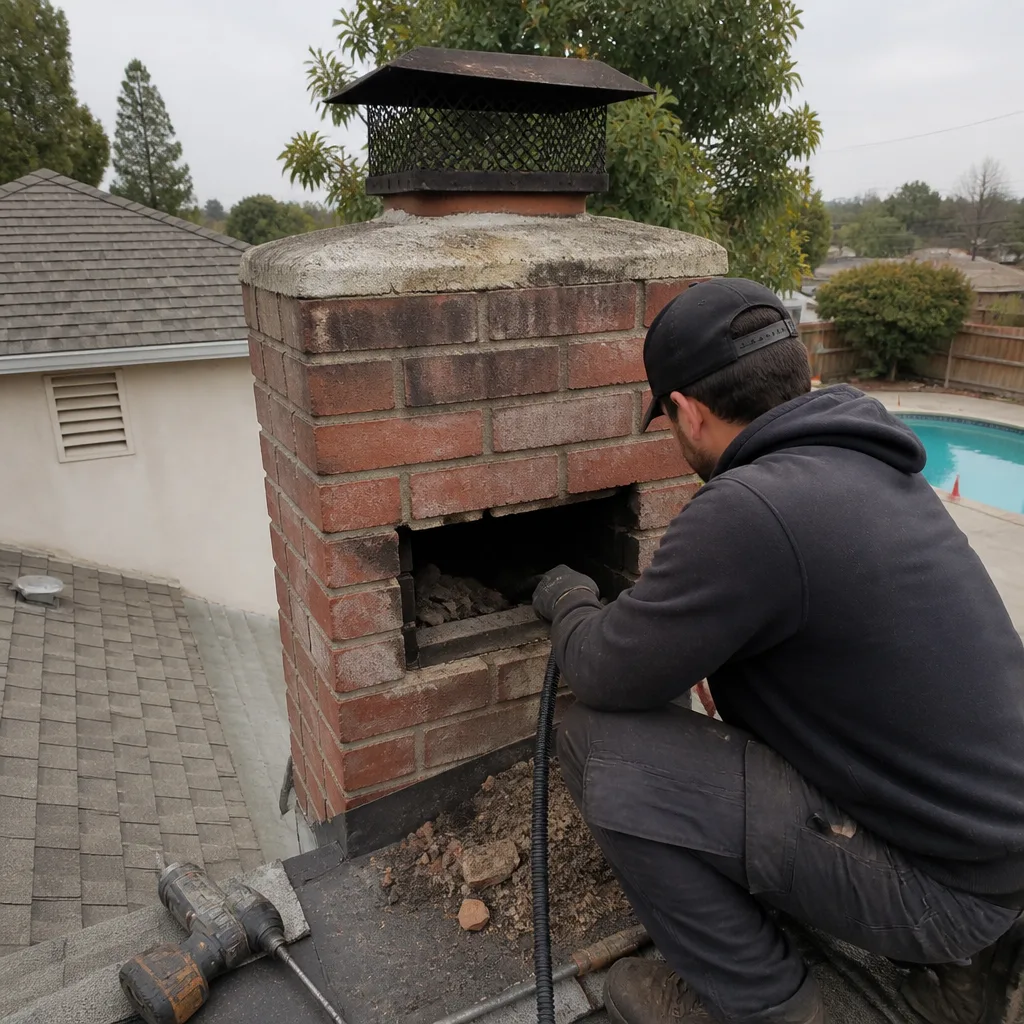
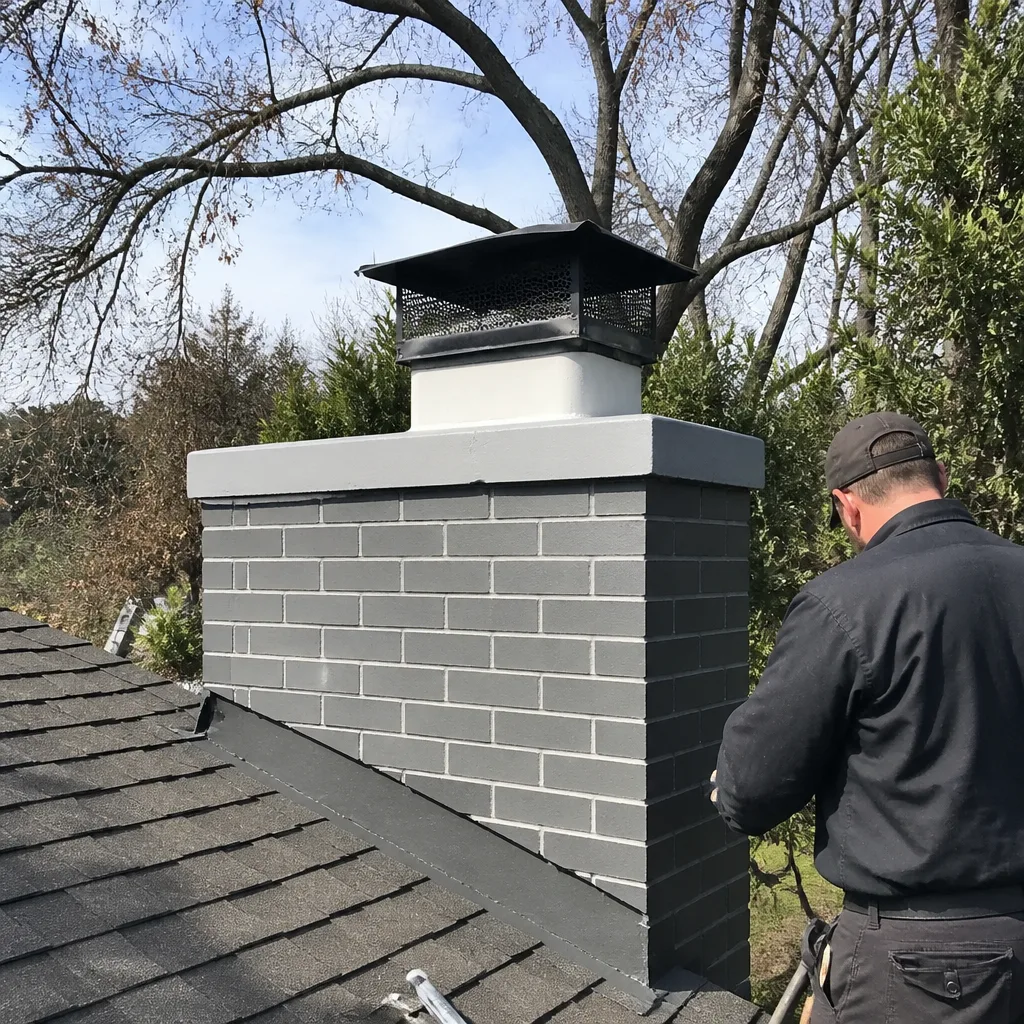
The chimney crown, the concrete surface at the very top, cracks because it expands and contracts at a different rate than the brick underneath it. Small cracks widen into gaps. Water gets under the crown, into the flue, into the mortar bed, and down into the firebox. The fix starts with repairing or re-casting the crown, usually with a waterproofing membrane applied after the concrete work. The cap itself needs its mesh intact and properly sized for the flue opening. Copperfield and Olympia Chimney manufacture caps and crowns that we use regularly because they fit precisely and last. A properly installed cap and sealed crown will end nearly all top-down water intrusion in a Pocket chimney.
A quick step-by-step for what a water intrusion inspection covers:
- Check the cap and crown from the roof. Look for cracks in the crown concrete and missing cap mesh.
- Check the flashing where the chimney meets the roofline. Failed flashing is the second most common water source after the crown.
- Look down the flue from the top with a camera. Note any moisture trails, efflorescence, or dark staining inside the flue.
- Inspect the firebox from inside. Damp spots, rust on the damper, and water rings on the firebox floor are evidence of top-down moisture.
- Repair in order: crown, cap, flashing, then interior firebox or liner work. Fixing the visible water stain without fixing the crown just moves the problem again.
Chimney Noises: The High-Pitched Whistle That Means More Than Wind
Chimney noises confuse homeowners because they’re intermittent, tied to specific conditions, and easy to dismiss. Wind whistling during a storm can be nothing more than normal airflow over the cap. But the sound we listen for is different: a high, thin, clear whistle that only appears when wind hits from a particular angle, and that sometimes persists even when the storm seems mild. That’s the cracked or misaligned flue tile we described above. The same gap that lets heat through to the masonry lets air pass through and vibrate. The fix is liner repair, not weatherproofing tape. A professional camera inspection confirms it.
Other noises and their sources: animals. A scratching, scrabbling, or fluttering sound almost always means something living in the flue: birds, squirrels, raccoons. Cap mesh prevents entry, and if the cap is intact but the animal is still present, it likely entered through a gap in the crown or a missing cap cover. Never smoke an animal out by lighting a fire. The animal may die in the flue and become a blockage plus a health hazard. The humane removal is a pest professional or, in some cases, a sweep who can access the top and remove the nest. Rattling sounds when the wind blows suggest a loose cap or loose flashing. These are mechanical fixes, and they’re quick ones relative to liner repair.
DIY Fixes vs. Professional Repairs: An Honest Breakdown
Not every chimney problem requires us, and the homeowners who are happiest with their chimney know where the line is. Here’s how we draw it in our own work.
Safe for a homeowner to handle:
- Preheating a cold flue before lighting a fire using the newspaper method.
- Cracking a window to test and correct a negative pressure issue during a test burn.
- Cleaning the firebox: shoveling ash, brushing the firebrick surface, and vacuuming cool ash. This keeps the firebox safe between professional cleanings.
- Inspecting the visible chimney from the ground with binoculars: you can spot a missing cap, visible crown cracks, or spalling brick at the roofline.
- Checking the damper operation with a flashlight from inside the home.
Leave to a professional:
- Anything on the roof. Chimney work at height is a fall hazard, and roof access is also where flashing, crown, and cap work actually happens.
- Creosote removal beyond a light surface brushing. Glazed creosote requires chemical treatment, mechanical removal, and precise knowledge of what the flue can tolerate.
- Liner inspection and repair. A camera inspection is the only reliable way to read liner condition, and liner replacement requires sizing, installation, and materials like DuraFlex, HeatShield, or Gelco products, not off-the-shelf substitutes.
- Masonry repair. Crown re-casting and spalled brick replacement require structural knowledge and the right mortar mix.
- Animal removal from inside the flue. The animal is protected, the flue is delicate, and trying to force a resolution creates more problems than it solves.
In Pocket, we see homeowners attempt roof-level chimney work every year, and the consistent pattern is that a small problem becomes a larger one because the underlying issue was missed. That’s not a knock on homeowner effort. It’s a statement about what the work actually requires. A chimney specialist, not a generalist with a brush, has the gear to see the whole system and the training to know which observation matters first.
Common Mistakes to Avoid
- Treating smoke backdraft as a single problem. There are four causes, and the fix depends on which one you have. Open a window first. If that fixes it, the chimney is likely fine and the house is the issue. If it doesn’t, move to the flue.
- Ignoring a smoke smell when the fireplace hasn’t been used. That’s moisture reacting with creosote, or negative pressure pulling flue air into the house. It won’t go away with candles or air fresheners, and it may point to a liner issue.
- Assuming a chimney cap is optional. A missing cap is an open pipe to the sky. Rain gets in, animals get in, and draft gets unpredictable. The cap is one of the cheapest components to replace and one of the most expensive to ignore.
- Lighting a fire to “burn off” creosote. This is how chimney fires start. Creosote does not burn off in a controlled fireplace. It ignites, and that spike in temperature cracks the flue, damages the chimney, and in the worst cases spreads to the structure. This is the single most dangerous DIY chimney instinct we see in Pocket and everywhere else.
- Hiring a generalist handyman for liner or masonry work. Chimney systems are governed by specific clearances, materials, and code requirements. A handyman with a caulk gun is not the same thing as a chimney repair specialist with a camera and the right materials.
- Only addressing the chimney and not the venting system. Dryer vents carry the same fire-safety burden as chimneys. Lint accumulates, airflow drops, and the vent becomes a fire waiting to happen. The entire venting system, including the dryer vent, deserves the same annual attention.
- Waiting until burning season to inspect the chimney. Pocket’s damp winters mean moisture gets into any existing cracks and gaps. An inspection in the off-season, before the fire-dependence months, leaves time for crown, cap, or liner repair without the pressure of cold nights coming.
When to Call a Professional
Call when you see spalled brick, white mineral staining, or a damp firebox. Call when you hear the windy-day whistle or any animal sounds from the flue. Call when smoke behaves like it can’t decide which direction to go, and the open-window test didn’t resolve it. Call when your dryer vent has not been cleaned in over a year and you have to run the dryer twice to finish a load. Call when you can see visible creosote buildup in the flue or the chimney hasn’t been swept during your entire time in the house. If you’re in Pocket or the surrounding area, Meadow Chimney Sweep offers free estimates in Pocket – call (855) 943-1461.
Frequently Asked Questions
The most common chimney problems are smoke backdraft, creosote buildup, cracked flue liners, water intrusion through the crown or cap, and animal entry. In Pocket specifically, negative house pressure is a frequent backdraft cause due to modern weatherized construction, and damp winters accelerate masonry moisture problems.
Fireplace smoke into the room is caused by one of four things: negative pressure in the house pulling air down the chimney, a cold flue that hasn’t warmed enough to draw, an obstructed flue from creosote or debris, or an undersized flue for the appliance. Test the simplest fix first: open a window two inches and see if the draft improves, which confirms a pressure problem.
Smoke smell without a fire points to creosote absorbing moisture and releasing odor, negative pressure drawing flue air into the house, or a deteriorated liner that has absorbed years of smoke. The remedy starts with a thorough chimney sweep to remove the creosote, then a camera inspection to rule out liner damage.
The surest indicator is a camera inspection, but the clearest audible sign is a high-pitched whistle when wind blows across the chimney top from certain angles. That whistle is produced by air passing over a crack or gap in the flue tile. Visual signs include efflorescence staining and flaking brick, but the camera confirms it.
An actively used wood-burning fireplace in Pocket should be swept at least once per burn season, and more often if you burn softwood, unseasoned wood, or use the fireplace as a primary heat source. Even a lightly used fireplace should be inspected annually because moisture and animal entry are possible regardless of burn frequency. Our Chimney Sweep in Pocket service includes full flue inspection with every sweep.
You can handle the firebox, including ash removal and basic surface brushing inside the firebox. You should not attempt roof-level cleaning, creosote removal beyond light soot, liner inspection, or masonry repair. Chimney sweeping at the flue level requires roof access, proper brushes for your liner material, and an inspection camera to confirm the result. The risk of missing a liner crack or damaging a clay tile is too high to justify the savings.
We do both. Chimney repair is a core service, not a referral. When we find a liner crack, damaged crown, or failed flashing during a sweep, we can propose and complete the repair using professional-grade materials like DuraFlex, HeatShield, Gelco, and other brands the chimney trade relies on. One call covers the sweep and the repair, which means no second contractor and no gap between diagnosis and fix. See our Chimney Repair in Pocket page for what that looks like in practice.
The Bottom Line
Chimney troubleshooting is a sequence, not a scattershot checklist. Start with draft pressure, then look at the liner, then the cap and crown, and only then address creosote at the level your flue actually needs. Smoke during a fire and smoke smell without one are separate problems with separate fixes. The windy-day whistle is a liner warning, not an aesthetic quirk. Some fixes are truly homeowner work, but roof-level repairs, liner replacement, and glazed creosote removal are specialist work, and doing them halfway creates a worse chimney than the one you started with. In Pocket, the chimney and venting systems in your home work hard through the wet season and the burn season. When a problem shows up, call (855) 943-1461 for a free estimate, and you’ll know exactly what you’re looking at before anyone picks up a brush.
Written by the team at Meadow Chimney Sweep, serving Pocket since 2018.
See the difference
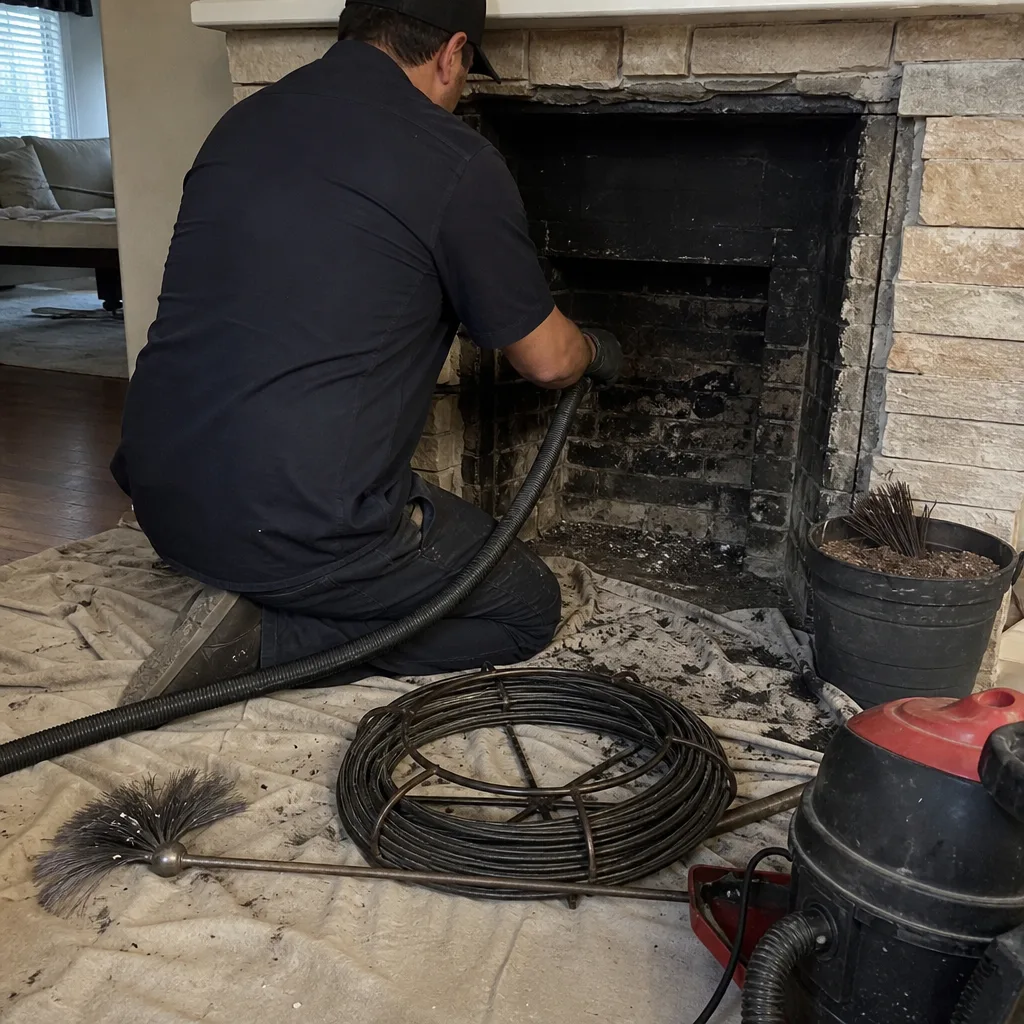 Before
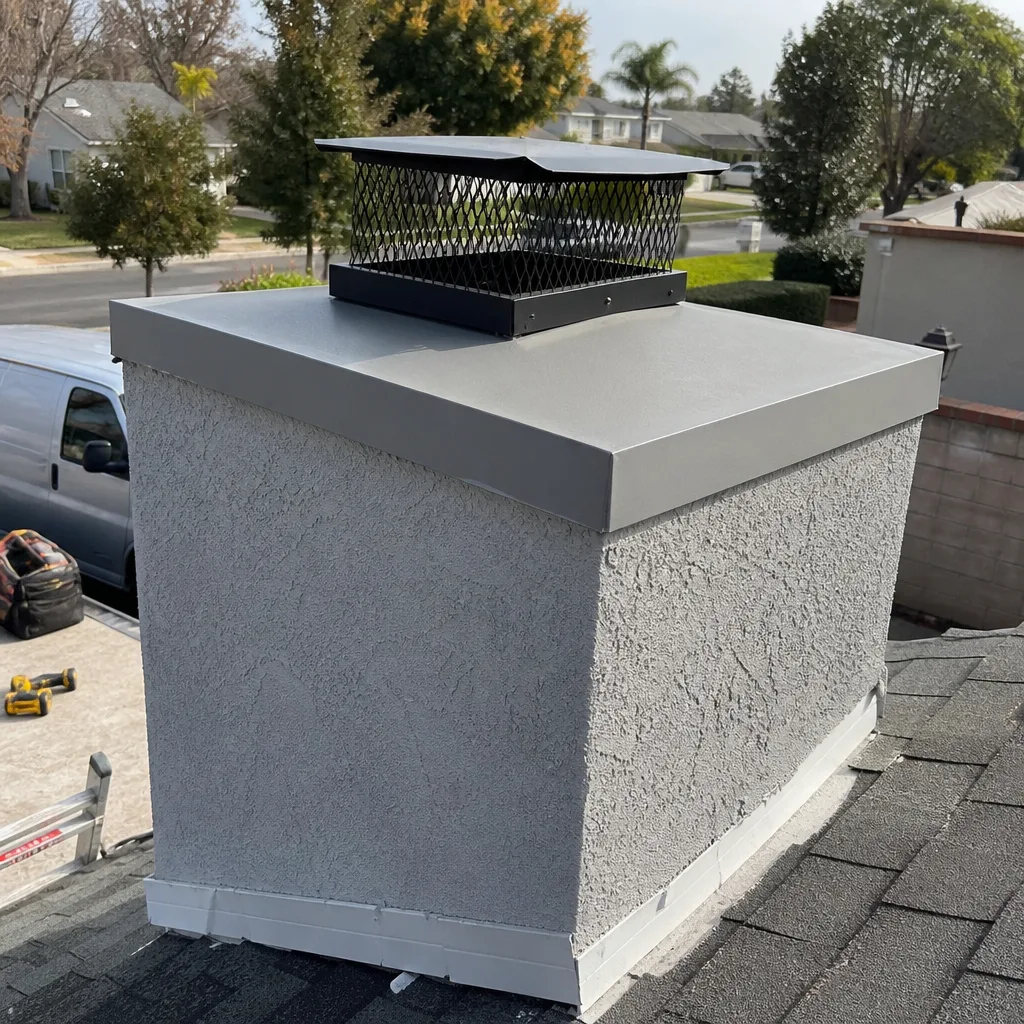 After
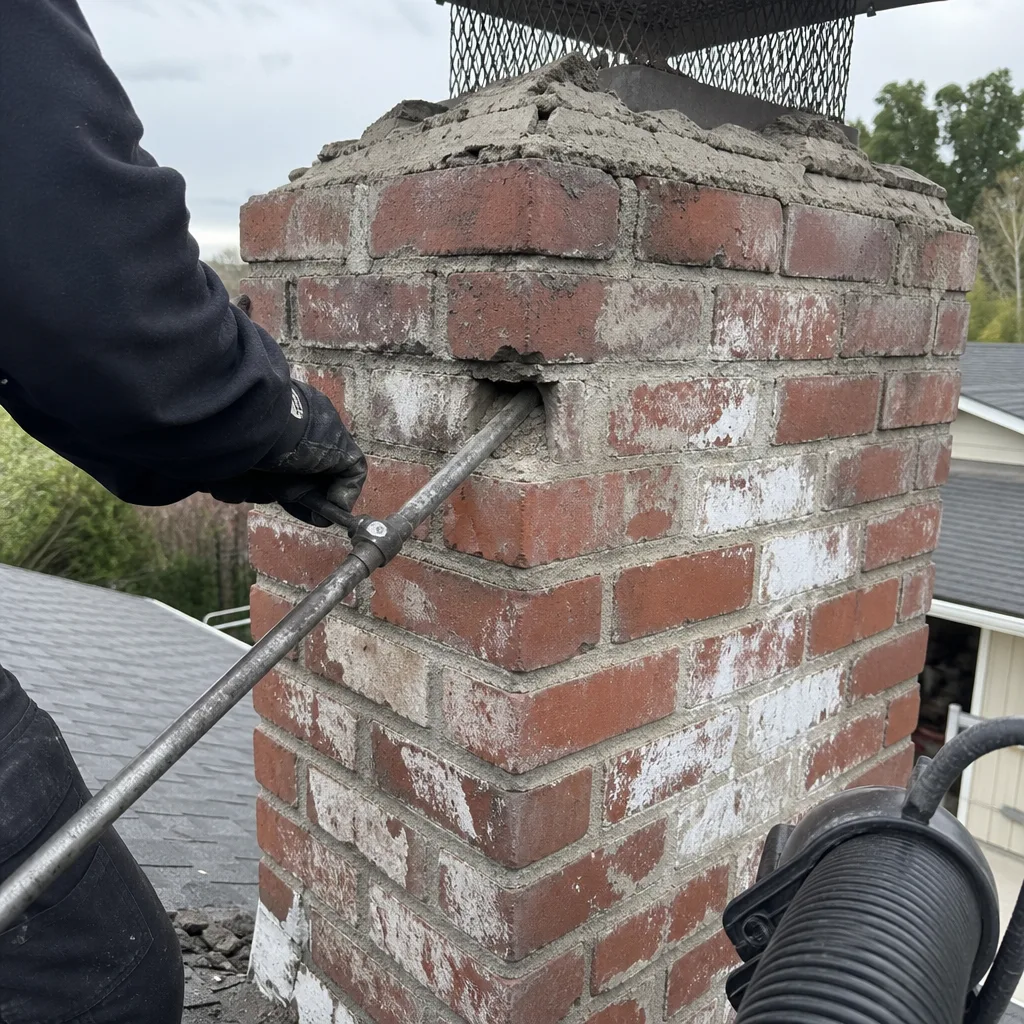 Before
 After
 Before
 After