
Last updated November 2, 2026
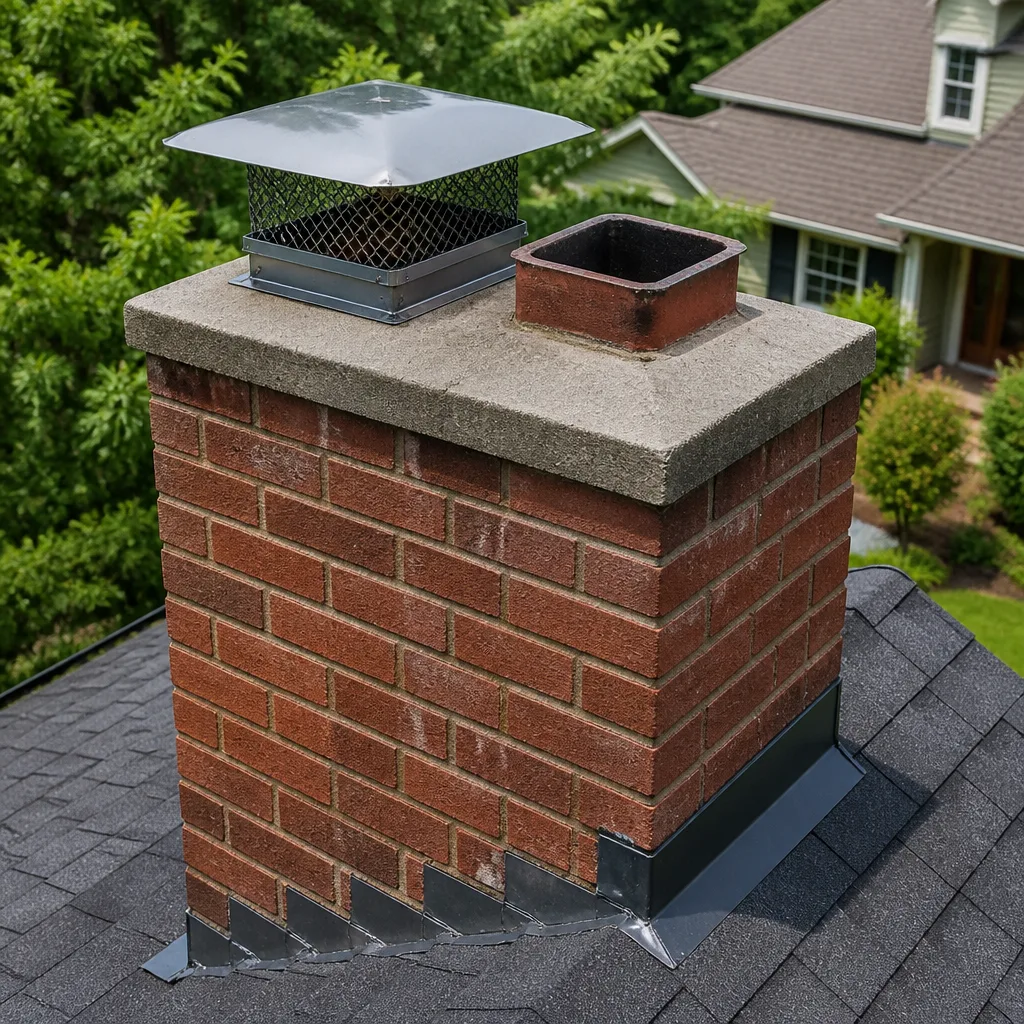 Sweep & inspection
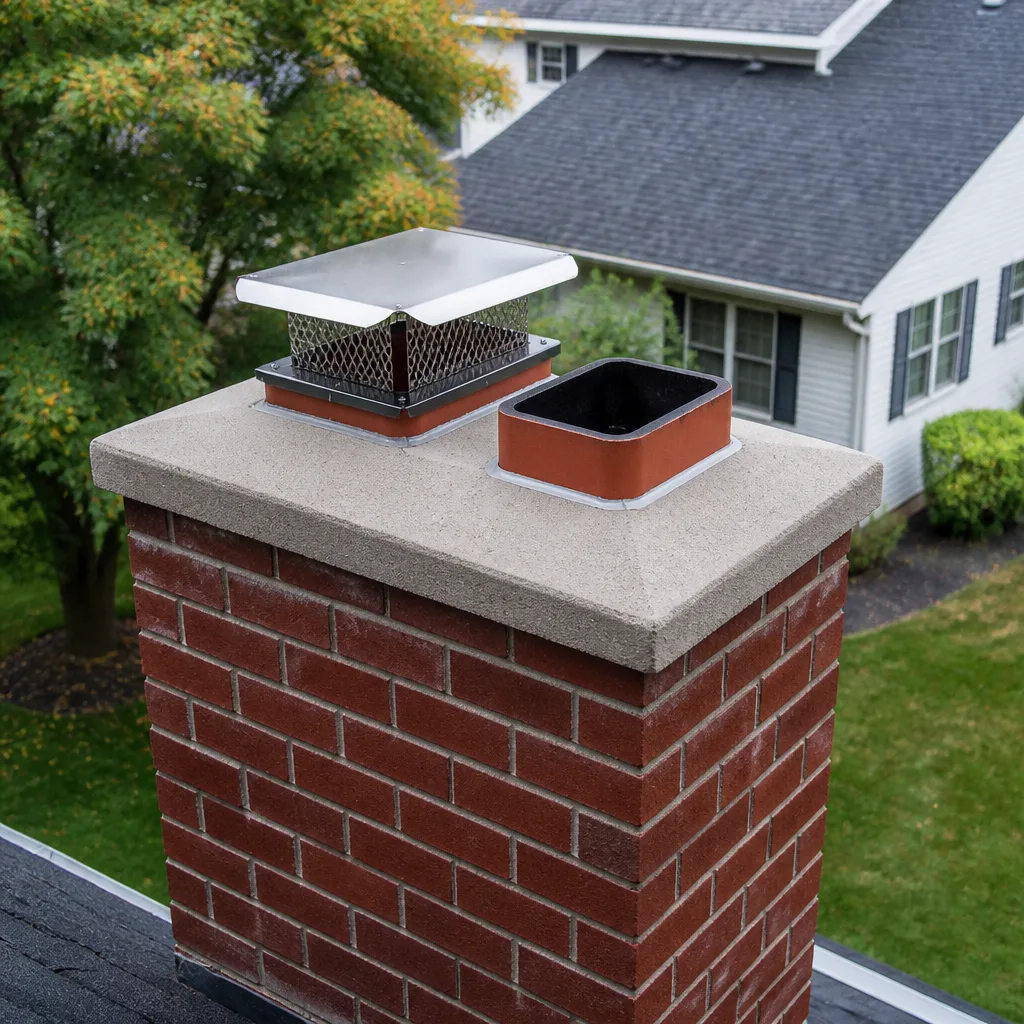 Caps & crowns
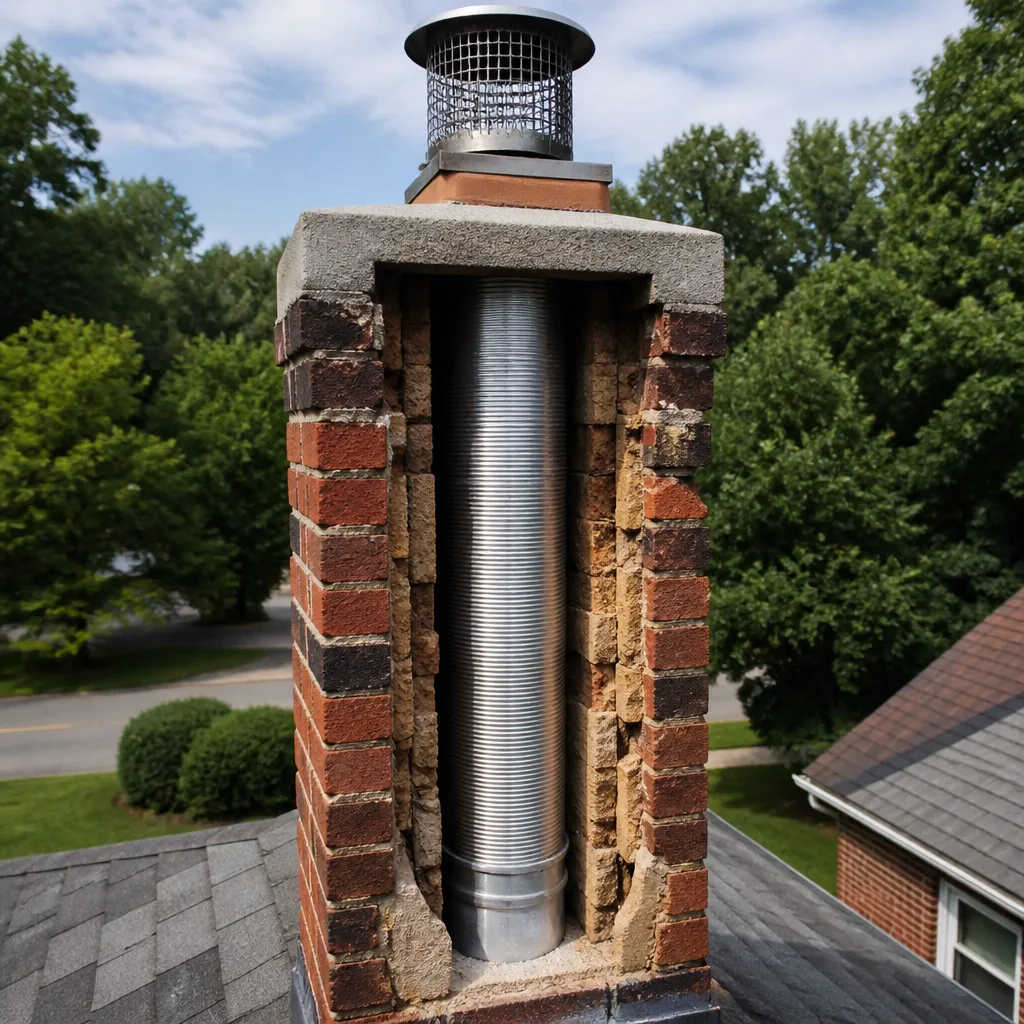 Flue relining
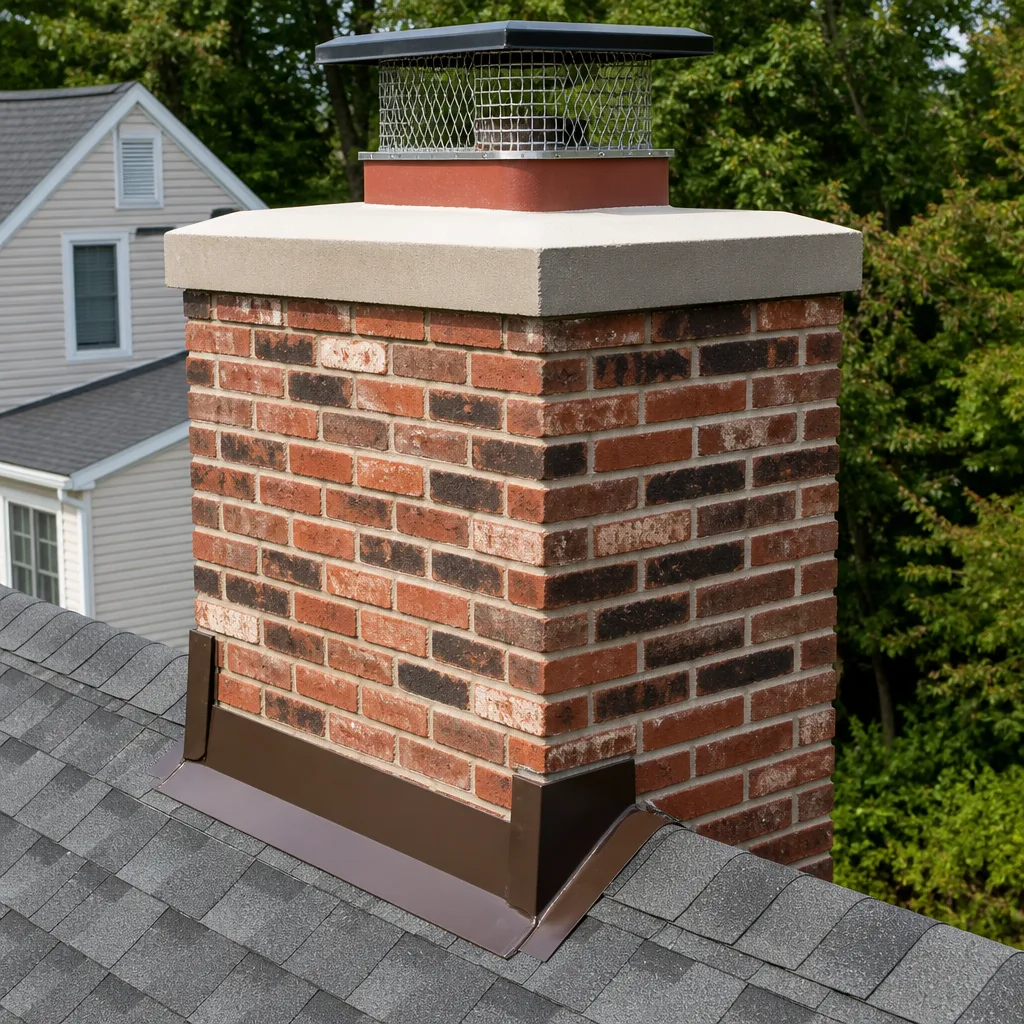 Masonry repair
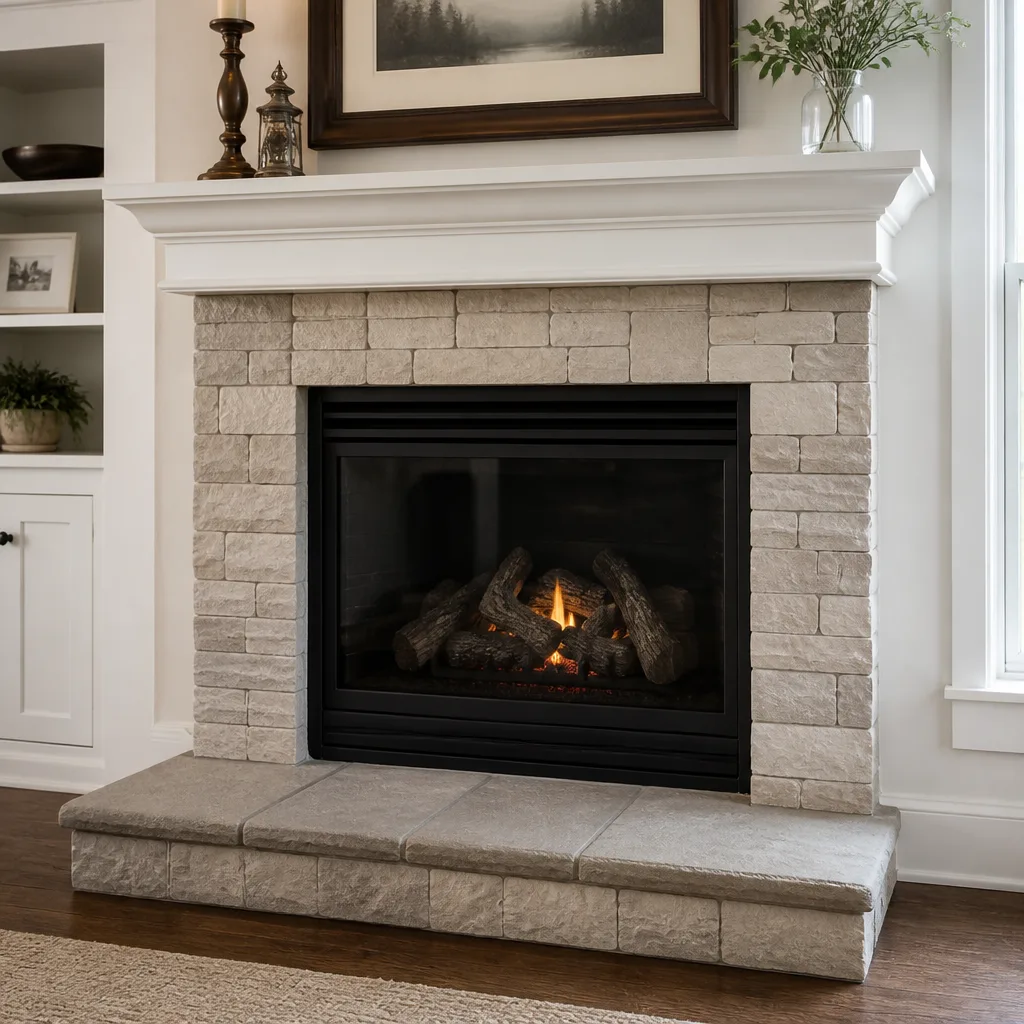 Gas fireplace service
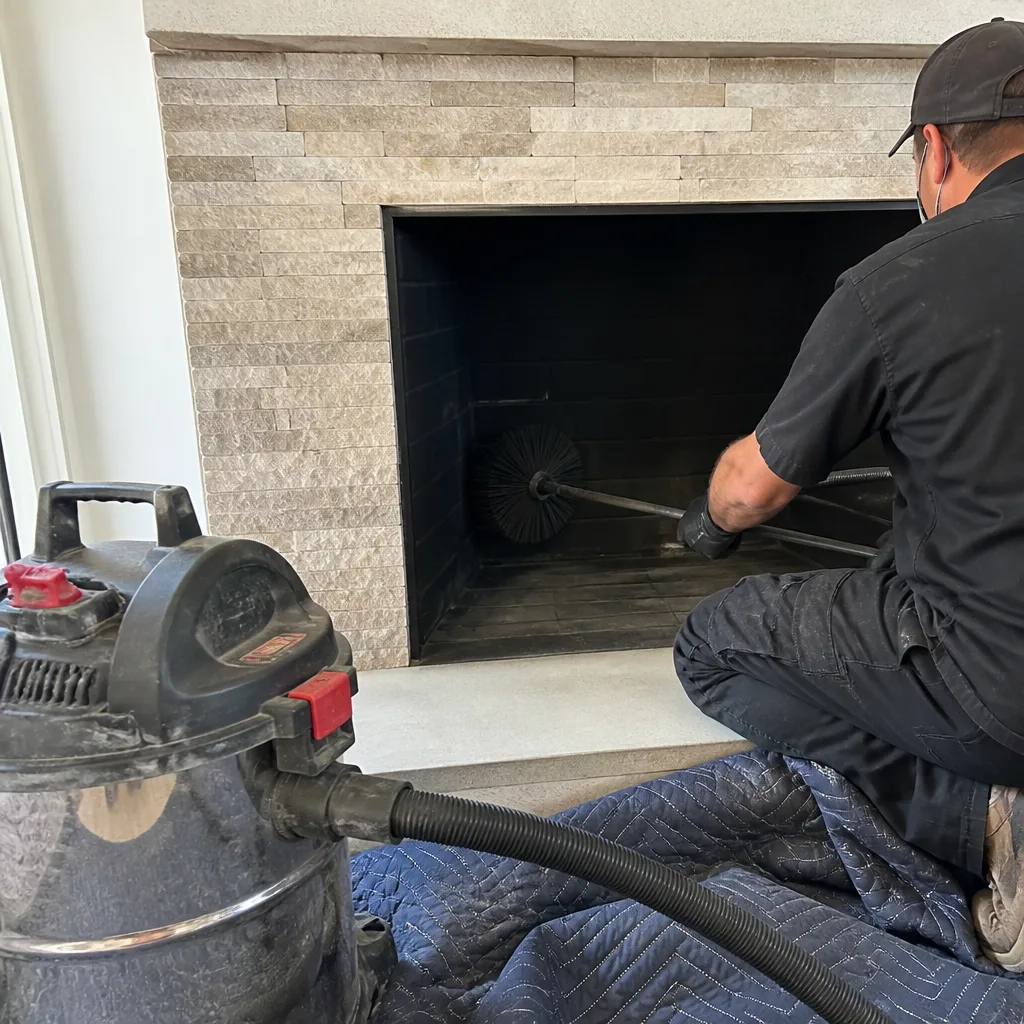
Level 1 sweep and inspection to the NFPA 211 annual standard - flue, crown, cap, and flashing checked and photographed
Chimney sweep logs do not sweep chimneys. They loosen some creosote - which then falls where a brush and vacuum still have to collect it.
Choosing the Right Chimney Cleaning Brand: A Buyer’s Guide for Pocket
Here’s the thing most homeowners in Pocket don’t realize until it’s too late: there is no consumer product equivalent to a professional-grade creosote modifier. The stuff sold at hardware stores is formulated for maintenance-level buildup, the light fluffy deposits you get after a season or two of occasional fires. It will not touch stage-2 creosote, the hardened tar-like glaze that forms when your chimney runs cooler than it should, and it certainly won’t do anything for stage-3. We’ve pulled apart enough chimneys in Pocket to know the difference between a homeowner who tried the store-bought route first and one who had it done right. This guide will walk you through what actually matters when choosing a chimney cleaning brand: the products used, the standards they meet, and why the name on the material matters more than the name on the truck.
Styles & brands we work with
- Sweep & inspection
- Caps & crowns
- Flue relining
- Masonry repair
- Gas fireplace service
Quick Answer
The right chimney cleaning brand is one that uses professional-grade materials – rotary cleaning systems, commercial sealants, and UL-listed liner components from manufacturers like Copperfield, DuraFlex, and HeatShield – rather than consumer products or hardware-store substitutes. In Pocket, CA, that means choosing a specialist who stocks these professional brands and can answer specific questions about what they use and why. The brand of materials a contractor reaches for tells you more about their skill than any badge on their website.
Table of Contents
- What “Professional-Grade” Actually Means in the Chimney Industry
- The Product Categories Homeowners Can’t Buy Retail
- How to Evaluate Creosote Removal Products Sold to Consumers
- Chimney Crown Sealants: Elastomeric vs. Hardware Store Patching Compounds
- Why the Brand of Materials a Contractor Uses Is a Legitimate Question
- What Pocket’s Climate and Housing Stock Mean for Chimney Cleaning Choices
- Questions to Ask Any Chimney Cleaning Company in Pocket
- Common Mistakes to Avoid
- When to Call a Professional
- Frequently Asked Questions
- The Bottom Line
What “Professional-Grade” Actually Means in the Chimney Industry
Professional-grade is not a marketing phrase, at least not when it’s used honestly. It refers to materials and equipment that meet specific standards set by industry bodies: ASTM International testing standards, UL (Underwriters Laboratories) listing for liner systems and components, and materials recognized or approved by the Chimney Safety Institute of America (CSIA) and the National Fireplace Institute (NFI). These standards exist because chimney systems fail in predictable ways, and a liner or sealant that hasn’t been tested against those failure modes is an unknown variable sitting inside your house.
UL listing is the one homeowners in Pocket should pay closest attention to. A UL-listed stainless steel liner from a manufacturer like DuraFlex has been tested for specific temperature tolerances, corrosion resistance, and clearance-to-combustibles performance. When a sweep installs that liner, they’re installing a component with documented, verifiable behavior. A non-listed liner purchased from a discount supplier has no such documentation. It might work fine. It might not. The point is you have no way of knowing, and neither does the installer.
ASTM standards cover things like the material composition of chimney components and the performance of sealants. A crown sealant that meets the relevant ASTM standard has been tested for adhesion, flexibility, and weather resistance. The professional formulations we use in Pocket work are engineered for repeated freeze-thaw cycles and decades of UV exposure. The patch compound at the hardware store was designed to fill a crack in a driveway, and the label usually says so if you read it carefully.
The Product Categories Homeowners Can’t Buy Retail
There’s a reason the chimney section at the big box store in Pocket is so small. The tools and materials that make up a professional sweep’s kit are largely sold through trade distribution channels, not retail shelves. That’s not an accident. The manufacturers who sell through professional channels do so because they want trained installers working with their products, which protects their reputation and their liability exposure. Here’s what a professional sweep uses that you won’t find at the hardware store:
- Rotary cleaning systems. A professional sweep in Pocket doesn’t just shove a brush up the flue. Rotary systems use a spinning head attached to flexible rods, driven by a drill, with specialized chain or whip attachments that physically abrade stage-2 glazed creosote off the flue walls. These heads are sold through chimney supply distributors, not retail outlets. They cost hundreds of dollars and require training to use without damaging the flue liner.
- Commercial-grade creosote modifiers. The chemical treatments professionals apply after a sweep are different from consumer products. Professional formulations are designed to penetrate and break down creosote over repeated burn cycles after the sweep has removed the bulk of deposits. They’re applied via spray systems with specific coverage rates. The consumer versions are weaker by design, because the manufacturers assume a homeowner is using them without the benefit of a mechanical sweep first.
- UL-listed liner systems. When a chimney in Pocket needs a new liner – which happens frequently in older homes in the Pocket and Greenhaven neighborhoods – a professional installs a stainless steel system from a manufacturer like DuraFlex or Copperfield. These systems are tested and listed as complete assemblies, with specific supports, tees, and terminations that have all been evaluated as a unit. You cannot buy these systems retail, and you shouldn’t want to install one yourself.
- Professional-grade crown sealants. Elastomeric sealants from brands like Gelco are sold exclusively through trade supply houses. They’re designed to bond to concrete, mortar, and metal flashing while remaining flexible enough to accommodate the natural expansion and contraction of a masonry chimney through Sacramento Valley temperature swings.
- Camera inspection equipment. Not a product per se, but most professional chimney companies in Pocket now use camera systems to inspect flues before and after cleaning. The equipment itself is specialized and expensive, and more importantly, the operator needs to know what they’re looking at. A camera image of your flue is only useful if someone who understands chimney anatomy interprets it for you.
The takeaway here isn’t that professional equipment is better because it’s more expensive. It’s that professional equipment exists because the job of cleaning and maintaining a chimney properly requires capabilities that consumer products were never designed to provide. When you hire a company that works with brands like Copperfield and DuraFlex, you’re hiring access to a supply chain that homeowners simply don’t have.
How to Evaluate Creosote Removal Products Sold to Consumers
We get asked about store-bought creosote removers a lot, usually by homeowners who’ve just received a quote for a sweep and are wondering if there’s a cheaper DIY option. The honest answer is that these products have a legitimate role – just not the role their packaging implies. Here’s how to evaluate them if you’re standing in the aisle:
- Read the active ingredient list. Most consumer creosote removers use either a manganese-based catalyst or a copper-based formulation. The manganese products work by lowering the ignition temperature of creosote, which promotes more complete combustion of deposits during normal fires. The copper products work differently, based on what the manufacturer claims anyway. The label should state what the active ingredient is. If it doesn’t, put it back on the shelf.
- Check the dosage and repetition requirements. Consumer creosote modifiers typically require application every 30 to 50 fires, or every 1 to 2 months of burning season. Read that carefully. If a product claims to eliminate stage-3 creosote with a single application, that’s a red flag. No consumer product does that. Professional sweeps don’t even claim that, and they have access to materials you can’t buy.
- Look for the words “prevents” versus “removes.” Most consumer products are preventive. They help keep new creosote from bonding to the flue walls, and they help break down stage-1 deposits over time. The word “remove” on the packaging is doing a lot of heavy lifting. The label’s fine print usually clarifies that the product is for maintenance use and that heavy buildup requires mechanical removal.
- Skeptically evaluate any “miracle” claim. Creosote is a product of incomplete combustion. If you burn wood, you create creosote. No chemical changes that fundamental fact. Products that claim to “eliminate” creosote without mechanical cleaning are making a claim that contradicts basic chemistry. The chemistry of creosote formation is well understood: unburned volatiles cool and condense on the flue walls. A chemical added to the fire can alter the composition of those deposits, but it cannot remove existing heavy buildup.
- Consider what you’re actually trying to achieve. If you use a consumer product faithfully during burning season and still get your chimney professionally swept annually, you’re doing it right. The product keeps deposits softer and easier to remove, and the mechanical sweep does the actual removal. In our experience, chimneys in Pocket that have been treated with a manganese-based modifier during the season are noticeably easier to clean than chimneys that haven’t been treated at all.
The point is not that consumer products are useless. The point is that they’re maintenance products with specific, limited functions, and the companies that market them rarely say so plainly. A professional creosote modifier, applied after a mechanical sweep, does something different: it treats the flue surface to slow future accumulation and makes the next sweep more effective. Those products are applied by professionals because they’re part of a system, not a standalone solution.
Chimney Crown Sealants: Elastomeric vs. Hardware Store Patching Compounds
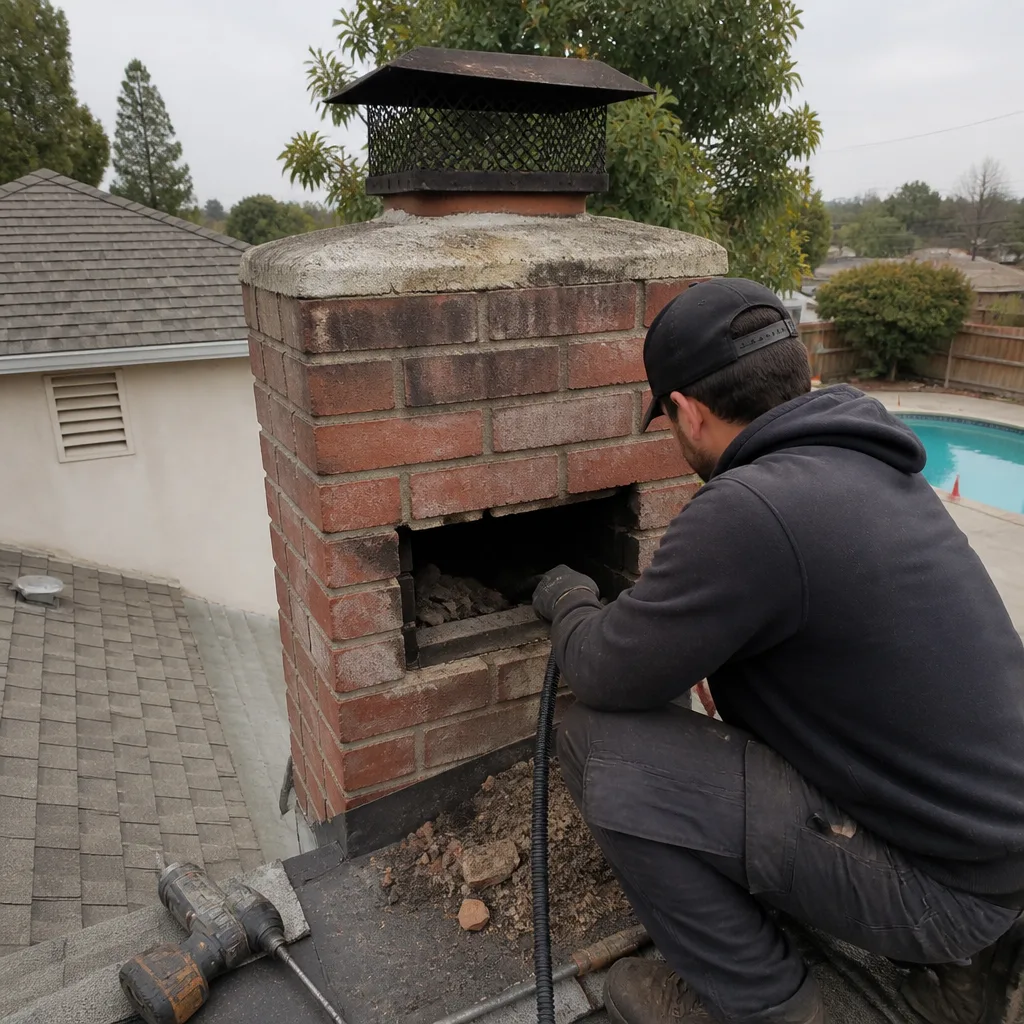
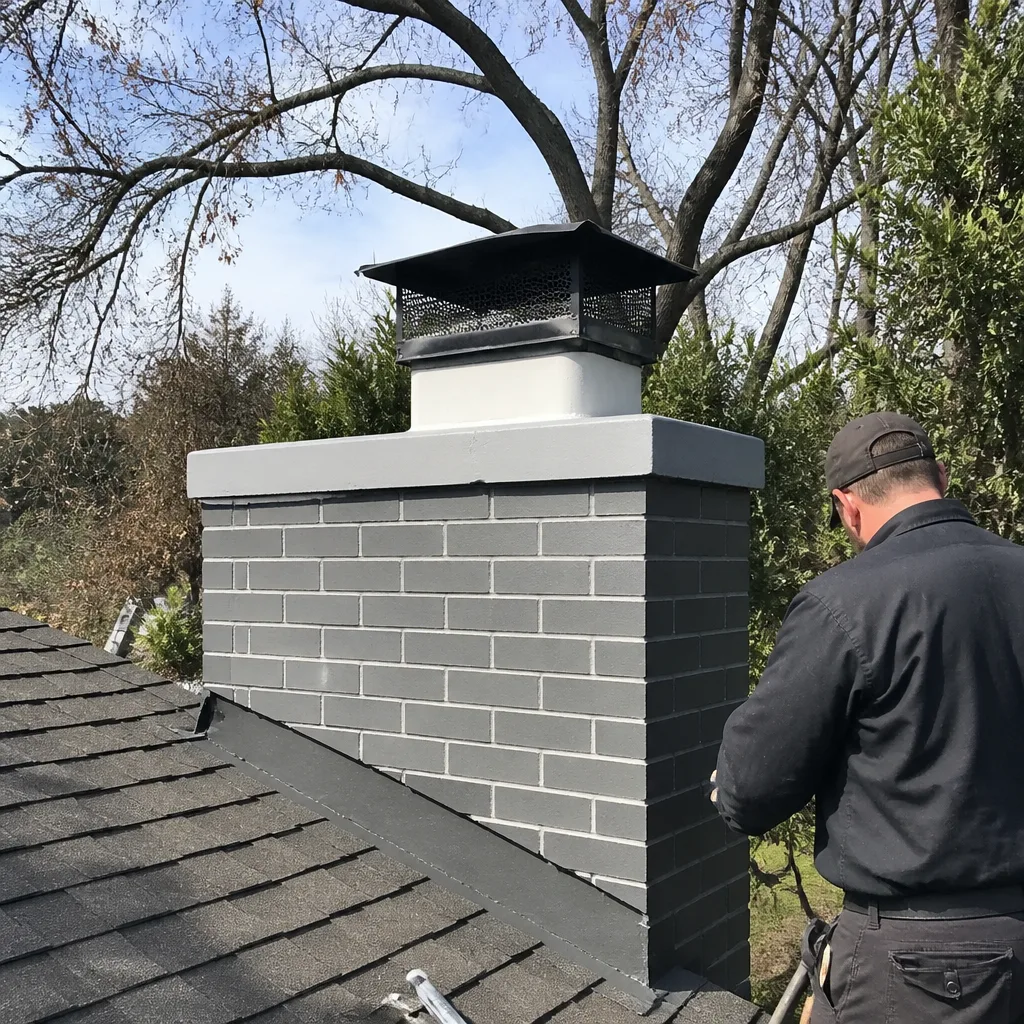
The crown is the concrete cap at the top of your chimney, and it’s one of the most common failure points we see in Pocket homes. Cracks develop from thermal stress and moisture intrusion. Water gets in, freezes, expands, and makes the crack bigger. The Sacramento Valley’s winter rain cycles, followed by dry summer heat, create exactly the kind of wet-dry-warm-cold pattern that destroys masonry crowns.
When a homeowner sees a cracked crown and heads to the hardware store, they usually come back with a tub of concrete patching compound or some kind of caulk. Those products have a role in non-chimney applications, but on a chimney crown they fail, repeatedly and predictably. Here’s the difference:
- Flexibility. Concrete patch compound is rigid. It cracks when the substrate moves, and chimney crowns always move. Elastomeric sealants like the professional formulations from Gelco are designed to stretch and flex with the thermal expansion of the chimney system. They accommodate movement rather than resisting it.
- Bond strength. Professional crown sealants are formulated to bond to concrete, brick, mortar, and metal flashing. Hardware store patching compounds are designed for a single material, usually concrete, and often don’t bond well to the mixed materials of a real chimney crown.
- Water resistance. This is the whole point of a crown sealant. Elastomeric formulations create a watertight membrane that sheds rain and prevents further moisture intrusion. Patching compound is porous. It absorbs water and transmits it into the crown, making the problem worse over time.
- UV stability. Sacramento gets a lot of sun, and a chimney crown sits in direct sunlight for hours every day. Professional sealants are formulated with UV stabilizers that prevent breakdown and cracking from sun exposure. The hardware store products simply aren’t designed for this environment.
- Application temperature range. Professional sealants can be applied in the temperature conditions when chimney work actually happens in Pocket, which is most of the year. Many DIY products have narrow application temperature windows that don’t match the realities of working on a roof.
The crown sealant issue illustrates the broader pattern: the right material for the job is usually a professional product, not because professionals want to hide products from homeowners, but because the products exist to solve specific problems that professionals encounter. A specialist in chimney repair reaches for an elastomeric sealant because patching compound fails. It’s not about cost, it’s about not coming back in six months to redo the job.
Why the Brand of Materials a Contractor Uses Is a Legitimate Question
You should ask any chimney contractor what products they use, and you should expect a specific answer. The difference between a chimney specialist and a generalist is that the specialist can tell you exactly what they stock and why, while the generalist usually says something like “we use quality materials” or “industrial-grade.” Those phrases usually mean “we order whatever’s cheapest from the supply house.”
At Meadow Chimney Sweep home, we work with a curated lineup of professional-trade brands: DuraFlex and Copperfield for liner systems, HeatShield for resurfacing products, Gelco for sealants, Olympia Chimney and Famco for components. These are the same materials that certified chimney technicians nationwide use, which matters because these manufacturers stake their reputations on performance. DuraFlex and Copperfield didn’t become industry standards by accident. Their liner systems have decades of documented field performance behind them, and their UL listings mean the products have been tested by independent laboratories.
There’s also a practical difference between a contractor who stocks professional materials and one who orders per job. A contractor who stocks materials has them on hand when common problems present themselves. If we find a cracked crown during a sweep, we can seal it that day because the sealant is on the truck. If we find minor spalling in the firebox, we can discuss repair options immediately because we stock HeatShield materials designed specifically for that repair. A contractor who orders per job has to schedule a second visit, and the homeowner waits while the problem gets worse.
Ask about brands during your initial phone call. The answer you get is diagnostic. A specialist will name specific manufacturers and specific product lines without hesitation. A generalist will dodge the question, because they don’t actually know what they’ll be using until they pick up supplies for your job. In Pocket, where chimneys range from 1960s masonry construction in the original Greenhaven tracts to newer installations in the developments near the river, that specific knowledge matters even more. Older chimneys have different material needs than newer ones, and a contractor who understands material compatibility is already ahead of one who doesn’t.
What Pocket’s Climate and Housing Stock Mean for Chimney Cleaning Choices
Pocket is a distinct part of Sacramento, bordered by the Sacramento River on three sides and Interstate 5 on the east. The housing stock dates mostly from the 1960s through the 1990s, with some newer construction near the river. What that means for chimney care is predictable: a lot of masonry chimneys that are now 40 to 60 years old, many of them with original clay tile liners that have seen better decades.
The climate here matters too. Sacramento Valley winters bring rain, not snow, but the rain falls on chimneys that have spent the summer baking in 100-plus-degree heat. That thermal cycling is brutal on masonry. Crowns crack, flashing separates, and moisture works its way into the chimney structure. When we inspect chimneys in Pocket after a wet winter, crown damage and moisture intrusion are the most common findings, followed by creosote accumulation in wood-burning fireplaces and failures in aging clay liners.
For homeowners choosing a chimney cleaning brand in Pocket, the practical implication is this: the company you hire should be prepared to find damage, because damage is common here. A sweep that’s just a sweep leaves you with a report saying “you have a problem” and a referral to someone else. That’s frustrating and slow. A specialist who handles chimney cleaning in Pocket and repair can address what they find during the same visit, or schedule the repair immediately with a clear plan. That’s the argument for hiring a full-service operation rather than a cleaning-only service.
Older homes in Pocket also have specific chimney configurations. Many homes in the original Greenhaven neighborhoods have chimneys with multiple flues serving fireplaces and furnace appliances. Those systems require different cleaning approaches for different flues, and a company that understands the difference between a wood-burning fireplace flue and a furnace vent is a company you want to keep. We’ll go one further: ask any contractor you’re considering how they handle multi-flue chimneys. The quality of the answer will tell you a lot.
Questions to Ask Any Chimney Cleaning Company in Pocket
Before you book a sweep or repair, spend five minutes on the phone with the company. Here are the questions that separate specialists from order-takers, with notes on what a good answer sounds like:
- What cleaning method do you use? A good answer names the system: rotary cleaning with specific head attachments, or a brush system appropriate for the liner type. A vague answer is a warning sign.
- What materials and products do you stock? A specialist names brands: DuraFlex, Copperfield, HeatShield, Gelco, Olympia Chimney, Famco. Those names mean the company works through professional distribution channels, not the contractor aisle at the home center.
- Do you inspect with a camera? A yes is the minimum standard in 2026. A company that doesn’t offer camera inspection is flying blind, and so are you.
- What happens if you find damage during the sweep? The answer here reveals the company’s model. Cleaning-only companies refer you elsewhere. Full-service operations can quote and schedule the repair immediately. In Pocket, where every older chimney has some level of wear, this distinction matters.
- Do you clean dryer vents? This might seem like a tangent, but it’s diagnostic. A company that takes dryer vent cleaning seriously understands that venting systems as a category have fire-safety implications. A company that doesn’t offer it at all is probably focused on volume chimney sweeps, not venting systems. Our Dryer Vent Cleaning in Pocket service exists because dryer vents are as important as chimneys when it comes to fire prevention.
- Are you a chimney specialist or a general contractor? The answer should be a quick “specialist.” A handyman service that sweeps chimneys on the side may do a fine job on a simple fireplace, but they won’t have the specialized equipment, training, or materials to handle complications. And in Pocket’s older homes, complications are the norm, not the exception.
Common Mistakes to Avoid
- Choosing a cleaner based on price alone. A sweep is not a commodity, because the house it’s protecting isn’t a commodity either. The cheapest sweep in Pocket is cheap for a reason: likely less training, no camera inspection, no material inventory, and no repair capability. When a cheap sweep finds a problem, you start over with another company.
- Believing the hardware store products will substitute for a sweep. We covered this above, but it bears repeating: consumer creosote modifiers are maintenance products, not mechanical cleaning substitutes. No chemical removes stage-2 or stage-3 creosote. Using store-bought products and skipping the sweep makes things worse over time, not better.
- Not asking about what materials the contractor uses. The contractor who can’t name their liner manufacturers or their sealant brand is a contractor who buys whatever’s on sale. That’s not precision, and chimney work requires precision.
- Treating the chimney as a standalone system. Your chimney, furnace vent, and dryer vent are all part of the same basic system: they move exhaust gases and byproducts out of your house. A company that understands all of them sees connections that a single-system contractor misses.
- Ignoring the crown because you can’t see it from the ground. The crown is out of sight, so it’s out of mind until the ceiling stains appear. In Pocket’s wet winters, a cracked crown is the leading cause of internal chimney damage. Have it inspected, and have it sealed with the right product when it needs it.
- Assuming all chimney liners are the same. Clay tile, stainless steel, and cast-in-place liners all have different characteristics, different lifespans, and different appropriate repair strategies. A contractor who treats them interchangeably is guessing. Ask what type of liner you have and what the implications are.
- Hiring a generalist to save time. The handyman who “also does chimneys” isn’t saving you time. If they miss a cracked flue tile or fail to identify a moisture problem, you’re spending more time and money later. And the fire risk doesn’t go away just because someone with a brush showed up.
When to Call a Professional
If you’re reading this guide because you’re trying to decide whether to DIY your chimney cleaning or hire someone, here’s the short version: if your chimney has visible creosote buildup, if it’s been more than a year since the last sweep, if you’ve noticed smoke backing up into the room, or if you see any signs of water damage on the ceiling near the chimney, stop researching and call a professional. These are not situations where a store-bought product helps, and some of them are situations where continued use of the fireplace increases the risk of a chimney fire or carbon monoxide exposure. Meadow Chimney Sweep offers free estimates in Pocket – call (855) 943-1461 and we’ll schedule an inspection.
Frequently Asked Questions
A standard chimney sweep in Pocket typically costs between $180 and $350, depending on the chimney’s condition, height, and accessibility. Prices rise if there’s heavy creosote buildup or if the chimney hasn’t been cleaned in several years. Call (855) 943-1461 for an exact quote – estimates are free.
This is a fair question, and you should ask it outright. A cracked clay tile liner is a fire hazard because it can allow heat and combustion gases to reach combustible materials in the home’s structure. A reputable company will show you camera footage of the damage and explain exactly what they’re seeing. If a contractor recommends a new liner without visual evidence you can see for yourself, get a second opinion.
The National Fire Protection Association recommends annual inspection and cleaning as needed, and that’s the sensible standard for most wood-burning fireplaces in Pocket. If you burn a lot of wood during the Sacramento Valley’s short but real winter season, or if you burn green or unseasoned wood, you may need more frequent cleaning. Gas fireplaces need less frequent service but shouldn’t be ignored.
Creosote accumulates, and creosote is flammable. A chimney fire can reach temperatures that crack clay liners and transfer heat to the home’s framing. Even without a fire, accumulated creosote restricts airflow, which means smoke and carbon monoxide don’t vent properly. Skipping a sweep is a gamble with real consequences. Call (855) 943-1461 if your chimney is overdue.
A sweep removes creosote and inspects the flue; a repair company fixes what the inspection finds. Most homeowners benefit from hiring one company that does both, because the technician who discovers a cracked crown or damaged liner during a sweep can explain the repair in concrete terms and schedule it immediately, rather than referring you to a second company you have to vet separately.
Dryer vent cleaning is a legitimate fire-safety service. Lint accumulation in a dryer vent restricts airflow, which makes the dryer work harder and increases vent temperatures, which can ignite the lint itself. Thousands of home fires annually start in dryer vents. That’s not an upsell, that’s a documented fire cause. Dryer vent cleaning in Pocket is a core service at Meadow Chimney Sweep, not an afterthought.
The Bottom Line
Choosing the right chimney cleaning brand comes down to materials, standards, and specialization. Professional-grade products from manufacturers like DuraFlex, Copperfield, HeatShield, and Gelco exist because chimney systems fail in predictable ways, and proper repair and maintenance require materials that have been tested and listed for exactly those failure modes. A company that stocks these materials, uses them daily, and can explain why they chose them is a company that understands the work. In Pocket, where older homes and wet winters create specific, repeatable chimney problems, that understanding is worth more than any discount coupon. Ask specific questions, get specific answers, and make your decision based on what you learn.
Written by the team at Meadow Chimney Sweep, serving Pocket since 2018.
See the difference
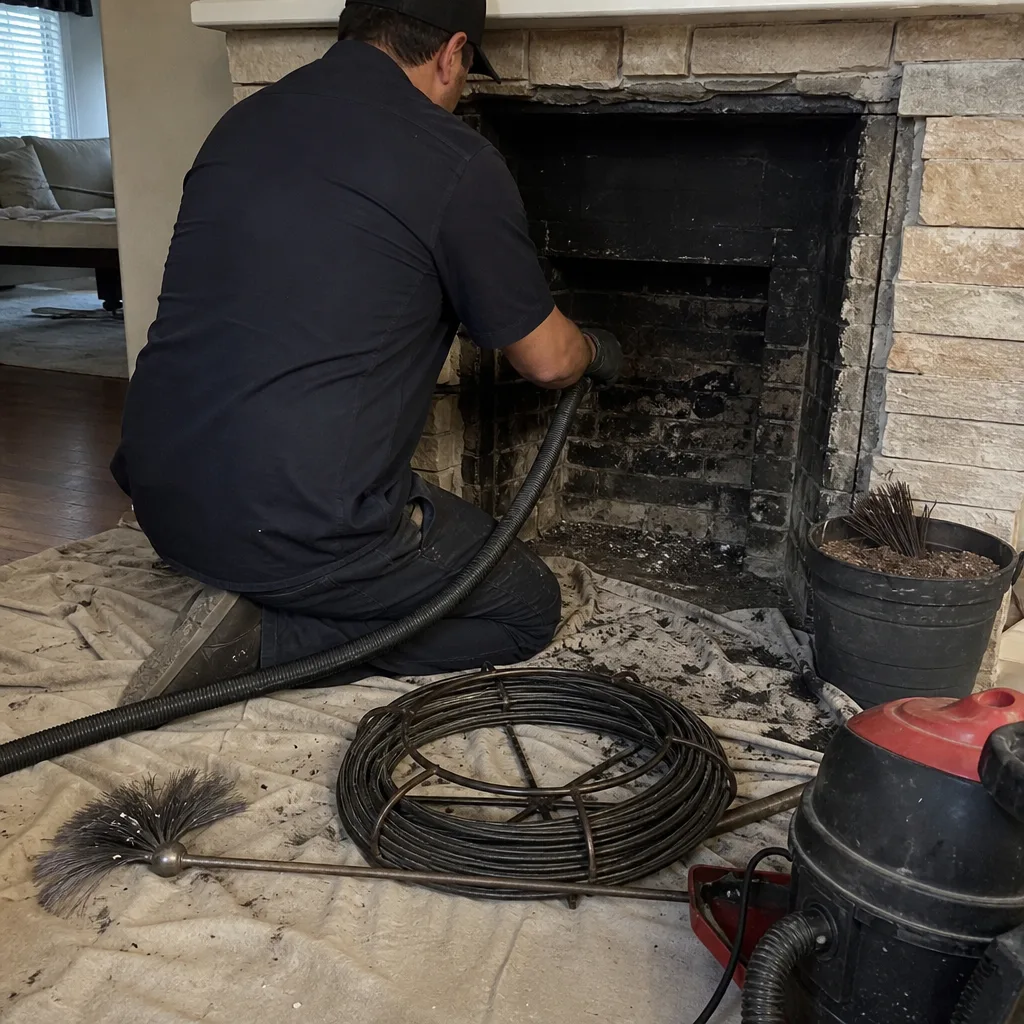 Before
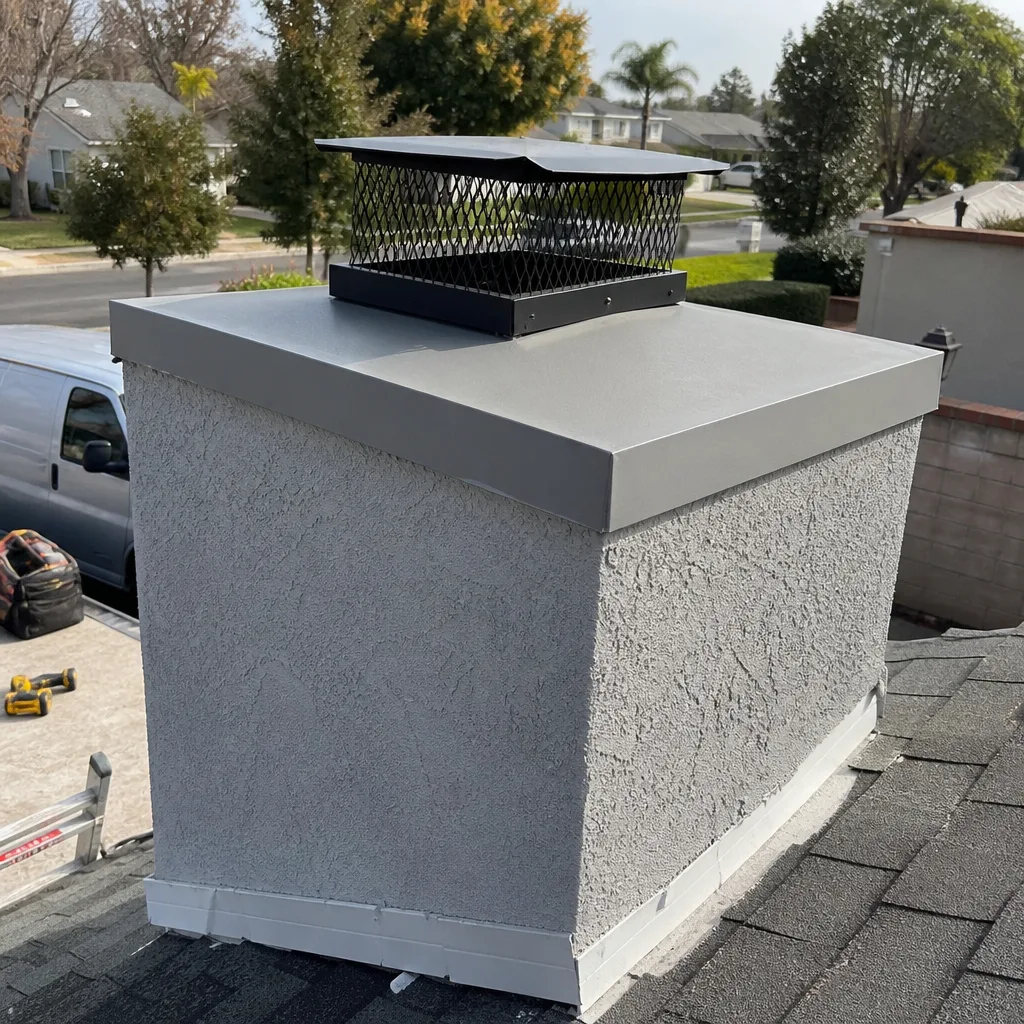 After
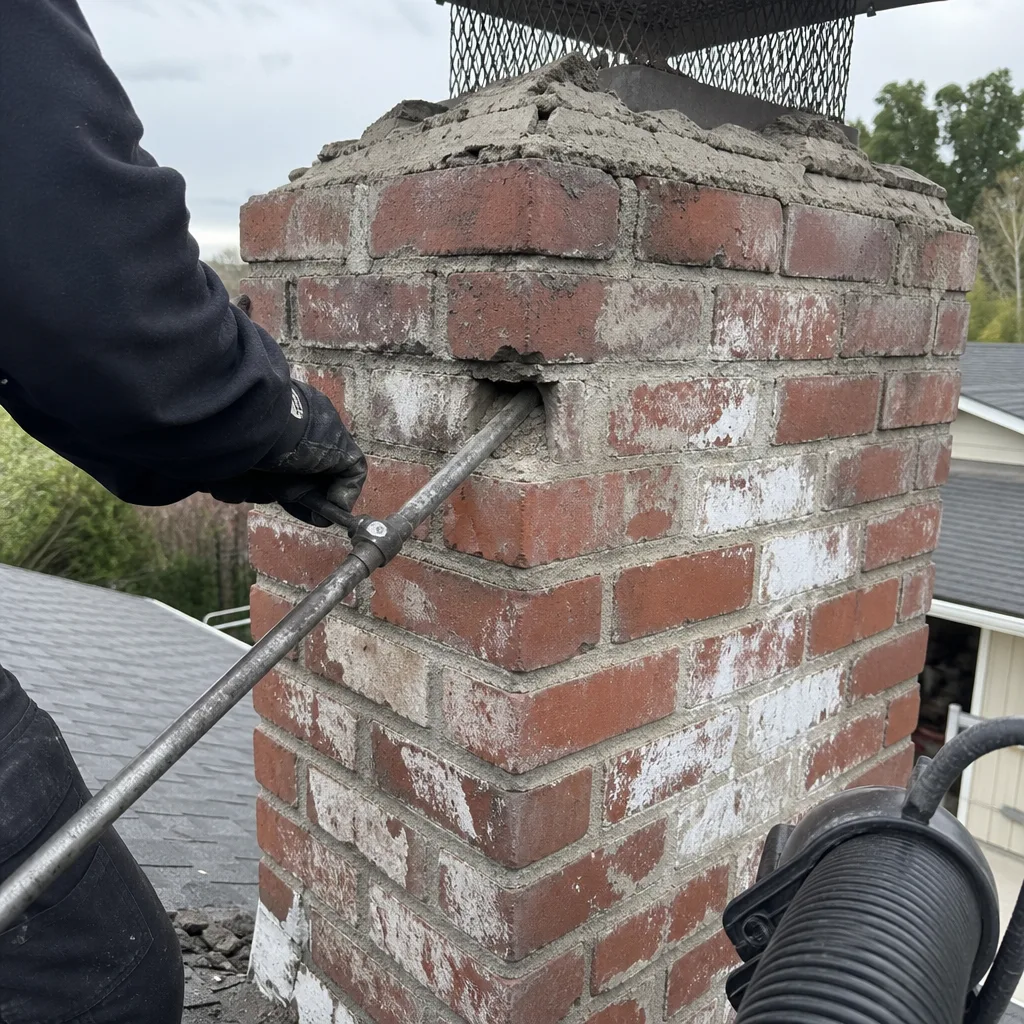 Before
 After
 Before
 After