
Last updated November 3, 2026
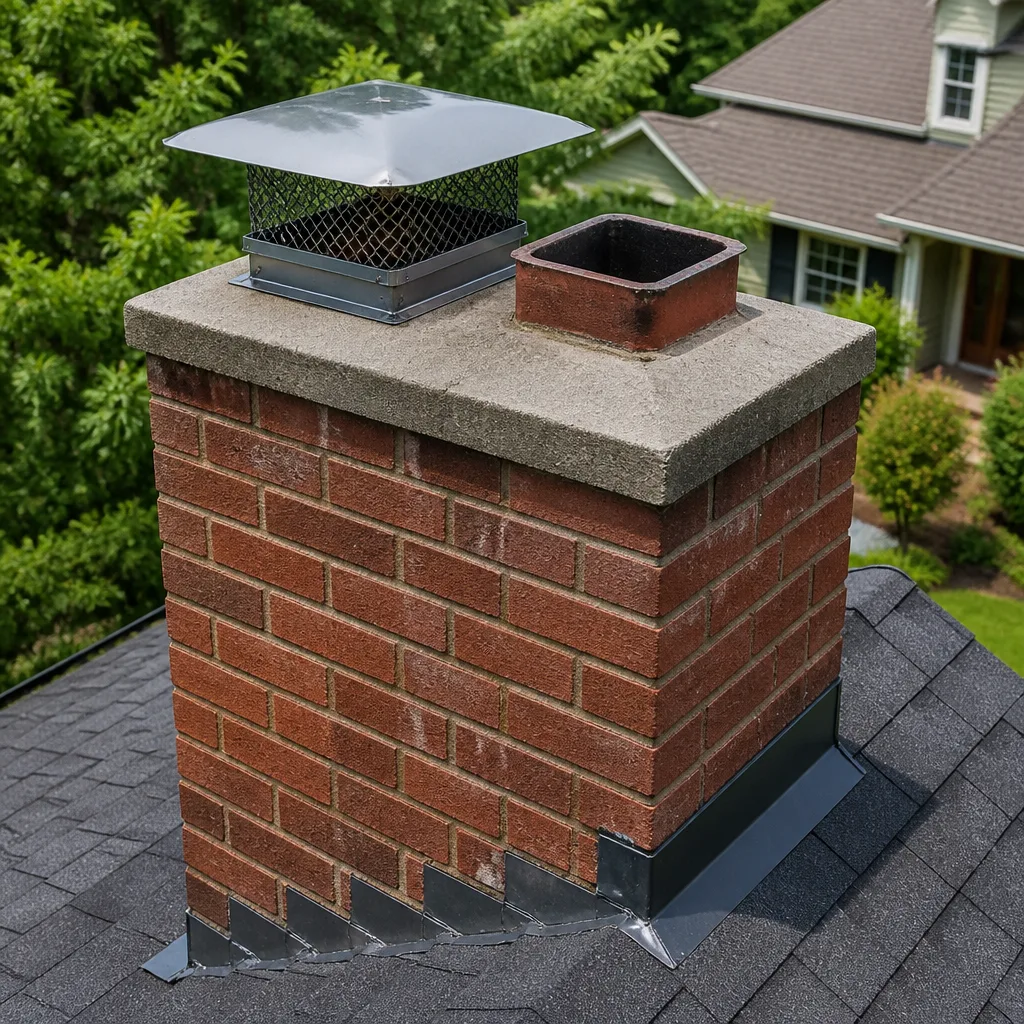 Sweep & inspection
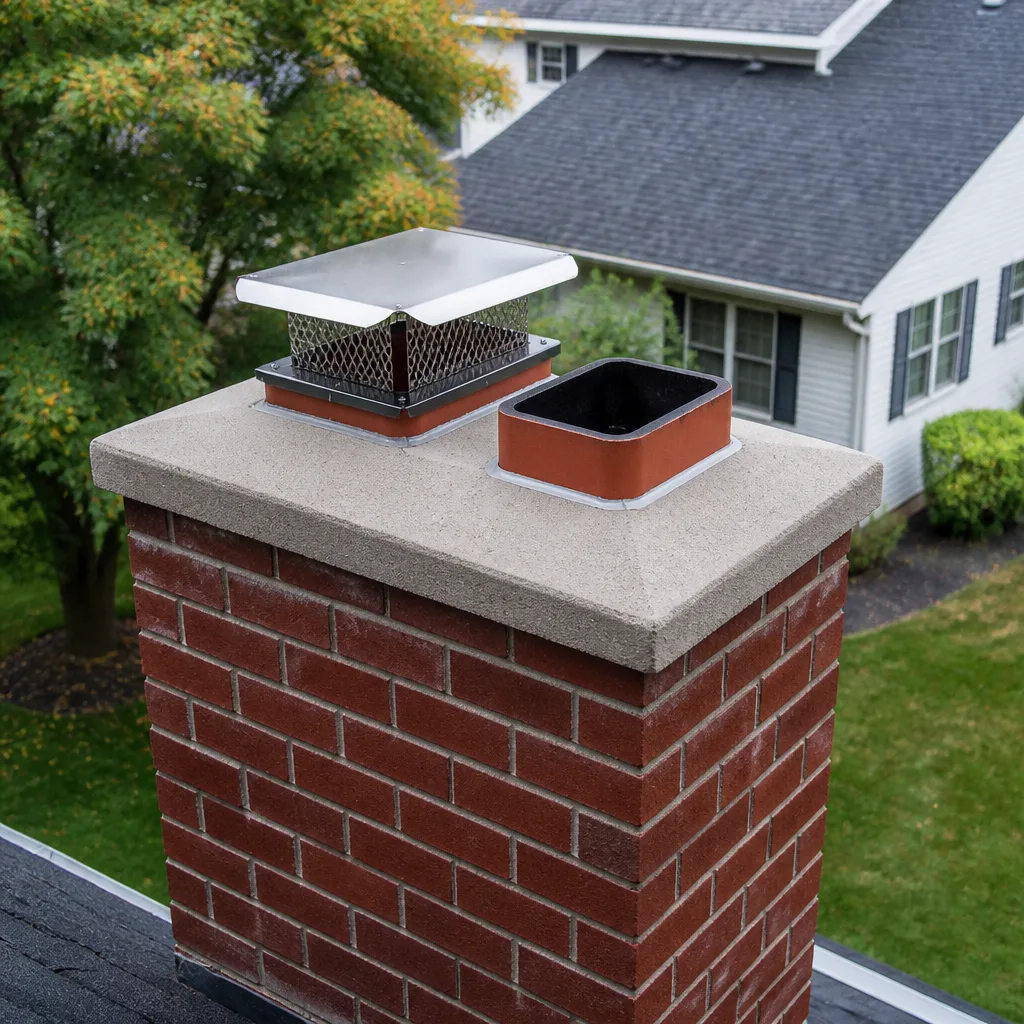 Caps & crowns
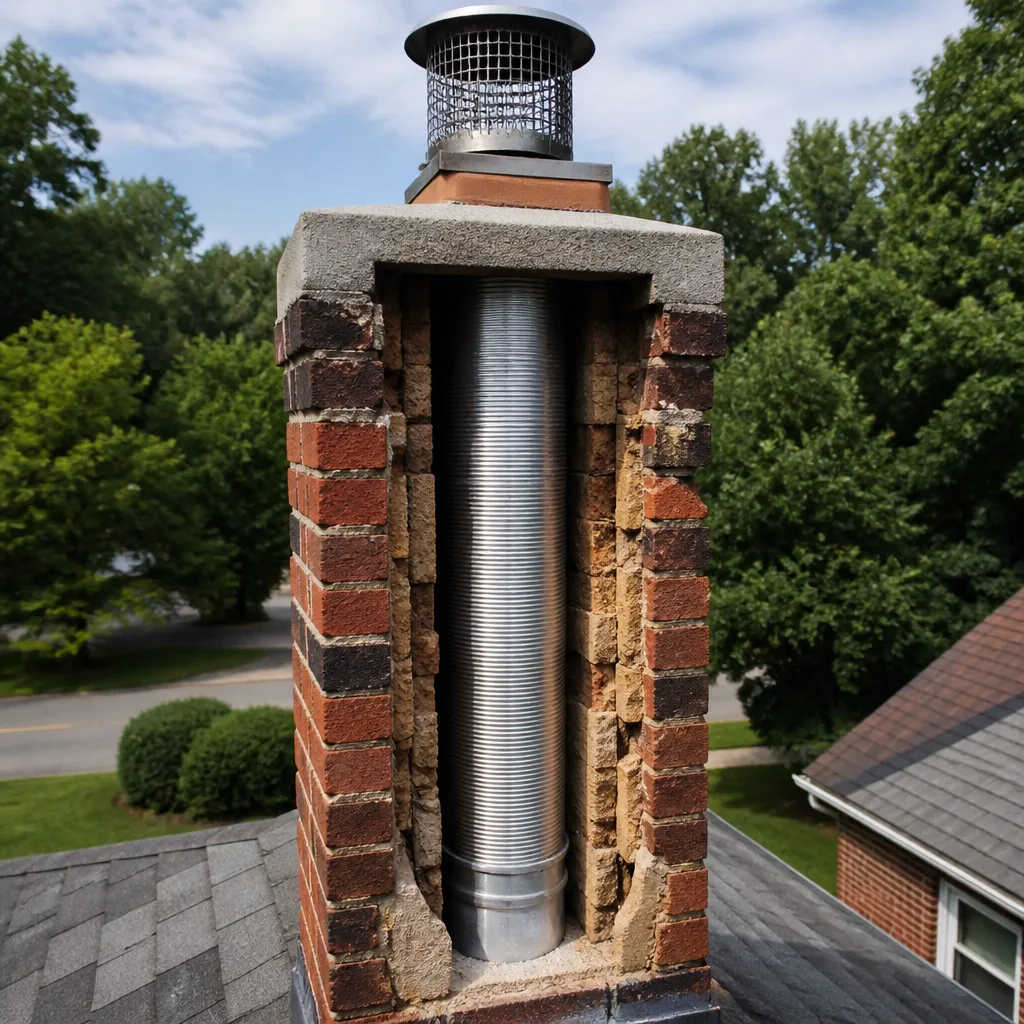 Flue relining
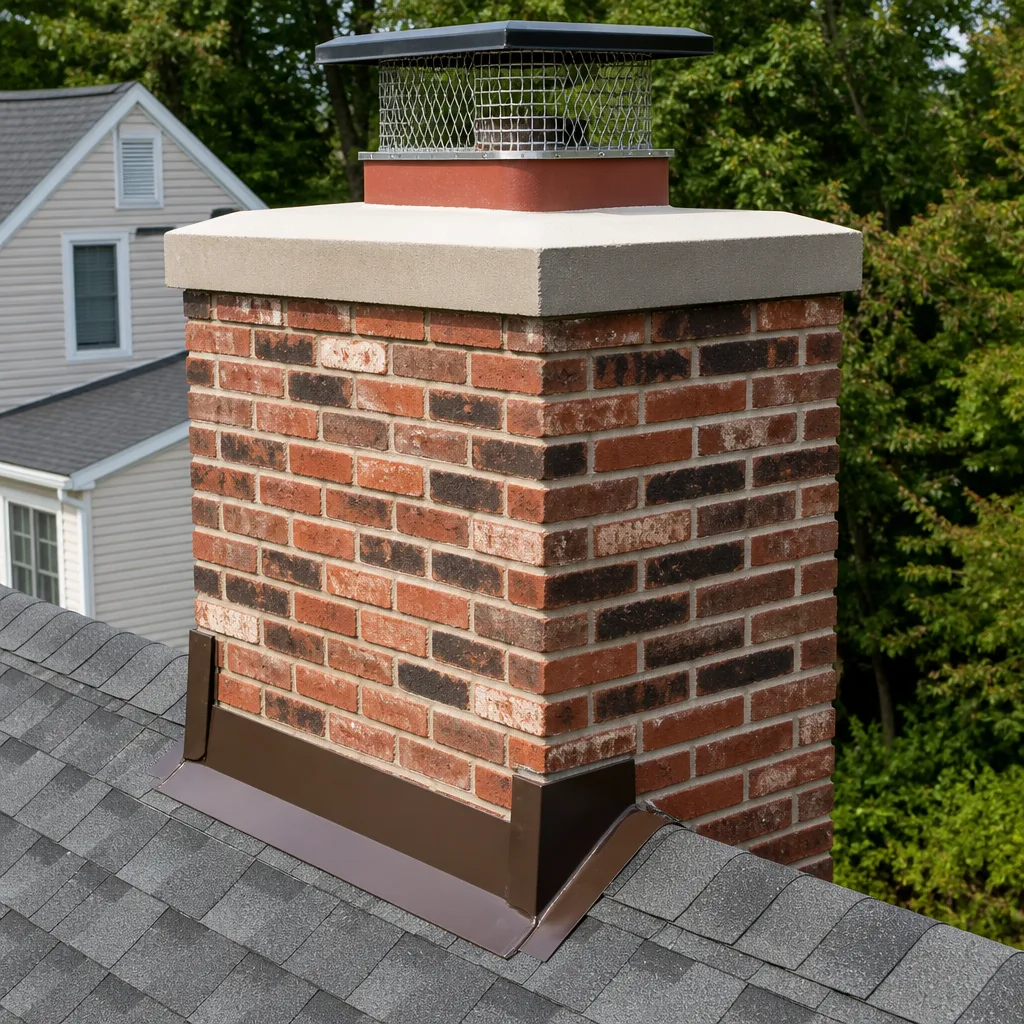 Masonry repair
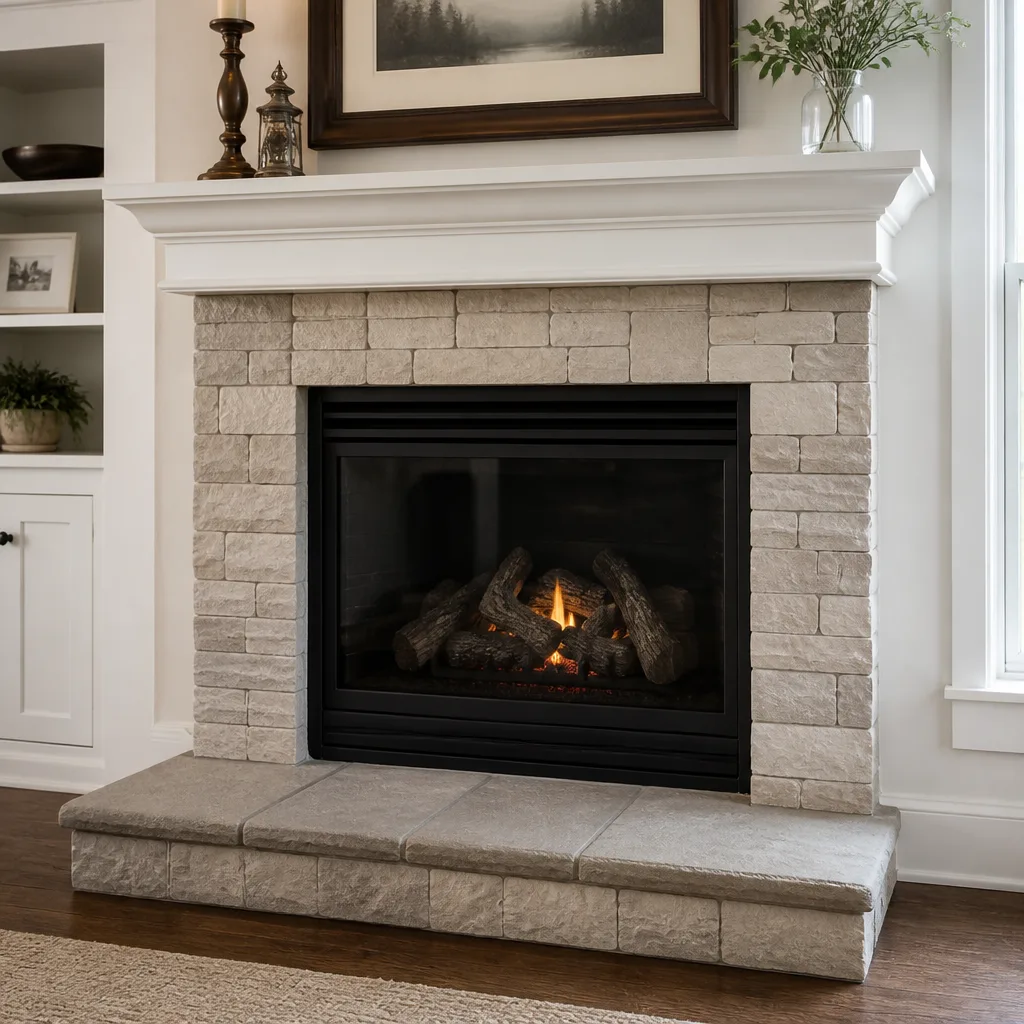 Gas fireplace service
Level 1 sweep and inspection to the NFPA 211 annual standard - flue, crown, cap, and flashing checked and photographed
Chimney sweep logs do not sweep chimneys. They loosen some creosote - which then falls where a brush and vacuum still have to collect it.
The Complete Chimney Sweep Guide for Pocket Homeowners
Most chimney guides were written for homeowners in dry, cold climates, places where a flue stays bone-dry between fires and creosote flakes off with a brush. Pocket, CA is different. We sit in a Sacramento River bend where tule fog rolls in from November through February, humidity hangs above 80% for weeks at a time, and moisture works its way into chimney systems months before most families even light their first fire of the season. That changes how often you should sweep, what problems develop, and how a professional should evaluate your flue. This guide explains all of it, from fog-season creosote chemistry to what a real inspection should include when you hire our Chimney Sweep services in Pocket.
Quick Answer
A chimney sweep in Pocket, CA typically costs $185 to $350 for a standard cleaning and inspection, and homeowners who burn wood regularly should schedule one annually, ideally in late summer or early fall before tule fog season sets in. Pocket’s high-humidity winters mean creosote absorbs moisture and corrodes flue liners faster than in drier parts of Sacramento, so skipping years is riskier here than the mild climate would suggest. The right professional will use a camera-assisted Level 2 inspection when conditions warrant it, not just a visual glance and a brush, as covered in DIY vs Professional Chimney Cleaning: The Pocket Homeowner’s Decision Guide.
Styles & brands we work with
- Sweep & inspection
- Caps & crowns
- Flue relining
- Masonry repair
- Gas fireplace service
Table of Contents
- Why Pocket’s Microclimate Changes Chimney Math
- Creosote, Tule Fog, and What Actually Happens Inside Your Flue
- How Often Should Pocket Homeowners Sweep Their Chimney?
- Level 1 vs. Level 2 Inspections: What Pocket Homes Actually Need
- Older Pocket Homes and Clay Tile Liners: Why Age Changes the Job
- What a Professional Sweep Should Include (and What Should Be Left Behind)
- What Does a Chimney Sweep Cost in Pocket?
- Common Mistakes to Avoid
Why Pocket’s Microclimate Changes Chimney Math
Pocket sits inside a bend of the Sacramento River, which means we get something most of Sacramento doesn’t: dense, persistent ground fog that arrives in late fall and can linger for days. Tule fog forms when the ground is wet and the air cools fast, and Pocket’s proximity to the river means our humidity levels run higher than neighborhoods just three miles east. For a chimney, that’s not a small footnote. It’s the controlling variable.
Here’s what happens. When you burn wood, combustion byproducts rise up the flue and condense on the interior walls as creosote, a tar-like residue that’s acidic and flammable. In a dry climate, creosote eventually hardens and crystalizes. It’s still a fire hazard, but it behaves predictably. In Pocket, the story changes. The moisture that sits in our air during fog season gets pulled into the flue, where it reacts with creosote deposits. The creosote absorbs the water, shifts texture, and in many cases accelerates corrosion of the liner beneath it. We’ve pulled brushes out of Pocket chimneys that came back slick with a paste-like creosote you’d rarely see in Folsom or Roseville.
The practical consequence: a chimney that would be “fine for another year” in a drier zip code can be actively deteriorating in Pocket. The moisture isn’t just sitting on the surface. It’s working its way into the porous surfaces of older liners and masonry. If you live in the Greenhaven side of Pocket or along Pocket Road near the river, you’re in the thick of this fog zone. It’s worth planning your maintenance around it, which we’ll cover later in this guide.
Creosote, Tule Fog, and What Actually Happens Inside Your Flue
Creosote is not one substance. It forms in three stages, and Pocket’s humidity pushes systems toward the most dangerous stage faster than homeowners expect. Stage one is a dry, sooty dust that brushes off easily. Stage two is a flaky, crusty layer that needs more than a casual sweep. Stage three is a hardened, tar-like glaze that’s concentrated fuel, and it’s the stage most likely to ignite a chimney fire.
Fog and humidity act as a catalyst. Here’s the sequence we see in Pocket homes year after year:
- Early fall: A homeowner burns wood for the first few weeks of the season. Creosote begins depositing on the flue walls, mostly stage one and early stage two.
- November through February: Tule fog arrives. Humidity in the flue spikes. Creosote absorbs moisture, which breaks down its structure and lets it settle deeper into liner cracks and masonry joints.
- Spring and summer: The flue dries, but the creosote has now adhered more aggressively and, in many cases, hardened into a glaze. A simple brush sweep no longer removes it completely. The acidity of the creosote has also had months of moist contact with the liner, accelerating deterioration.
This is why the “annual sweep” recommendation isn’t just a safety cliché in Pocket. It’s a real, climate-driven deadline. Missing a year here means creosote has had a full wet season to bond with your flue. The second point to understand is that irregular burning is harder on a flue than consistent burning. Sacramento winters are mild, so Pocket homeowners often burn only a dozen times a year. That intermittent use means the flue cycles between hot and cold, wet and dry, more often than a flue used daily. Each cycle creates expansion, contraction, and condensation. A chimney that fires up every evening actually stays drier inside than one that fires twice a month.
We mention this because every guide written for Minnesota or New England assumes daily burning. Pocket doesn’t burn that way, and the advice needs to account for it. If you’re a seasonal burner, your sweep timing matters more, not less.
How Often Should Pocket Homeowners Sweep Their Chimney?
The National Fire Protection Association standard, NFPA 211, says chimneys should be inspected at least once a year and cleaned whenever soot buildup reaches 1/8 inch or more. For Pocket homeowners, that annual inspection is the floor, not the ceiling. Here’s a practical schedule based on how you use your fireplace.
- Wood-burning fireplace used more than twice a month during winter: Sweep every year, ideally in late August or September before fog season starts. This clears out whatever accumulated last season and gives the liner a dry window before humidity returns.
- Occasional burner (fewer than 15 fires per year): Inspect annually, sweep every 18 to 24 months. But don’t skip the inspection. Infrequent burning is exactly the pattern that lets creosote sit and bond for longer stretches.
- Gas fireplace or gas insert: Sweep less often, usually every 2 to 3 years, but inspect annually. Gas produces no creosote, but it does produce acidic condensate that corrodes metal flues, and birds and debris still find their way in.
- New home purchase or no known sweep history: Sweep and inspect before the first fire, no matter what the previous owner says. Pocket homes built before 1980 often have decades of maintenance debt hidden inside the flue.
The timing piece matters. If you schedule a sweep in late summer, you go into fog season with a clean liner and a dry flue. If you schedule it in January, you’re already fighting moisture that’s been working on the creosote for two months. Late summer and early fall are the highest-value sweep windows in Pocket, and it’s one of the most useful local-specific pieces of advice we can give, along with The Complete Guide to Chimney Cleaning in Pocket.
Level 1 vs. Level 2 Inspections: What Pocket Homes Actually Need
There are three levels of chimney inspection defined by the NFPA, and understanding the difference will help you know what you’re paying for. A Level 1 inspection is a visual check of the accessible parts of the chimney, inside and out, no special tools. It’s the right choice when nothing has changed: same appliance, same fuel, same burning habits, and a chimney that’s been swept recently.
A Level 2 inspection goes further. It includes everything in Level 1 plus a video scan of the flue interior, using a camera that can see liner cracks, hidden gaps, and creosote glazing that a flashlight from above or below would miss. Think of the difference this way: a Level 1 tells you whether the chimney is dirty. A Level 2 tells you whether the chimney is safe.
You need a Level 2 if any of these apply:
- You bought the home and don’t have a documented sweep history
- You’re changing fuel types, like converting a wood fireplace to gas
- The home experienced a chimney fire, even a small one
- An earthquake or structural event shook the home
- A Level 1 inspection turned up something questionable
- The last sweep was more than two years ago in a fog-prone area like Pocket
That last bullet deserves emphasis. Given what tule fog does to liners, we lean toward camera-assisted inspections more often in Pocket than we would in a drier climate. A hairline crack in a clay tile liner is exactly the kind of defect that grows during a wet season. Catching it in October with a camera is cheap compared to discovering it in February as water stains spread across your ceiling.
Be wary of any sweep that skips the camera when one of those conditions applies. A brush and a flashlight were the standard for decades, but a flue liner is a long, dark, curved space. You can’t see a mid-flue crack from the top or the bottom. The camera sees what the eye can’t.
Older Pocket Homes and Clay Tile Liners: Why Age Changes the Job
Many Pocket neighborhoods were built between the 1950s and 1970s. Greenhaven, Pocket-Greenhaven, and the streets around Seymour Park and Garcia Bend have a high concentration of mid-century ranch homes, and a large share of those homes still have their original clay tile chimney liners. That’s not a problem by itself. Clay tile has been used for decades and can last 50 years or more. But it behaves very differently from modern stainless steel, and the sweep needs to know the difference.
Clay tile liners are rigid. They’re installed in sections, stacked with mortar joints between them. Over decades of heating and cooling, especially in a humid environment like Pocket’s river bend, those mortar joints degrade. Gaps open. Moisture gets in. Then fog season arrives and the moisture load increases. A stainless steel liner, by contrast, is continuous and flexible. It expands and contracts without cracking. It’s the material most modern certified sweeps recommend when a clay liner has failed.
Here’s what this means for a homeowner:
- Brushes differ. Clay tile requires wire brushes sized to the tile dimensions. Stainless steel flues, if brushed too aggressively, can scratch. A professional knows which brush belongs in which flue.
- Evaluation differs. Clay tile failures start as hairline cracks and spalling, the flaking of the tile surface. These are almost impossible to see without a camera. Stainless failures show up as rust, warping, or separation at seams.
- Repair options differ. A cracked clay tile liner in an older Pocket home often means either a liner replacement or a resurfacing treatment like HeatShield, which repairs and reinforces the existing flue. A failed stainless liner usually means full replacement.
If your home still has a clay tile liner and you’ve been in the house for more than a decade without a camera inspection, it’s past time for one. The humidity here doesn’t crack liners by itself, but it absolutely accelerates the process once a small crack starts. Think of a hairline gap as a moisture highway, and then remember that Pocket runs a moisture surplus from November through February.
What a Professional Sweep Should Include (and What Should Be Left Behind)
A proper chimney sweep is more than running a brush up and down. Here’s the sequence a professional should follow, and what you should expect to be handed when the job is done.
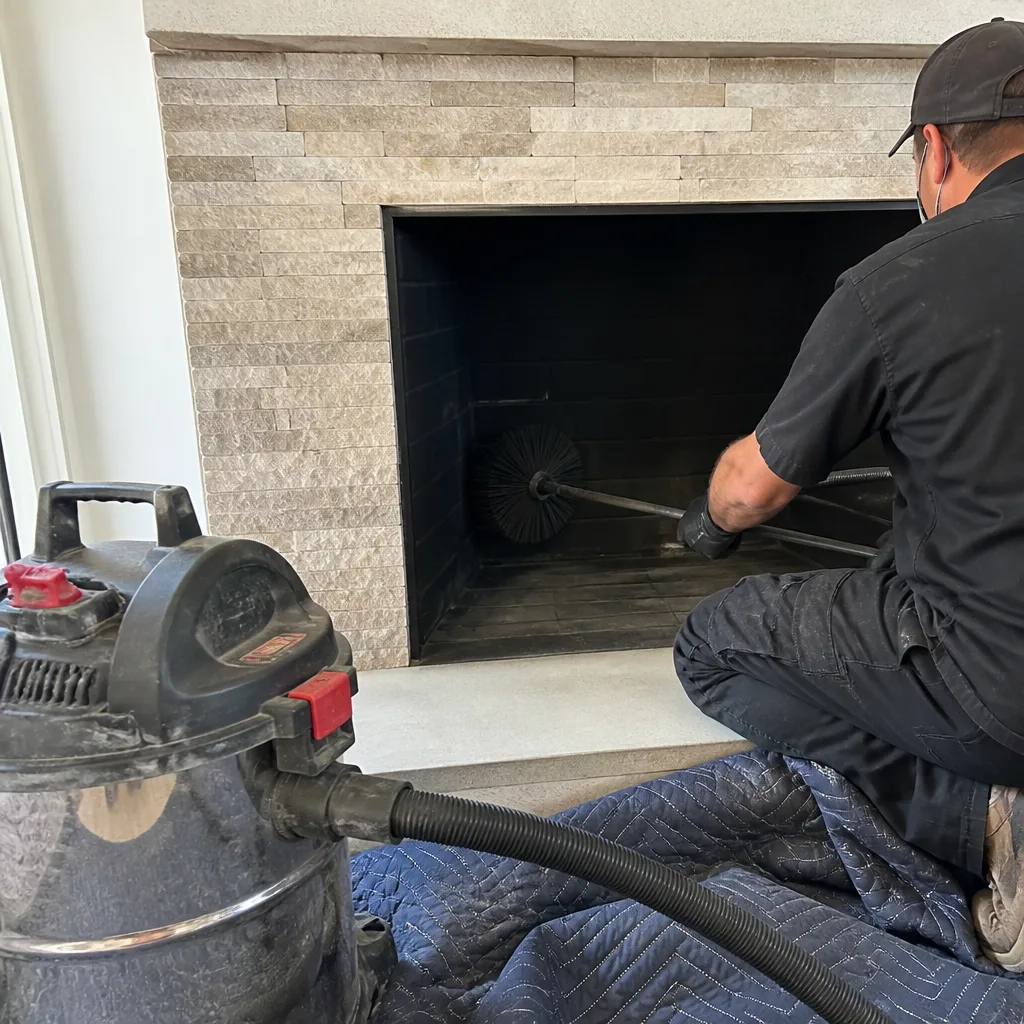
- Site protection. Drop cloths around the hearth, floor runners from the door to the fireplace, and a vacuum with a HEPA or high-filtration filter running during the sweep. If a sweep doesn’t protect your floors before starting, that tells you how the rest of the job goes.
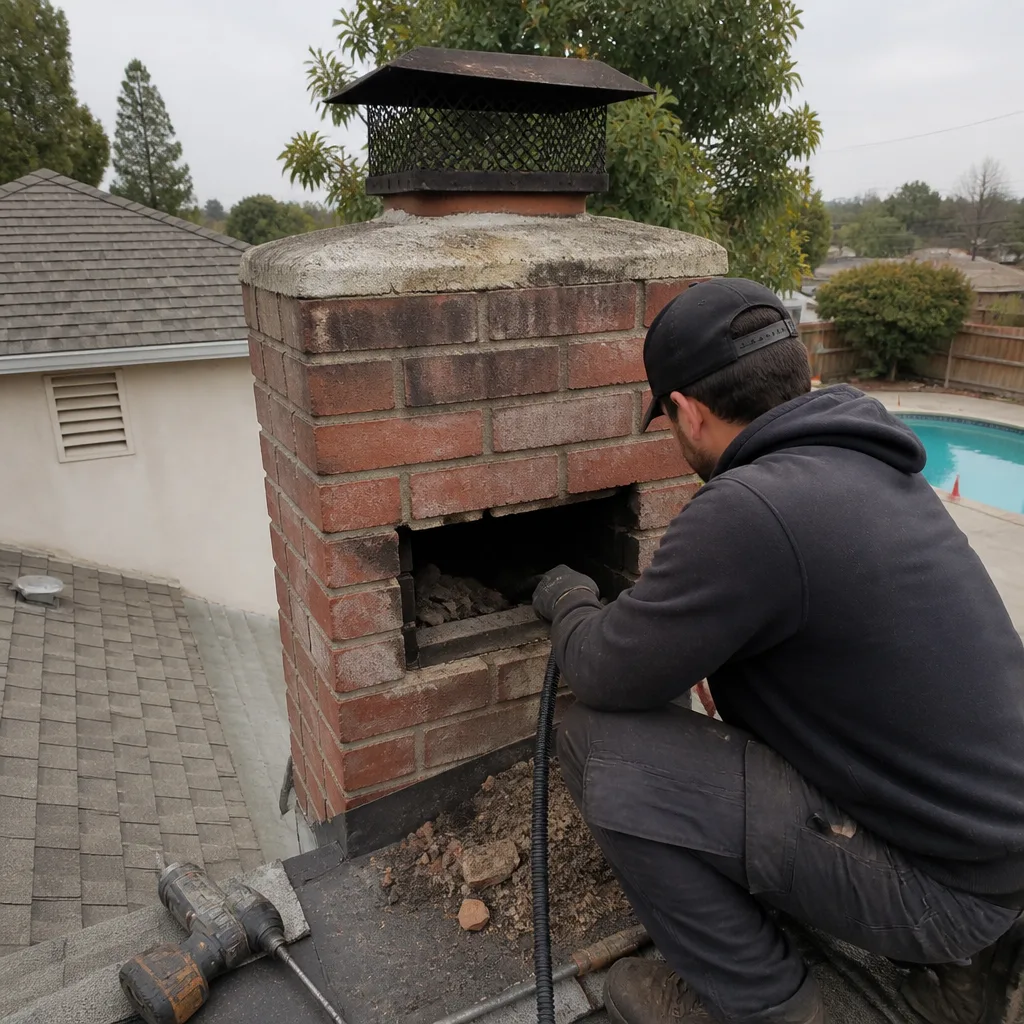
- Top-down inspection. The sweep should examine the chimney cap, crown, and flashing from the roof or with a camera. Missing caps are common in Pocket, and they let rain, fog moisture, and birds straight into the flue.
- Flue brushing. Using brushes sized for your specific flue, whether clay tile or steel, the sweep removes creosote and soot from the full length of the flue.
- Smoke chamber and damper cleaning. Creosote collects below the flue too, in the smoke shelf and smoke chamber. A thorough sweep includes these areas.
- Firebox and ash cleanup. The fireplace itself should be left clean, not just the flue.
- Documentation. You should receive written notes on what was found, what was done, and what condition the chimney is in. If a camera was used, ask for still photos or a short video clip. This documentation matters, partly for your records and partly because it’s evidence the sweep actually looked.
Here’s the gap between specialists and generalists. A handyman with a brush can remove loose soot. A chimney specialist evaluates the whole system, catches defects a brush won’t, and, importantly, can fix those defects. At Meadow Chimney Sweep home, we carry the same professional-grade materials used by certified chimney technicians nationwide, so when a camera scan finds a cracked liner or a failed damper, the repair can happen on the same visit instead of waiting for a second contractor. If you’re in Pocket and want the full Chimney Sweep in Pocket experience, one call should cover the sweep, the inspection, and the diagnosis.
The materials are a useful tell. Professional sweeps work with brands like Olympia Chimney for caps and components, Famco for venting parts, and Gelco for caps and chase covers. These aren’t the off-the-shelf caps you find at a hardware store. They’re the parts a certified sweep trusts because they fit correctly and hold up to weather. When a contractor opens their van and everything inside is a no-name substitute, it’s a signal about how seriously they take the trade.
What Does a Chimney Sweep Cost in Pocket?
Pricing for a standard sweep and Level 1 inspection in Pocket usually runs between $185 and $350, depending on the condition of the flue, the height and accessibility of the roof, and whether you’re adding a camera-assisted Level 2 inspection. A Level 2 inspection typically adds $100 to $200 on top of the sweep. Here’s a breakdown of the line items you’re likely to see:
| Service | Typical Range (Pocket, CA) | Notes |
|---|---|---|
| Standard sweep + Level 1 inspection | $185 – $280 | Includes full flue brushing, smoke chamber cleaning, and visual inspection |
| Sweep with Level 2 camera inspection | $285 – $450 | Recommended for older Pocket homes or unknown sweep history |
| Chimney cap replacement | $95 – $250 | Price varies by cap type and roof access |
| Dryer vent cleaning (standalone) | $95 – $175 | Separate service, same fire-safety category |
| Clay liner repair (HeatShield resurfacing) | $2,500 – $6,000 | Cost depends on flue length and damage extent |
| Stainless steel liner replacement | $3,000 – $7,500 | Full reline for older Pocket homes with failed clay tile |
Those repair ranges are wide because every chimney is different. The only way to get an exact number is a camera inspection, and any sweep who quotes a liner repair without one is guessing. That’s the advice we give every Pocket homeowner: get the camera, see the evidence, then decide. Nothing should be recommended that you can’t see with your own eyes.
For dryer vents, most Pocket homes have short vent runs, but lint accumulation in a 70-year-old home’s vent pipe is still a real fire risk. Dryer Vent Cleaning in Pocket is a legitimate fire-safety service on its own, not an afterthought. It uses different tools, but the principle is the same: a clogged vent is fuel waiting for heat.
Common Mistakes to Avoid
- Skipping the sweep because the fireplace “barely gets used.” Infrequent burning in a damp climate like Pocket’s is actually harder on a flue than regular use. The creosote sits longer in humid air and bonds more aggressively.
- Hiring a generalist handyman with a brush. A handyman can clean loose soot. A chimney specialist inspects the liner, the damper, the cap, and the smoke chamber. They’re different jobs, and Chimney Repair in Pocket often starts with what a specialist finds during a sweep.
- Putting off a sweep until January. By January, tule fog has been working on your chimney for two months. Late summer and early fall are when a sweep has the most value in Pocket.
- Accepting a sweep without documentation. If you don’t get written condition notes and photos, you have no record of what was found. A chimney with a known history is safer and easier to maintain.
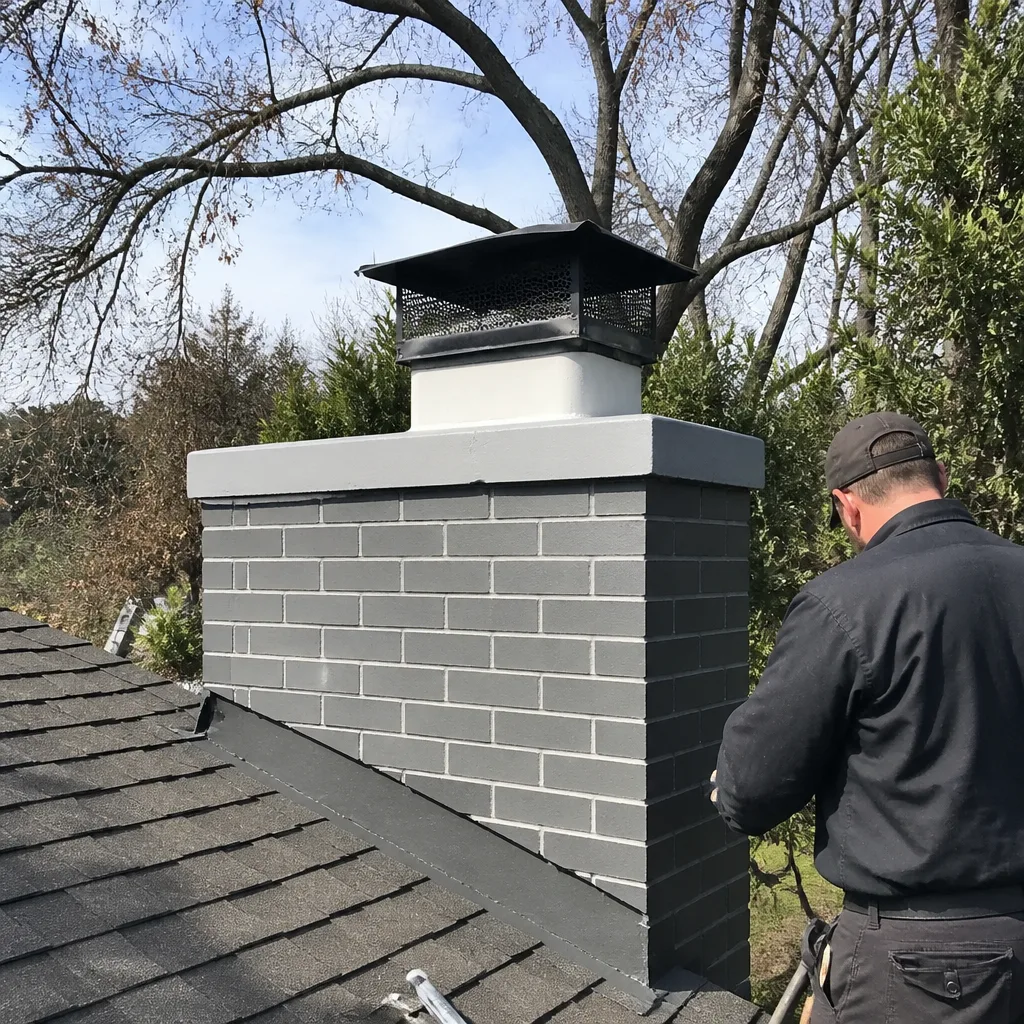
- Ignoring the chimney cap. A missing or rusted cap lets moisture into the flue year-round, and in Pocket’s fog season that’s an open invitation. Cap replacement is cheap compared to liner repair.
- Assuming a gas fireplace needs no maintenance. Gas produces acidic condensate that eats at metal flues over time. Inspect it annually, even if it doesn’t need sweeping.
- Accepting a repair quote without camera evidence. If a sweep says you need a new liner and won’t show you the camera footage, get a second opinion. A professional shows their work.
See the difference
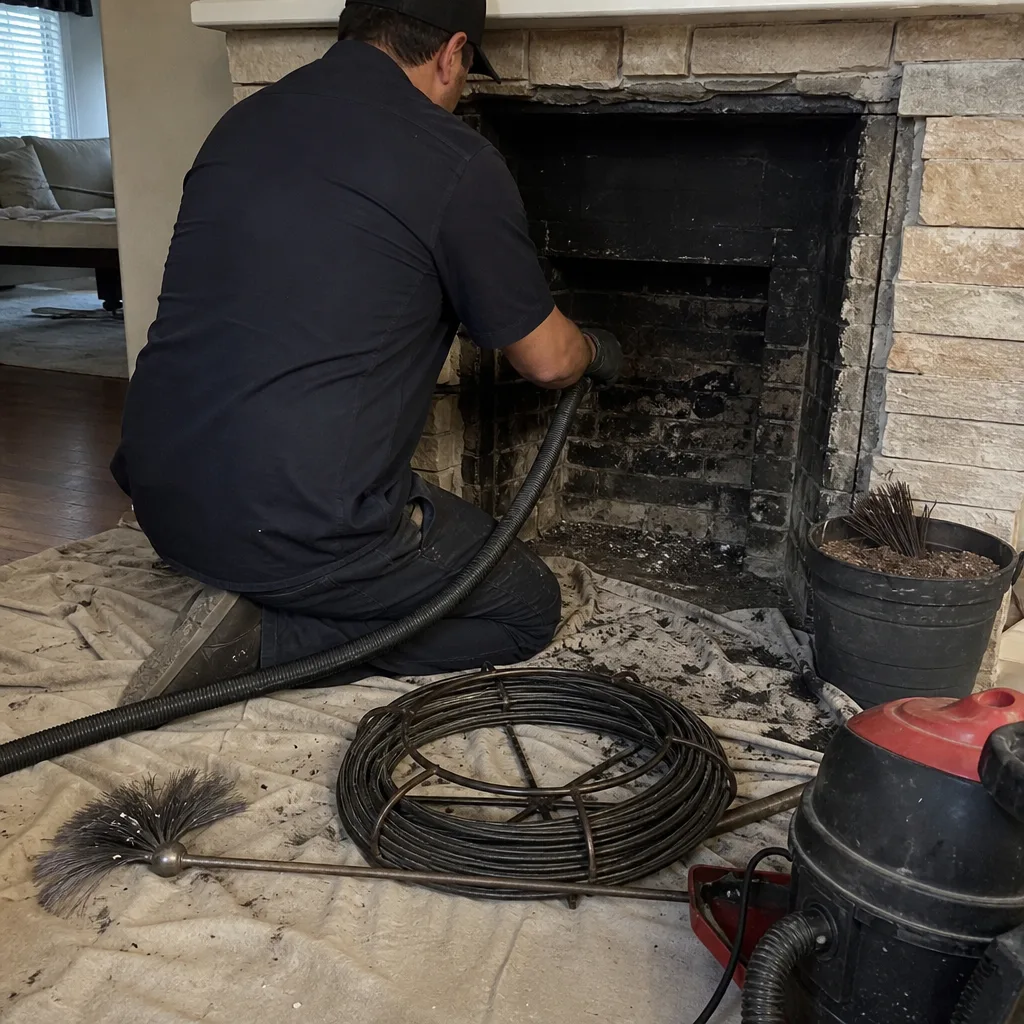 Before
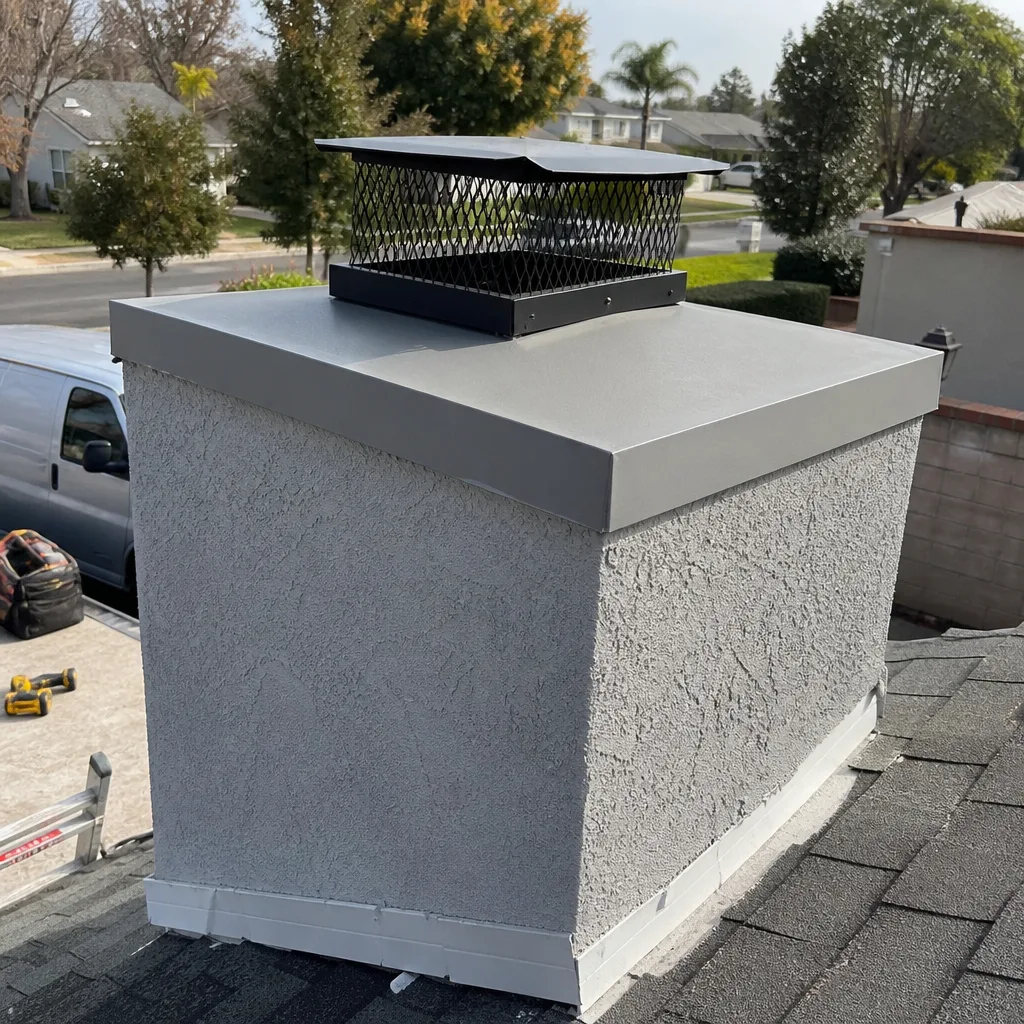 After
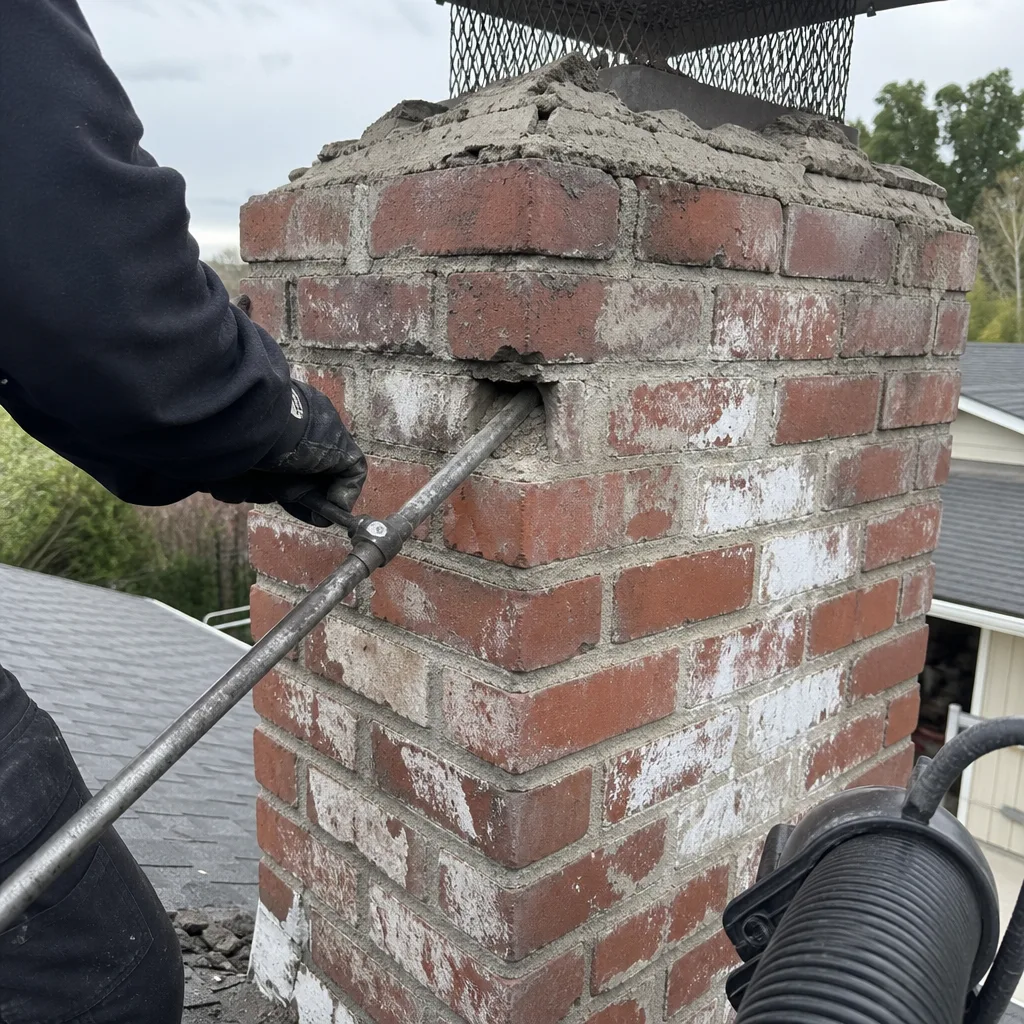 Before
 After
 Before
 After
When to Call a Professional
Call a chimney professional if you see black, shiny glaze on the flue walls, if smoke drifts into the room instead of up the chimney, if you smell a campfire-like odor on humid days, or if you notice water stains on the ceiling near the chimney. These are signs of creosote buildup, draft problems, or liner damage, and none of them improve on their own. If you’ve bought a Pocket home with an unknown sweep history, call before lighting the first fire. If your dryer takes two cycles to dry a load, call for a vent cleaning before lint reaches the point of ignition. Meadow Chimney Sweep offers free estimates in Pocket. For more guides & resources, visit our blog. Call (855) 943-1461 and we’ll walk the chimney with you, show you the camera feed, and give you an honest assessment of what needs doing now and what can wait.
Frequently Asked Questions
A standard chimney sweep with a Level 1 inspection in Pocket typically costs $185 to $350, while a sweep with a camera-assisted Level 2 inspection runs $285 to $450. The exact price depends on flue condition, roof access, and whether you have a clay tile or stainless liner. Call (855) 943-1461 for a free estimate specific to your home.
Yes, the inspection part is annual even if the sweeping happens less often. Pocket’s tule fog keeps humidity high for months, which lets creosote bond more aggressively than it would in a dry climate. Irregular burning adds thermal cycling stress, so annual inspection with sweeping every 18 to 24 months is a reasonable rhythm for low-use fireplaces.
A standard sweep removes creosote and includes a visual inspection of accessible chimney parts. A Level 2 inspection adds a video camera scan of the flue interior, revealing liner cracks, hidden gaps, and glazed creosote that a visual check can’t see. Older Pocket homes, new purchases, and chimneys with unknown history are the strongest candidates for a Level 2.
It might. Homes built in the 1950s through 1970s in Pocket often have original clay tile liners, which crack over decades of heating and cooling. Pocket’s humidity accelerates deterioration once cracks appear. A camera inspection will tell you whether your clay liner is intact or needs repair or replacement.
Creosote accumulates in stages, eventually forming a hardened glaze that’s concentrated fuel. At that point, a chimney fire becomes a real possibility, and the acidic creosote has likely been degrading your liner for months or years. The repair bill grows while the system deteriorates. Call (855) 943-1461 and we’ll show you what’s inside your flue before it gets to that stage.
Both. We’re a full-service chimney and venting operation, so when a sweep uncovers a broken damper, a cracked liner, or a missing cap, the repair can happen on the same visit. We work with professional-grade materials from brands like Copperfield, Gelco, and Olympia Chimney, the same products certified chimney technicians use across the country.
The Bottom Line
Pocket’s fog and humidity make chimney maintenance a different equation than it is in drier parts of Sacramento. Creosote absorbs moisture during tule fog season, liners crack faster once defects appear, and irregular seasonal burning adds stress that daily-burning guides don’t account for. The annual sweep, ideally scheduled in late summer or early fall, is the single highest-value maintenance item for a wood-burning Pocket home. A camera-assisted Level 2 inspection on older homes with clay tile liners isn’t an upsell; it’s the only way to see what’s actually happening inside the flue. And when the sweep uncovers a problem, one call should cover both the diagnosis and the fix. Meadow Chimney Sweep provides chimney sweeping, repair, and dryer vent cleaning in Pocket. Call (855) 943-1461 for a free estimate.
Written by the team at Meadow Chimney Sweep, serving Pocket since 2018.