
Last updated November 2, 2026
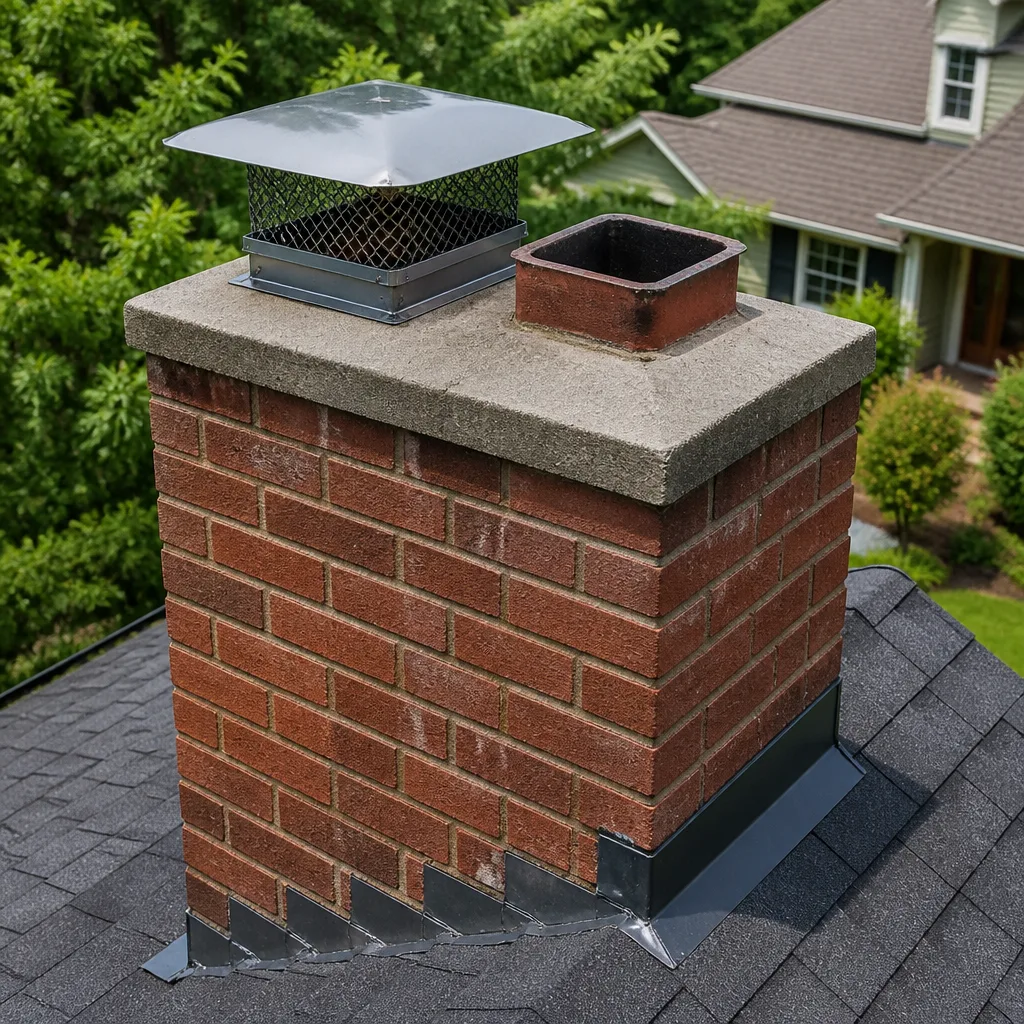 Sweep & inspection
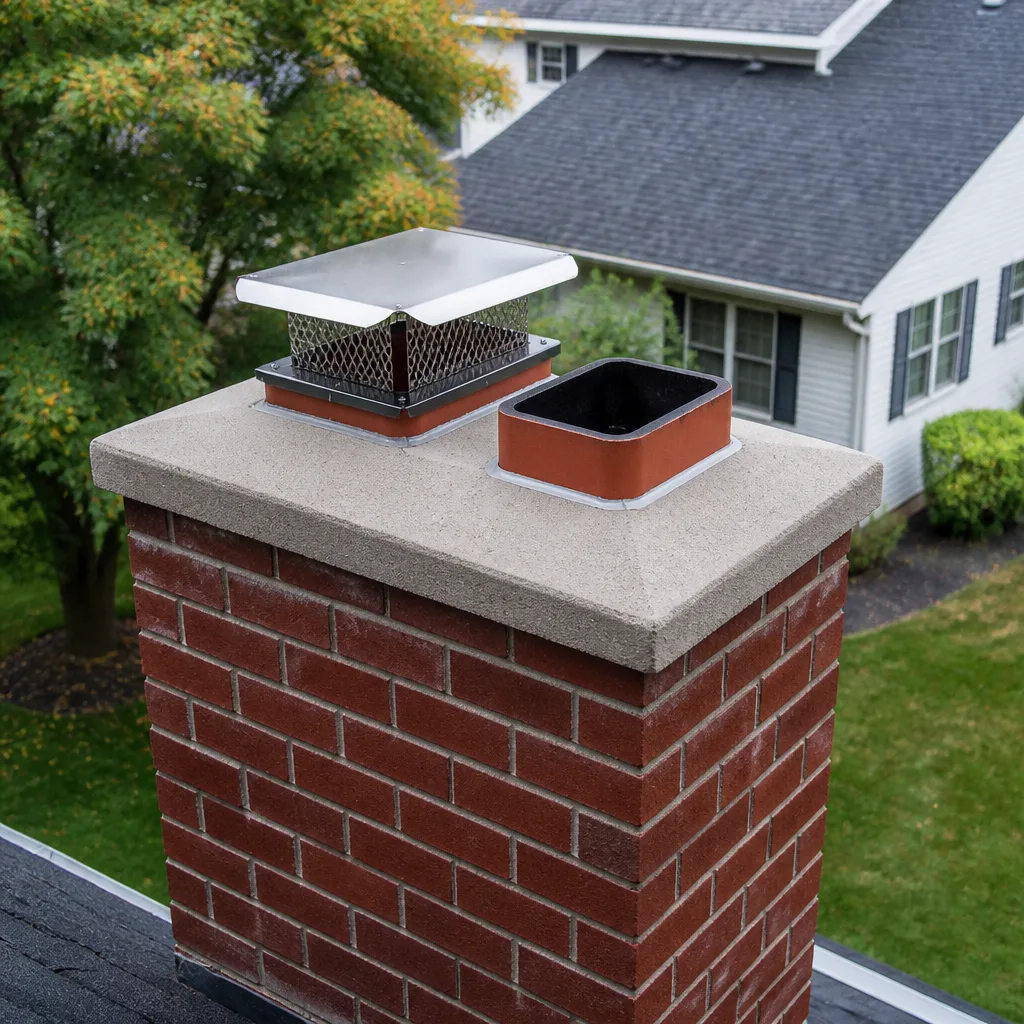 Caps & crowns
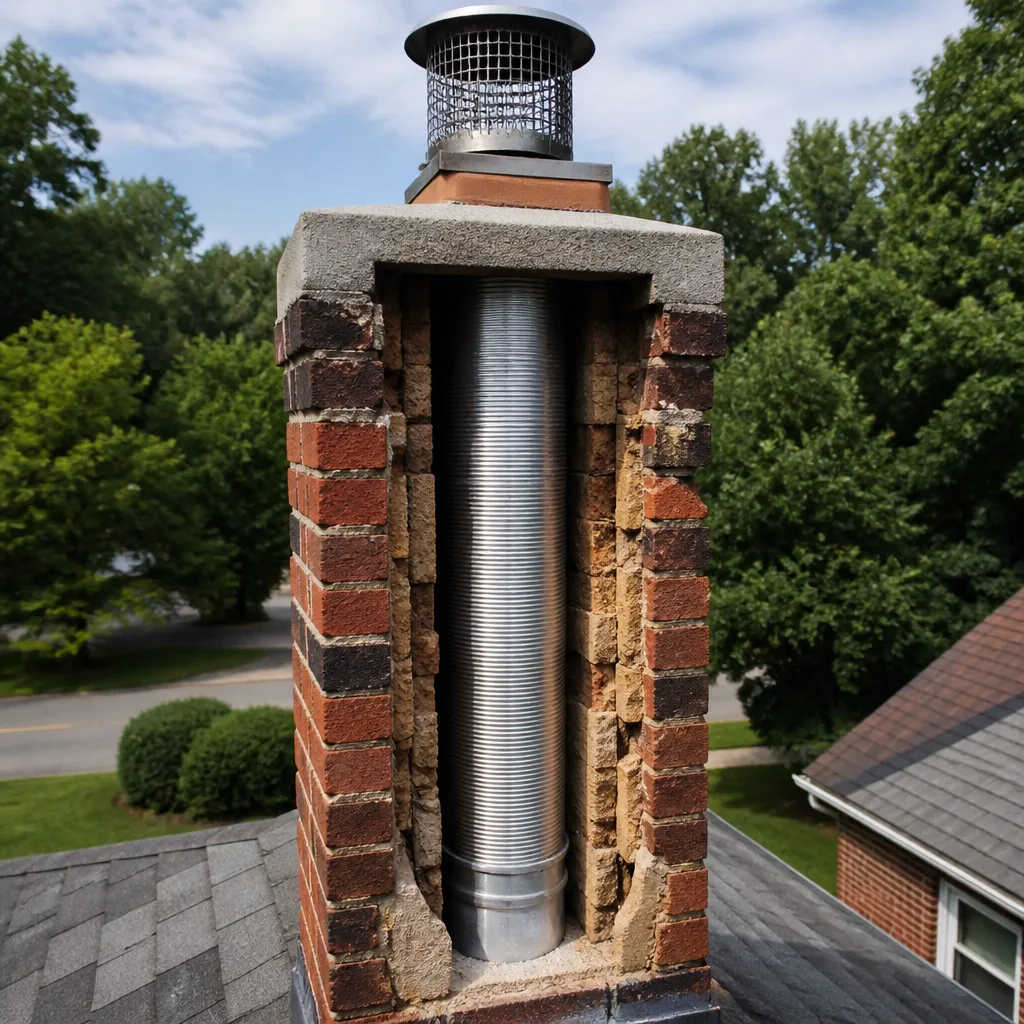 Flue relining
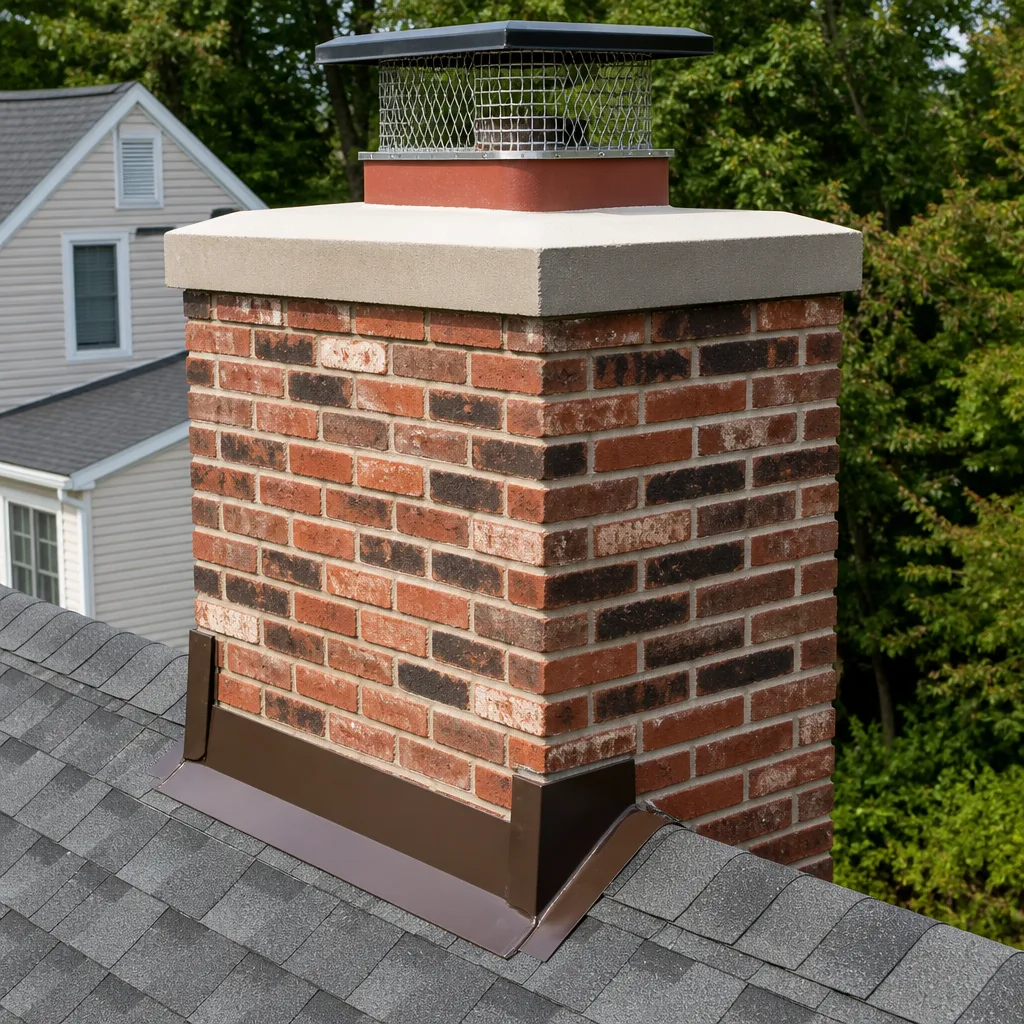 Masonry repair
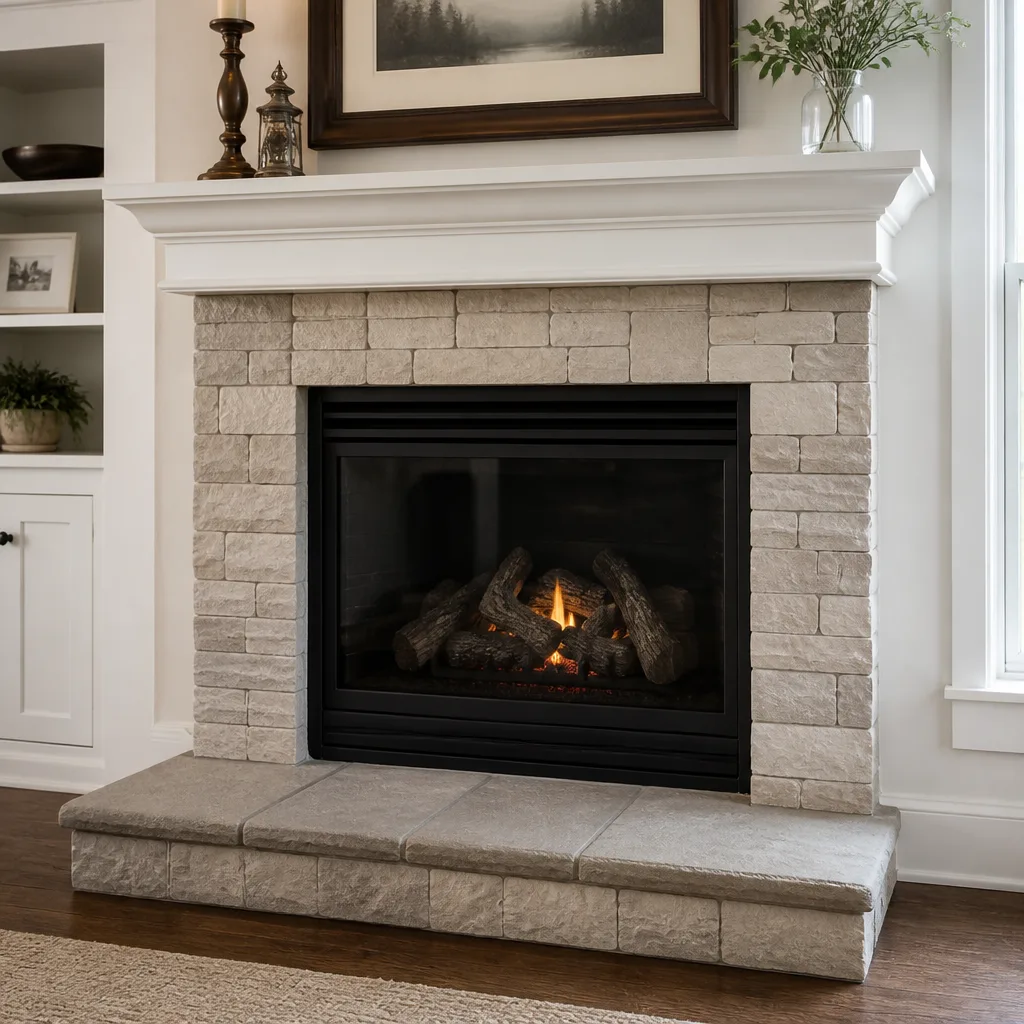 Gas fireplace service
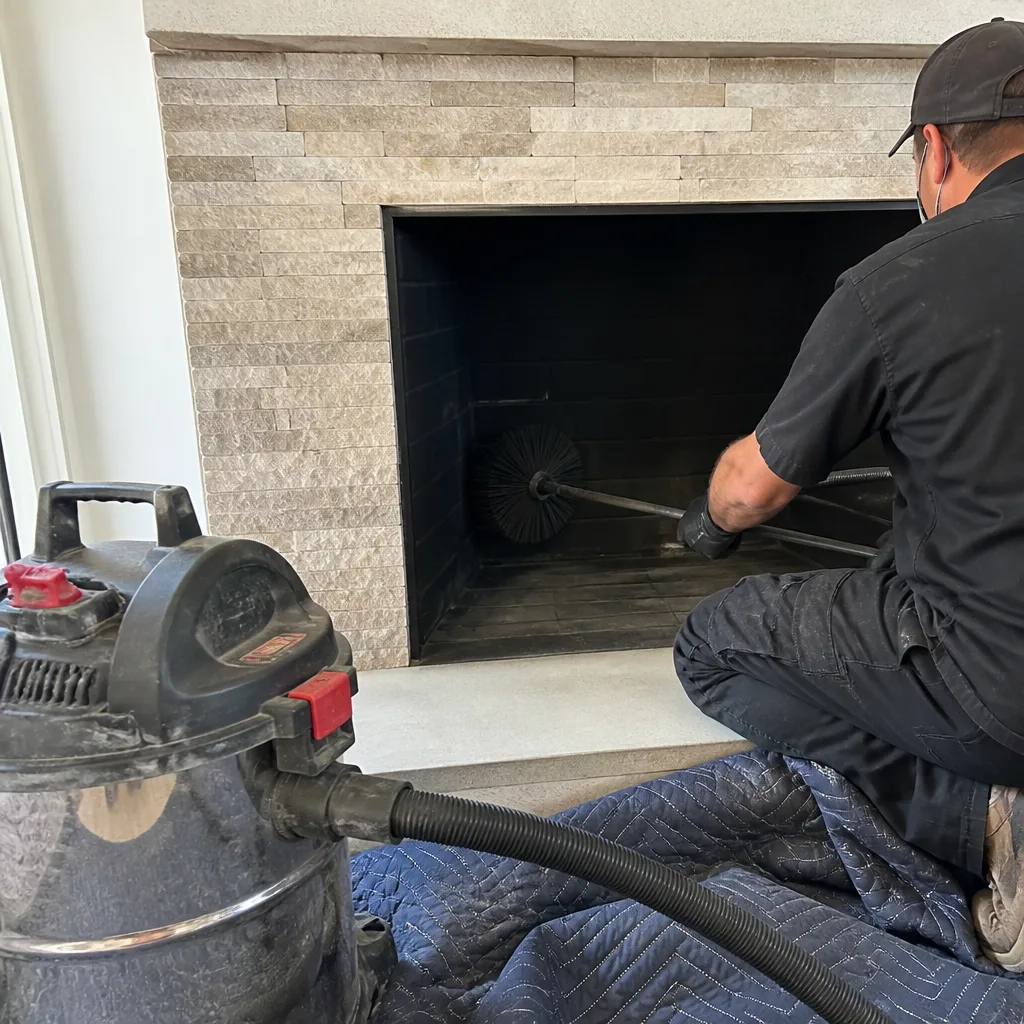
Level 1 sweep and inspection to the NFPA 211 annual standard - flue, crown, cap, and flashing checked and photographed
Chimney sweep logs do not sweep chimneys. They loosen some creosote - which then falls where a brush and vacuum still have to collect it.
Chimney Cleaning Warning Signs: A Pocket Homeowner’s Reference Guide
A correctly functioning chimney should be nearly invisible. No odor. No smoke in the room. No sounds. No stains creeping through the drywall. If you notice your chimney at all while it’s operating, something is already wrong. The problem is that most guides focus on late-stage symptoms, the dramatic ones, visible smoke billowing into the living room or a strong campfire smell in July. By then you’re not catching a problem; you’re responding to one. This guide is different. We’re going to cover the early, subtle indicators that homeowners in Pocket can recognize months before a nuisance becomes a hazard or a four-figure repair bill. You’ll learn what white staining on exterior brickwork actually means, how to tell the difference between a slow draft and a blocked flue without getting on the roof, what specific sounds warrant immediate action, and how to classify every warning sign as either “schedule a cleaning” or “do not use this fireplace until we inspect it.”
Styles & brands we work with
- Sweep & inspection
- Caps & crowns
- Flue relining
- Masonry repair
- Gas fireplace service
Quick Answer
The earliest warning signs your chimney needs cleaning in Pocket, CA are often invisible: a musty odor when the fireplace isn’t in use, white staining on exterior masonry, a fire that burns sluggishly or needs constant tending, or a faint acrid smell that lingers after the fire is out. Most of these show up long before visible smoke enters the room. For a complete rundown of what to watch for, see our Chimney Sweep Maintenance Checklist for Pocket Homeowners. The most reliable rule: if you noticed anything at all about your chimney this week, it’s worth a phone call.
Table of Contents
- The Invisible Standard: What a Healthy Chimney Should Do
- Smoke Signals: Reading What’s Coming Out of Your Flue
- Odor Types: Musty vs. Acrid vs. Exhaust-Like
- White Staining on Brick: Efflorescence and What It Means
- Sounds: Popping, Crackling, and Animal Noise
- Slow Draw vs. Blocked Flue: How to Tell Without Going on the Roof
- Urgency Classification: Schedule Soon vs. Do Not Use
- Common Mistakes to Avoid
- When to Call a Professional
- Frequently Asked Questions
- The Bottom Line
The Invisible Standard: What a Healthy Chimney Should Do
A healthy chimney does its job without announcing itself. When you light a fire in a Pocket home, the flue should draw smoke upward and out. That’s the entire job. No smoke in the room, no smell, no sounds, no visible anything. The fire burns cleanly, the room warms, and you never think about the chimney again. That invisibility is the standard. It’s not aspirational. It’s what properly functioning venting does. When we sweep a chimney that’s in good condition, the homeowner typically reports the fire “felt fine” and they only scheduled the cleaning because they knew it was time. That’s the baseline. Anything that deviates from that baseline, even slightly, is information. A faint smell you catch only when you walk past the fireplace on a humid morning. A fire that needs more kindling than usual to stay lit. A noise you noticed once and then forgot about. These aren’t quirks. They’re your chimney communicating. The homes in Pocket, many of them built decades ago, have masonry chimneys that have been through dozens of Sacramento Valley summers and wet winters. That cycle, heat expansion and contraction, moisture absorption and drying, slowly works on mortar joints and flue liners. The chimney that was invisible twenty years ago may not be invisible now. The good news is that most of the early warning signs are easy to spot once you know what you’re looking for. You don’t need any tools. You don’t need to climb anything. You just need to pay attention.
What “Normal” Looks and Sounds Like
When a fire is burning well, you should hear the sound of combustion, soft crackling from the wood, maybe a low rush of air moving up the flue. You should not hear popping sounds from inside the chimney structure. You should see flames in the firebox and nothing else. No smoke haze in the room. No dark streaks forming on the mantel or ceiling above the fireplace. After the fire is out and the ash has cooled, there should be no lingering smell. The next morning, the room should smell like the rest of the house. If any of this doesn’t describe your fireplace, keep reading.
Smoke Signals: Reading What’s Coming Out of Your Flue
Smoke is the most obvious information source, but most homeowners read it wrong. The question isn’t just “is there smoke in the room?” It’s what the smoke is doing, when it appears, and what it looks like. In Pocket, where winter fires are common but not constant, a chimney can develop creosote deposits gradually over a season. Creosote is the byproduct of incomplete wood combustion, a sticky or flaky residue that clings to the flue walls. It’s flammable. It’s also the primary reason chimneys need regular cleaning. As creosote builds up, the flue diameter effectively shrinks. The draft weakens. Smoke that used to flow out smoothly starts to linger, swirl, or back up into the room.
Smoke in the Room at Startup
If smoke enters the room when you first light the fire but then clears as the fire gets going, that’s a draft problem, not necessarily a blockage. Cold air sits in the flue and creates a plug. The warm rising air from the kindling can’t overcome it. This is common in Pocket on cold mornings when the house is cold and the chimney is colder. But if it happens every time, or if you find yourself opening a window to get the fire going, the chimney needs attention. For help diagnosing the cause, see our Chimney Sweep Troubleshooting: Common Problems and How to Fix Them. It could be creosote buildup, but it could also be a flue liner that’s deteriorated, or a chimney cap that’s partially blocked with leaves or a bird nest.
Smoke That Seeps Out Slowly During the Fire
This is more concerning. If the fire is well established and you still see thin wisps of smoke drifting into the room around the edges of the hearth, the flue isn’t moving enough air. The cause is often significant creosote buildup or an obstruction. In our experience with chimney sweep work in Pocket, slow seeping smoke during an active fire is one of the most reported symptoms before a cleaning reveals heavy buildup. It means the flue has narrowed to the point where normal draft can’t keep up. This is a do-not-use situation until the chimney is inspected.
Smoke Packing Down into the Room When You Open the Door
On a stove insert, if opening the door to add wood sends smoke into the room, the draft is marginal. The chimney is moving just enough air to handle closed-door operation, but it has no reserve capacity. This is extremely common with dry, seasoned hardwood fires that produce heavy smoke early on. The fix isn’t always a cleaning; sometimes it’s the ceiling height, a nearby exhaust fan, or a home that’s too tightly sealed. But in a masonry chimney in Pocket, the first thing to check is creosote accumulation. We’ve seen stoves with this symptom run beautifully after a thorough sweep, because the flue was simply working at partial capacity.
Odor Types: Musty vs. Acrid vs. Exhaust-Like
Your nose is a surprisingly precise diagnostic tool when it comes to chimneys. The key is learning to distinguish between three distinct odor profiles. Each one points to a different underlying cause, and the urgency is different for each. We’re not being dramatic when we say that a homeowner who can describe the smell accurately over a phone call will get a more useful answer than one who just says “my fireplace smells.”
Musty or Damp Smell
A musty smell, like a basement or old leaves, points to moisture. Moisture in the flue. Moisture in the masonry. Moisture trapped in a layer of creosote. In Pocket, the damp winter months make this worse. A musty chimney smell often intensifies after rain or on humid days because water is penetrating somewhere and sitting. The source might be a cracked chimney crown, damaged flashing, porous brick, or a missing chimney cap. What’s happening is that moisture is mixing with creosote and soot inside the flue, and that mixture has a distinct odor that seeps into the house. A musty smell is a schedule-a-cleaning-soon situation. It’s not an emergency, but it won’t fix itself, and the moisture is slowly degrading whatever it touches.
Sharp, Acrid Smell During or After a Fire
This is the smell of creosote. It’s sharp, slightly chemical, and it can linger for days after the fire is out. Newer creosote has a tarry smell. Older, hardened creosote is more subdued but still distinct. If you smell acrid sharpness every time you use the fireplace, or if you smell it on hot days even when the fireplace hasn’t been used in months, the creosote layer is substantial. It’s not just a cleaning issue; it’s a fire risk. Creosote is combustible. Stage-three glazed creosote, which looks like a shiny black coating on the flue walls, burns intensely and is notoriously difficult to remove with standard brushes. If the smell is strong enough that you notice it from across the room, the chimney needs professional attention sooner rather than later.
Exhaust-Like or Gas Odor
An exhaust smell, like a car running in the garage, is a different animal. It suggests combustion gases are not venting properly. On a wood-burning fireplace, this might mean a partial blockage or a backdrafting issue. On a gas fireplace, it’s more urgent. Gas appliances produce carbon monoxide, which is odorless, but they also produce other combustion byproducts that do have a smell. If you smell exhaust-like odors from a gas fireplace, turn the unit off and don’t use it until a professional inspects the venting. This is one of the rare do-not-use-until-inspected situations on this list. The team at Meadow Chimney Sweep home would rather take a cautious call any day than have you take a chance on gas venting.
White Staining on Brick: Efflorescence and What It Means
If you’ve noticed a white, chalky film on the exterior of your chimney, you’re looking at efflorescence. That’s not a type of mold or paint failure. Efflorescence is a mineral deposit. Water enters the masonry somewhere, dissolves salts naturally present in the brick and mortar, migrates through the structure, and evaporates on the surface, leaving the salts behind. It’s a sign, not a disease. The disease is water penetration. The white staining is your chimney’s way of showing you exactly where moisture is moving through the masonry. In Pocket, where we get meaningful rain in the winter and hot dry summers, efflorescence tends to appear after a wet season. Many homeowners brush it off as cosmetic. It’s not. Persistent efflorescence means water is inside the chimney structure, and that water is doing work. It’s eroding mortar joints. It’s attacking the flue liner. It’s oxidizing any metal components. And when a chimney holds moisture inside the flue, creosote absorbs it and becomes heavier, more corrosive, and more odorous. The fix starts with finding the water entry point, often the crown, flashing, or cap, then addressing the moisture path. In some cases, a chimney with significant efflorescence is also a candidate for interior repair. That’s why we approach chimney repair in Pocket as a diagnostic process, not just a patch-up. White staining on the outside is often the earliest visible clue that something inside is wrong. It’s a schedule-soon situation, but not typically a do-not-use emergency on its own.
What Makes Efflorescence Worse
- Missing or cracked chimney cap: Rain falls directly into the flue and soaks the interior, increasing mineral migration to the surface.
- Failed flashing: The metal seal where the chimney meets the roof degrades over time, letting water run down the outside of the chimney and into the mortar joints.
- Soft, porous brick from old age: Older Pocket homes often have softer brick that absorbs water more readily than modern fired clay.
- Extended wet seasons: Consecutive weeks of rain give masonry no chance to dry out, and efflorescence blooms.
Sounds: Popping, Crackling, and Animal Noise
Most people don’t think of a chimney as something that makes noise when it’s not in use, but the sounds you hear can tell you a lot. There are three categories we hear about from homeowners in Pocket, and each one warrants a different response.
Popping or Clicking Sounds During a Fire
Wood pops. That’s normal. What we’re talking about is a sharper, more metallic popping or clicking sound that seems to come from inside the chimney structure, not from the firebox itself. This is often the sound of metal expanding and contracting, a damper assembly, a flue liner, a stove pipe. Metal components in a chimney system heat up and cool down at different rates than the surrounding masonry. Some expansion noise is harmless. But if the popping is new, or getting louder, or accompanied by smoke or odor, it can indicate a liner that’s warping, or a metal component that’s fatiguing. In houses built with original clay tile liners, a loud pop can sometimes mean a tile has cracked. A cracked clay liner is a do-not-use situation until it’s inspected. Combustion gases and heat can reach the surrounding structure through a cracked liner, and that’s how chimney fires start.
Crackling Sounds Between Fires
Hearing crackling or rustling sounds when the fireplace is cold is a different matter entirely. That’s often an animal. Birds, squirrels, and raccoons all find chimneys attractive. A chimney cap that’s missing or damaged is an open invitation. Birds build nests in flues, and a nest is both a blockage and a fire hazard. Squirrels can get into the chimney chase and build nests in dead spaces. Raccoons, less common in Pocket but not unheard of, can have babies in a chimney and become aggressive when separated. The sound to listen for is movement or scratching, especially in the morning or evening. Animal intrusion is a schedule-soon situation, but if the animal is active, don’t light a fire. You risk burning the animal, igniting the nest, and filling your house with smoke.
Rushing Air or Whistling Sounds
A chimney that whistles when the wind blows, or that produces a noticeable air movement sound even when the damper is closed, has an air leak somewhere. It might be a damper that doesn’t seal fully, a cleanout door that’s loose, or a gap around the flue. The problem with continuous air leakage is that it pulls conditioned air out of your house all winter, and it brings exterior air, and sometimes exterior odors, into your living space. A whistling chimney is not dangerous on its own, but it’s a sign that your venting system has openings that shouldn’t be there. It’s worth getting looked at.
Slow Draw vs. Blocked Flue: How to Tell Without Going on the Roof
This is the most useful diagnostic distinction we can teach you. A slow-draw draft and a blocked flue are different problems with different urgency levels, and telling them apart doesn’t require a ladder. Here’s how to do it from inside your living room.
- Check the smoke’s behavior at startup. Light a single sheet of newspaper rolled into a torch and hold it up inside the firebox, near the damper. If smoke wavers, hovers, or drifts into the room, the flue isn’t drawing. That’s a slow draft, possibly caused by a cold chimney, but it should improve as the chimney warms. If the smoke pours back into the room immediately and thickly, the flue is blocked or the damper isn’t opening.
- Look at how the fire burns once it’s established. A slow-draw fire burns, but not well. You have to tend it more, add kindling, maybe crack a window. A blocked flue fire doesn’t just burn poorly, it actively pushes smoke into the room at every opportunity. The distinction is the difference between a chimney that’s underperforming and one that’s not performing at all.
- Do the daylight test. With the damper open and a flashlight aimed up the flue, you should be able to see light at the top, a small patch of sky. If you can’t see daylight at all, there’s an obstruction. If you see light but the flue looks narrow or darkly coated, that’s creosote buildup.
- Check the chimney cap from the ground. Use binoculars. Look for visible nesting material, a leaning cap, or dark staining around the top. A blocked cap screen is enough to choke a draft.
The key distinction: a slow draft is usually a buildup problem that warrants scheduling a cleaning. A blocked flue is a do-not-use-until-inspected condition. And if you can’t tell which one you have, treat it as a blocked flue. The cost of being wrong isn’t worth it.
Urgency Classification: Schedule Soon vs. Do Not Use
One of the most practical things we can give you is a framework for deciding what to do with the warning signs you’ve identified. Not every issue is an emergency. In fact, most are not. But some are, and knowing the difference keeps you safe and prevents expensive damage.
Schedule a Cleaning Soon
- Musty smell that comes and goes with the weather. Indicates moisture; worth addressing before it becomes structural.
- Faint acrid odor after fires, but no smoke in the room. Creosote is present and building.
- Slow-draw draft with occasional smoke at startup. Flue is narrowing, but still partially functional.
- White efflorescence on exterior brick. Moisture is entering masonry; needs diagnosis before it worsens.
- Animal sounds in the chimney, but no recent fire use. The animal needs to be handled humanely before the next fire.
- Whistling or air movement when the fireplace is unused. An air leak that should be sealed, but not urgent in the moment.
Do Not Use Until a Specialist Inspects
- Smoke entering the room during an established fire. The flue isn’t venting; combustion gases are in your living space.
- Exhaust-like or gas odor from any fireplace or stove. Carbon monoxide risk is not something to guess about.
- Loud popping from inside the chimney structure during a fire. Potential cracked liner or metal fatigue.
- A suspected animal nest, especially if the animal is active. The nest is both a blockage and a fire accelerant.
- Visible sparks or embers exiting the chimney top. This can indicate a chimney fire in progress.
Our general rule at Meadow Chimney Sweep is simple: if you’re unsure which category you’re in, stop using the fireplace and call. A specialist can often tell you over the phone whether it’s safe to use or not. Guessing wrong has consequences that range from smoke-damaged furniture to a structure fire. We’d rather talk to you today and book a sweep for next week than hear about a scare next month.
Common Mistakes to Avoid
- Burning “chimney cleaning logs” instead of having the chimney actually swept. These products loosen some creosote, but they don’t remove the buildup. They can actually make things worse by causing loose, glazed creosote to fall and pile up at the base of the flue, creating a new obstruction. In Pocket homes where such logs have been used regularly, we often find heavy deposits that never left the chimney.
- Ignoring a smell because it’s “not that bad.” Odor is your earliest warning. By the time a smell becomes impossible to ignore, the problem has had weeks or months to compound.
- Leaving the damper open when the fireplace is not in use. An open damper is a direct line between your house and the outdoors, pulling conditioned air out and letting moisture, dust, and animal sounds in. It’s a small thing with a big cumulative effect on your comfort and your chimney’s health.
- Assuming a gas fireplace doesn’t need venting maintenance. Gas appliances produce carbon monoxide and water vapor. The venting still needs to be checked regularly. Gas flues get blocked too, and a cracked gas flue is dangerous.
- Waiting for visible smoke before calling a professional. Visible smoke is a late-stage signal. By the time you see it, the flue has been compromised for a while. The goal is to catch issues before they become visible.
- Using the fireplace to “burn off” something you know shouldn’t be in there. We’ve seen homeowners try to burn off what turned out to be a bird’s nest. That’s how you get a chimney fire. Don’t attempt to burn out an obstruction.
When to Call a Professional
Call a chimney specialist when you notice any odor that lingers after the fire is out, when smoke enters the room, when you see white staining on the exterior brick, when you hear animals or unusual sounds, or when you simply can’t remember the last time the chimney was swept. The National Fire Protection Association recommends annual chimney inspections and cleaning as needed. In Pocket, with our wet winters and variable fire use, an annual check is a sensible baseline. Some chimneys need more. Few need less. We work only with professional-grade materials, the same brands certified chimney technicians rely on nationwide, like DuraFlex and Copperfield, because we believe the materials matter as much as the hands doing the work. For guidance on selecting products, read our Choosing the Right Chimney Cleaning Brand: A Buyer’s Guide for Pocket. Meadow Chimney Sweep offers free estimates in Pocket. Call (855) 943-1461 to schedule an inspection, and you’ll know exactly what your chimney needs and what it doesn’t, without any pressure.
Frequently Asked Questions
A standard chimney sweep in Pocket generally falls between $150 and $300 depending on the chimney’s condition, the level of creosote buildup, and the accessibility of the roofline. A simple, well-maintained chimney on a single-story home costs less. A chimney with heavy glazing, an animal nest, or a steep roof pitch costs more because of the added time and safety equipment involved. The only way to get an exact number is to have the chimney looked at. Call (855) 943-1461 for a free estimate and flat-price quote before any work is booked.
The National Fire Protection Association recommends inspection and cleaning at least once per year for chimneys that are used regularly. A Pocket homeowner who burns fires three or four times a week during winter should plan on an annual sweep. Someone who uses the fireplace once a month might stretch that to eighteen months, but no longer. Creosote doesn’t care about your fire schedule; it accumulates whenever you burn wood, and it becomes more dangerous the longer it sits.
Creosote keeps accumulating until it either blocks the flue or ignites. A blocked flue pushes smoke, carbon monoxide, and combustion gases into your living space. An ignited creosote fire burns hot enough to crack flue liners, melt metal components, and spread to the roof structure. Those are the two failure modes: you either get smoke and gases in the house, or you get a chimney fire in the walls. Both are entirely preventable with regular cleaning.
In most cases, yes. A cracked flue liner can’t contain heat and combustion gases. The repair options range from a full stainless steel liner to a HeatShield resurfacing system, depending on the crack’s location and severity, but the one thing you can’t do is leave a cracked liner in service and pretend it’s fine. It’s the direct path for heat to reach combustible framing. Every decision about liner work at our shop is made with camera evidence; you’ll see the crack yourself before any work is recommended.
You can, but you shouldn’t, and here’s why: a proper chimney sweeping requires tools you don’t own, a roofline you have no reason to climb, and an understanding of what to look for while you’re up there. There are legitimate safety concerns around ladder work and high-tension chimney components. A trained professional is already equipped and already knows what dangerous buildup looks like. A DIY sweep removes some surface soot and often misses exactly the issues that needed attention. This is one of those jobs where the cost of a professional is cheaper than the cost of a mistake.
A thorough chimney sweep includes removing creosote from the flue and smoke chamber, checking the damper’s function, cleaning the firebox, and a visual inspection of the accessible chimney system. Our sweeps in Pocket include a camera inspection when indicated, and we document everything with photo reports. If we spot problems that need repair, we can handle them directly because we do chimney repair in Pocket as well. The goal isn’t just a clean flue; it’s a clear picture of the whole system’s health.
The Bottom Line
Your chimney should be invisible. That’s the test. If you smell it, hear it, see it staining, or notice it fighting back when you light a fire, it’s telling you something. The earliest signs, musty smells, faint acridity, slow drafts, white efflorescence, are your cheapest opportunities to intervene. Left alone, they become blocked flues, cracked liners, chimney fires, and repair bills that make a sweep look like pocket change. Pocket homeowners deal with a specific climate, wet winters and hot summers, that’s especially hard on masonry chimneys. Annual inspection is cheap insurance. If you haven’t had yours checked, start with a phone call. We’ll tell you honestly whether you need a sweep, a repair, or nothing at all. For more guides & resources, visit our blog. Call (855) 943-1461 and you’ll get a straight answer, a free estimate, and a specialist who does only chimneys and venting.
Written by the team at Meadow Chimney Sweep, serving Pocket since 2018.
See the difference
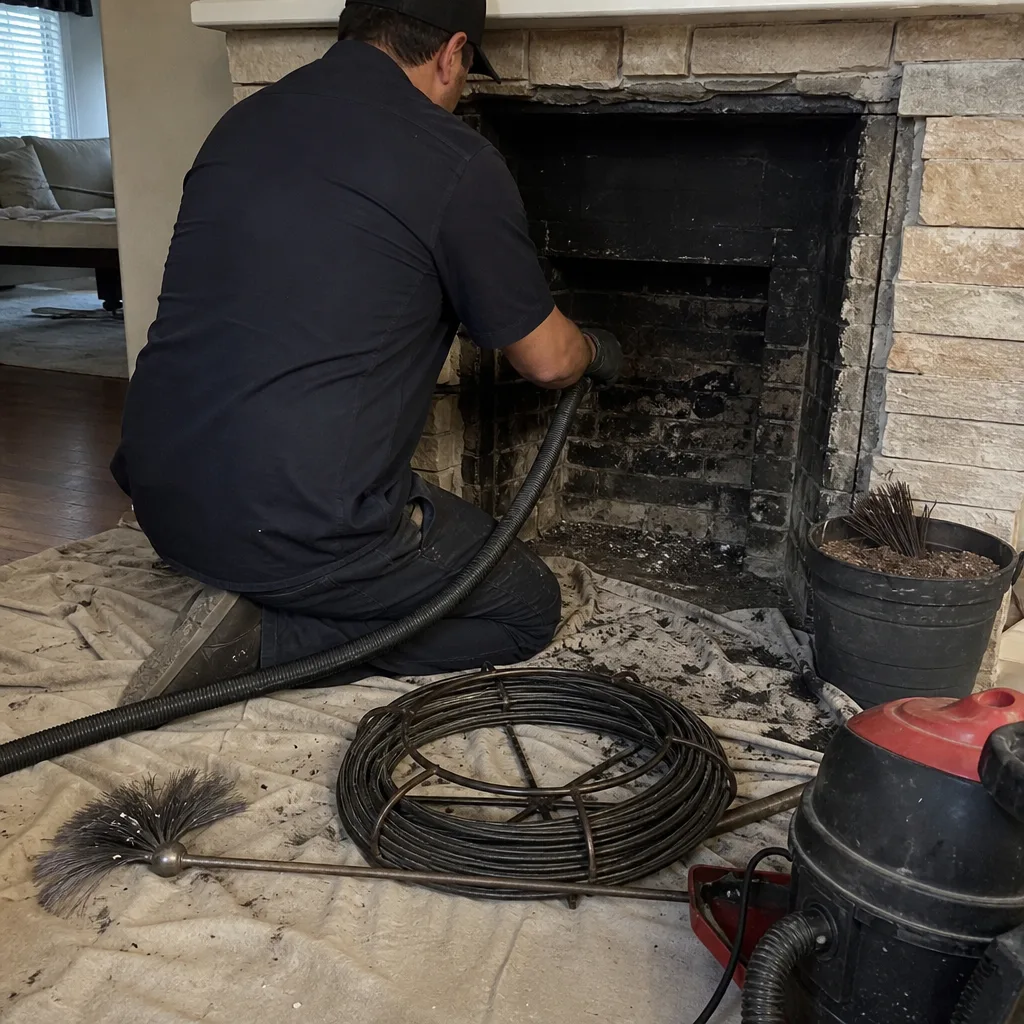 Before
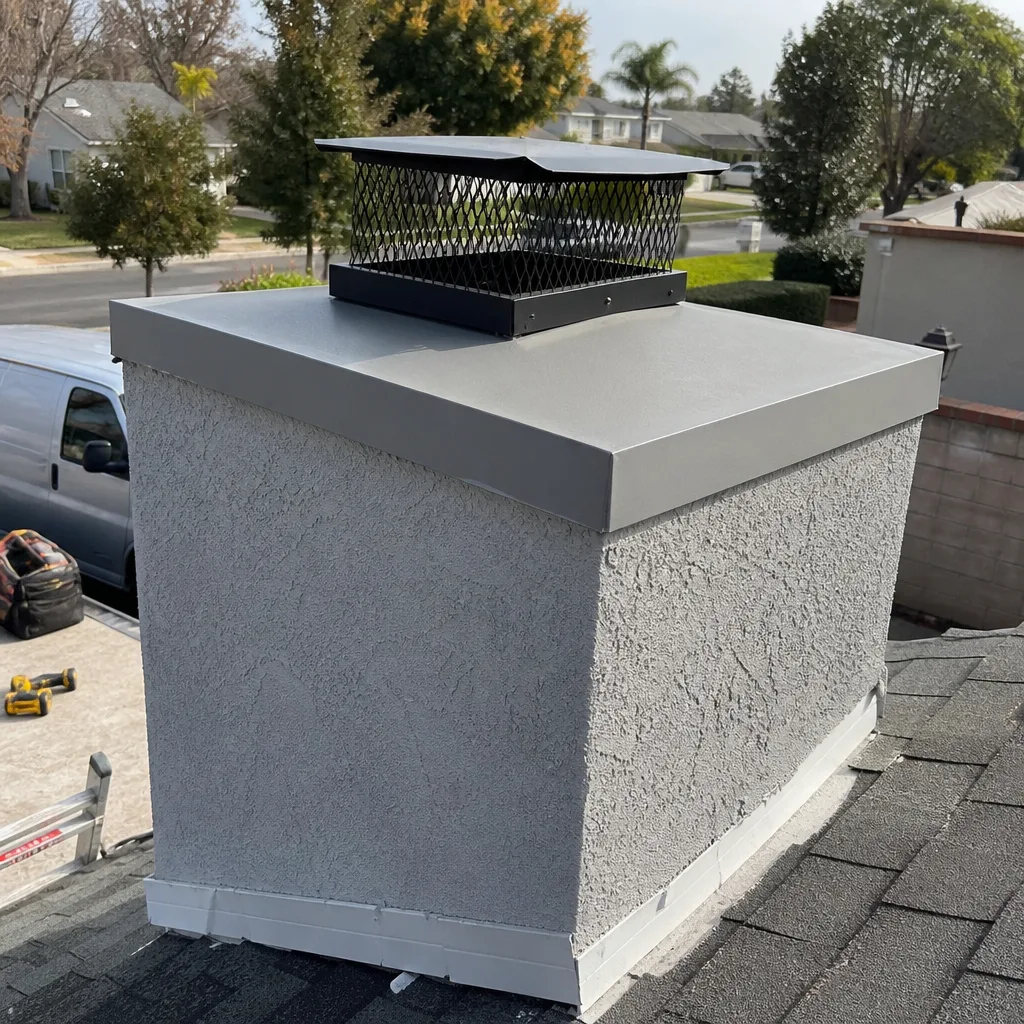 After
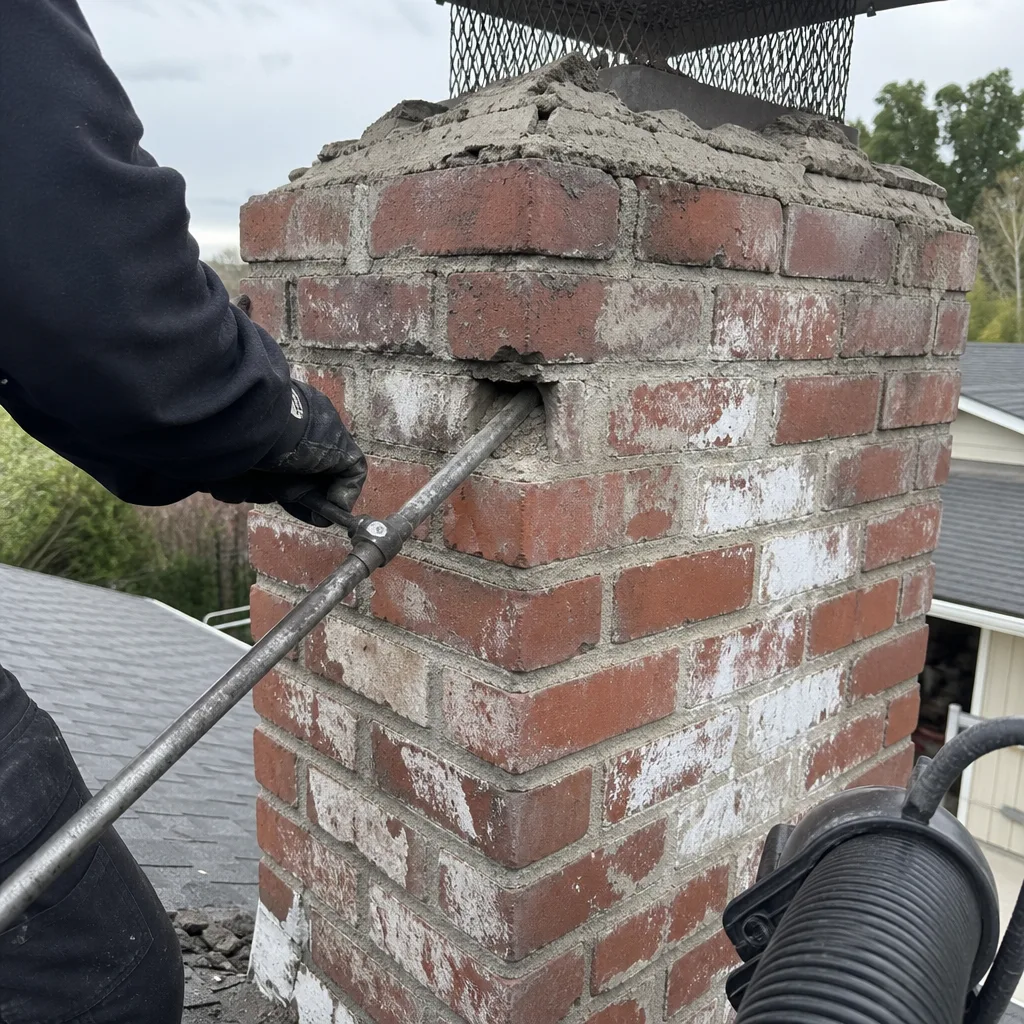 Before
 After
 Before
 After