
Last updated November 2, 2026
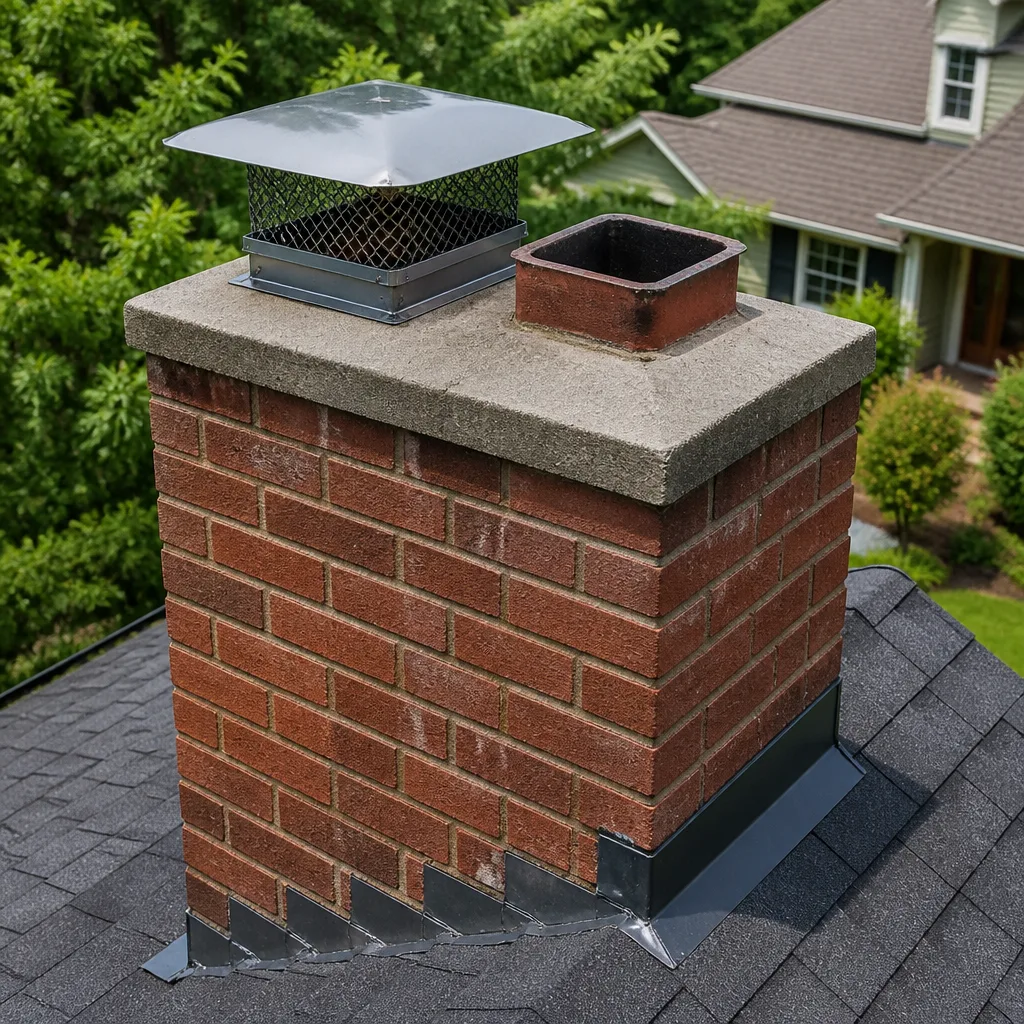 Sweep & inspection
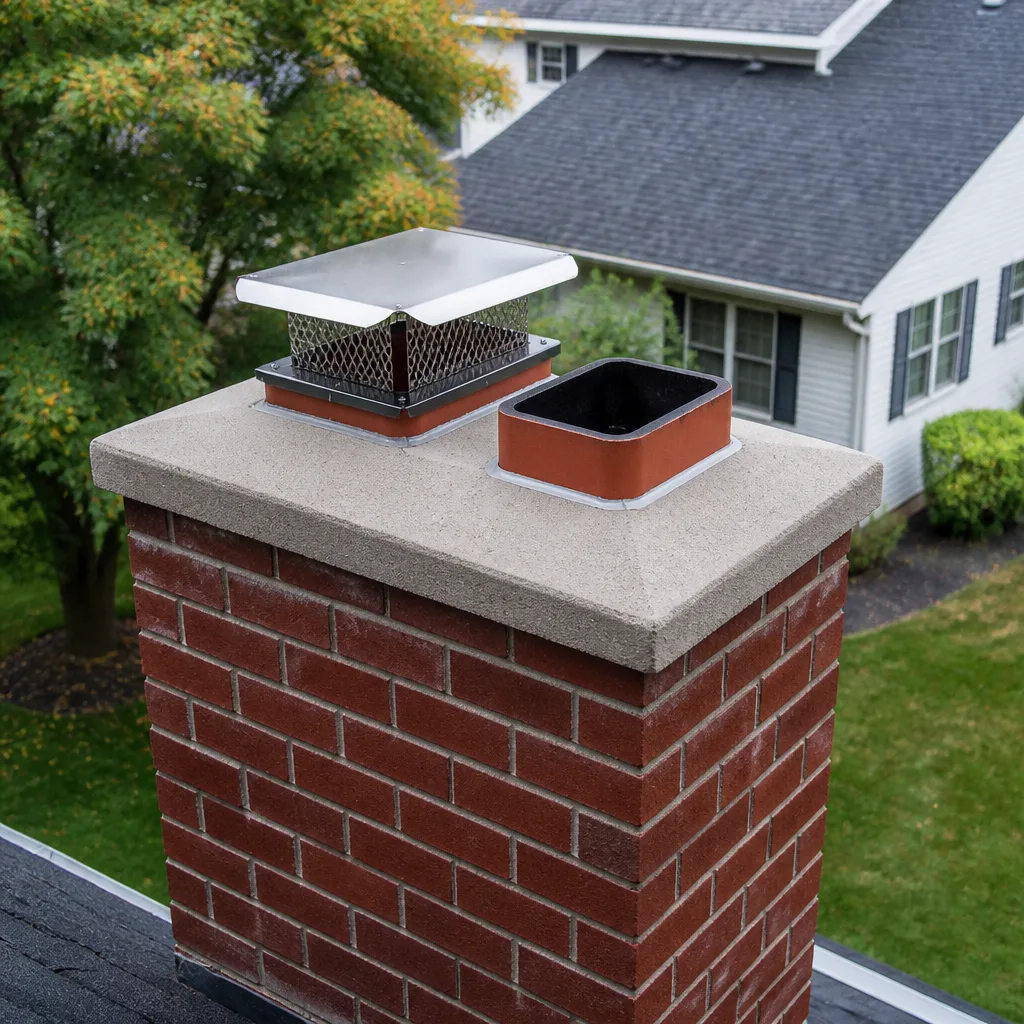 Caps & crowns
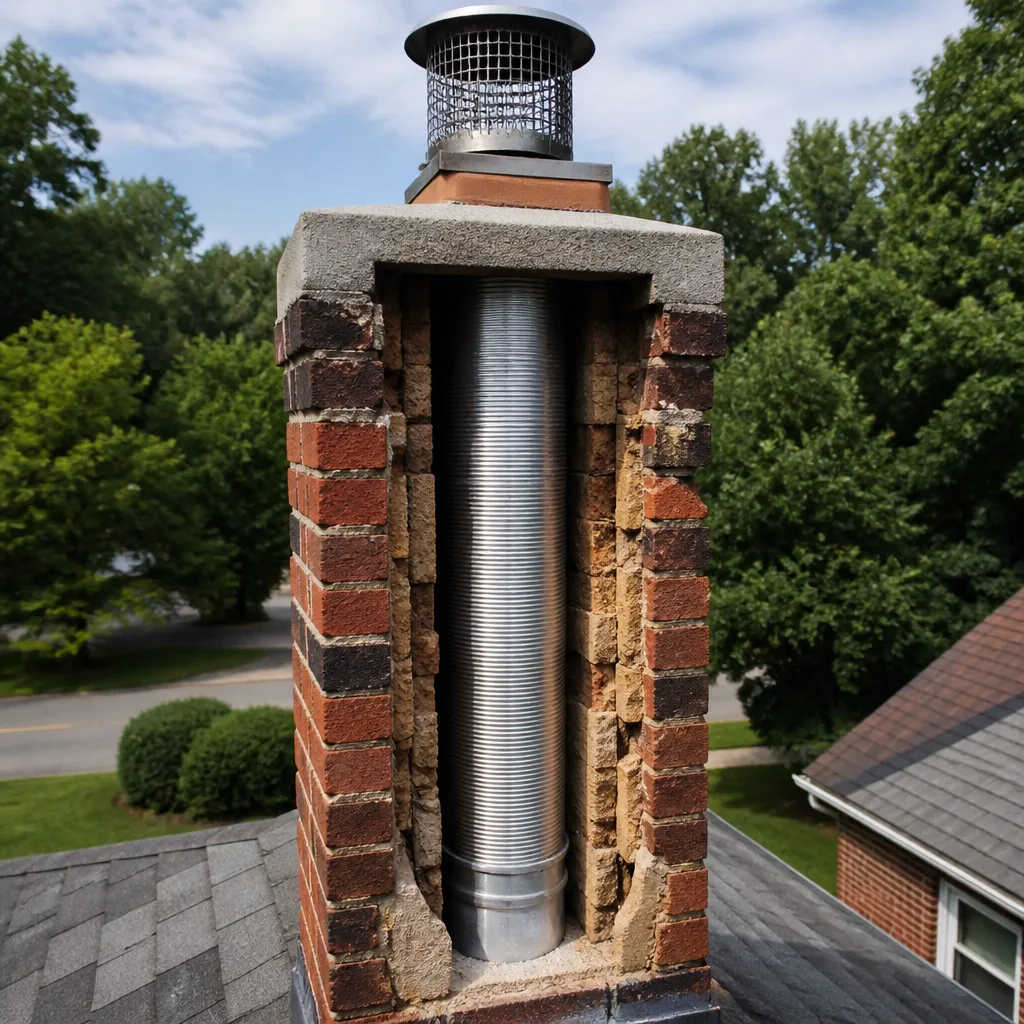 Flue relining
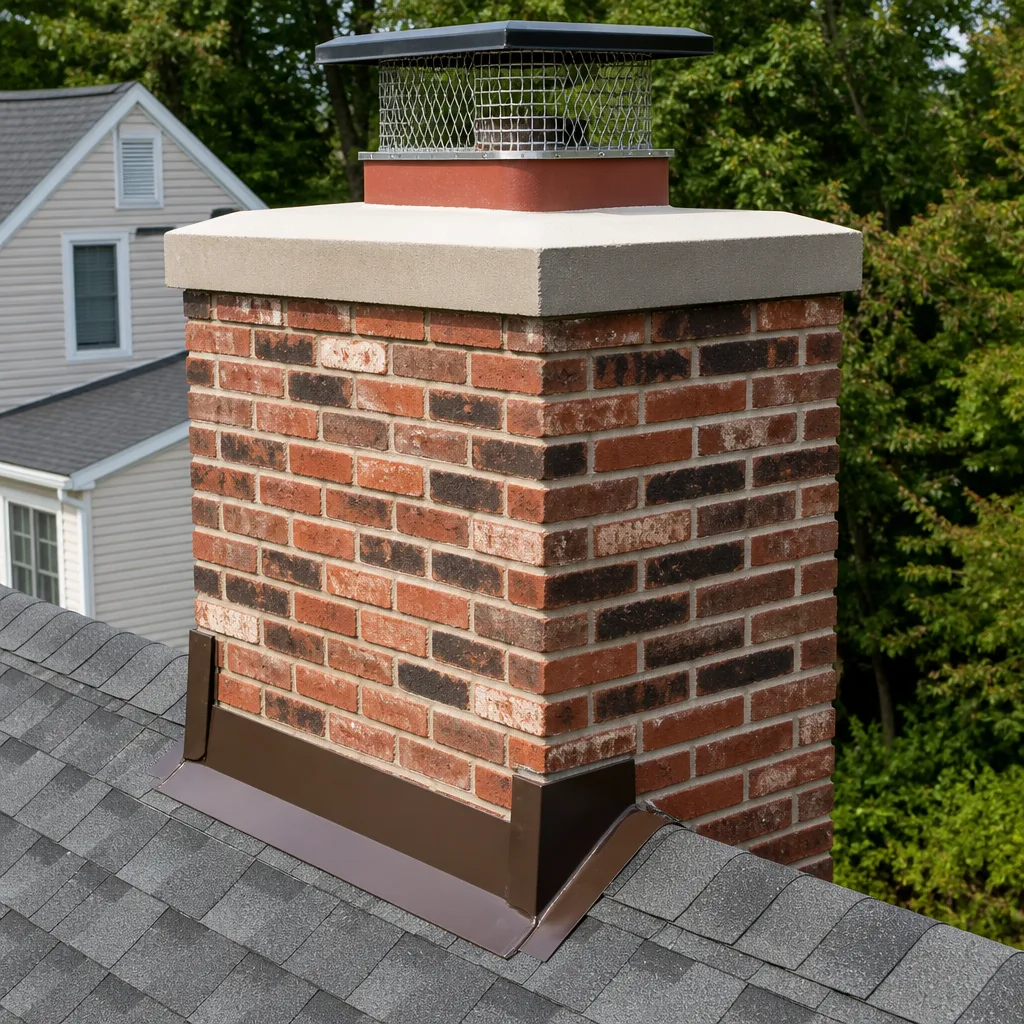 Masonry repair
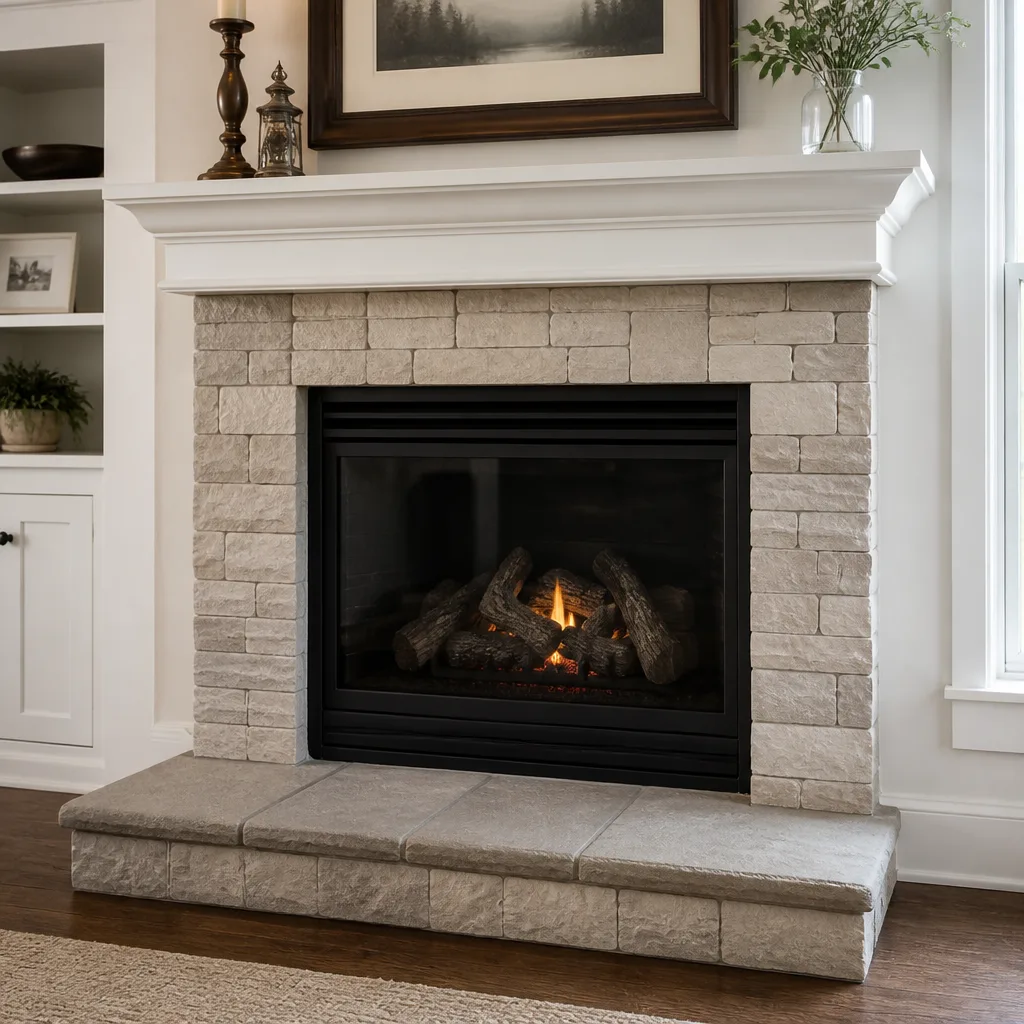 Gas fireplace service
Level 1 sweep and inspection to the NFPA 211 annual standard - flue, crown, cap, and flashing checked and photographed
Chimney sweep logs do not sweep chimneys. They loosen some creosote - which then falls where a brush and vacuum still have to collect it.
How to Hire a Chimney Cleaning Contractor in Pocket: A Step-by-Step Guide
Here’s the counterintuitive truth about hiring a chimney sweep in California: there is no state-issued chimney sweep license. Not one. A handyman with a pickup truck and a hardware-store brush can legally call himself a chimney cleaner tomorrow, knock on your door in Pocket, and charge you $89 for a job that does nothing but move soot around. Meanwhile, the creosote crusted onto your flue walls – the stuff that actually causes chimney fires – stays exactly where it is. This guide will show you how to separate a legitimate chimney specialist from a generalist with a brush, what questions to ask before you book, and how to verify the work was actually done right, or browse our more guides & resources for additional homeowner tips. If you live in Pocket and heat with wood or run a gas fireplace, the 15 minutes it takes to read this could save you from a false bill of health and a very real fire risk.
Quick Answer
To hire a chimney cleaning contractor in Pocket, verify CSIA certification directly on the certifying body’s website, ask four specific questions (about scope, inspection, materials, and reporting) before booking, confirm the cleaning includes a full flue inspection with photos – not just a brush-through – and expect to pay roughly $180 – $340 for a proper sweep in the Sacramento area. Avoid any company that quotes a price before asking about your chimney’s condition, fuel type, or last service date. Chimney Sweep in Pocket services from a specialist should always include inspection as part of the job, never as an add-on.
Styles & brands we work with
- Sweep & inspection
- Caps & crowns
- Flue relining
- Masonry repair
- Gas fireplace service
Table of Contents
- Why California Licensing Rules Put the Burden on You
- What CSIA Certification Actually Means (and How to Verify It in 30 Seconds)
- The Four Questions That Separate Specialists from Generalists
- What a Proper Chimney Cleaning Should Include, Line by Line
- What Chimney Cleaning Costs in Pocket: A Realistic Breakdown
- Red Flags in How a Company Answers the Phone
- How to Evaluate Before-and-After Photos as Proof of Work
- Pocket-Specific Considerations: Climate, Fuel, and Fireplace Culture
Why California Licensing Rules Put the Burden on You
California’s Contractors State License Board issues licenses for general contractors, specialty contractors like masons and plumbers, and HVAC technicians. Chimney sweeping falls through a regulatory crack. The CSLB does not have a C-61 classification for chimney sweeps, which means a sweep operating alone is not required to hold any state contractor’s license at all. In fact, a sole proprietor working on chimneys can operate with nothing more than a business license from Sacramento County.
This is not a trivial gap. When you hire an unlicensed roofer or electrician in California, the state has a mechanism for complaints, a fund for restitution, and a disciplinary board that can pull a license. None of that exists for chimney sweeps who choose to operate without certification. What fills that void is the private certification system run by the Chimney Safety Institute of America, or CSIA. It’s a national non-profit, it’s rigorous, and it’s the closest thing this industry has to a license. But participation is voluntary. That’s the key point: a sweep in Pocket can choose to pursue CSIA certification, or can skip it entirely. The state won’t force the issue.
What this means for you as a homeowner is straightforward. The vetting process that other trades handle through licensing boards is now your job. You cannot assume that a company advertising chimney cleaning in Pocket has any training at all. You have to check. The good news is that checking takes 30 seconds, and the bad news is that almost nobody does it.
What to Actually Check For
- CSIA certification status: Verify it yourself on the CSIA website’s “Find a Certified Sweep” directory. Never rely on a logo on a company’s website. Logos can be copied.
- Business license with Sacramento County: This is a basic legitimacy check. It doesn’t prove chimney expertise, but it does confirm the company actually exists as a registered entity.
- Insurance: General liability insurance is important because chimney work involves ladders, roofs, and sometimes heavy equipment. Ask for proof. A company that hesitates to show an insurance certificate is a company you don’t want on your roof.
- Brand affiliations: Professional chimney companies use professional-grade materials. If a company works with Meadow Chimney Sweep home brands like DuraFlex and Copperfield, that’s a signal they operate within the professional trade ecosystem, not the big-box retail aisle.
What CSIA Certification Actually Means (and How to Verify It in 30 Seconds)
CSIA certification is the industry’s highest credential for chimney sweeps. It requires passing a comprehensive exam, completing documented service hours, and agreeing to a code of ethics. Crucially, it’s not a one-time thing. CSIA-certified sweeps must recertify every three years through continuing education, which means they’re accountable to current fire codes and current best practices, not what they learned when they bought their first brush set a decade ago.
The certification covers a lot more than pushing a brush. A CSIA-certified sweep is tested on flue design, draft dynamics, creosote chemistry, appliance clearances, and the full range of venting systems: wood-burning fireplaces, gas logs, pellet stoves, and oil-fired appliances. They learn how to identify cracked flue tiles, deteriorated mortar joints, and improperly sized flues. They learn what a stage-3 creosote deposit looks and feels like, and what chemical treatments actually work to break it down. This is a meaningful body of knowledge, not a weekend workshop certificate.
How to Verify CSIA Certification Without Getting Fooled
- Go to the CSIA website and click “Find a Certified Sweep.”
- Enter the city or zip code – use 95831 for the Pocket neighborhood – and see if the company name appears.
- Confirm the company name matches exactly. Some companies use names that sound similar to certified businesses. Check the address.
- If you can’t find them, call and ask directly: “Are your technicians CSIA-certified, and can you give me the certification numbers?” Any hesitation is your answer.
- Be wary of phrases like “our technicians are trained to CSIA standards.” That is not the same as certification. Trained to standards is a promise. Certified is a fact you can verify.
In Pocket, we see the same pattern repeat every fall: a homeowner books the cheapest sweep they can find, the technician shows up without a certificate in sight, and the job takes 40 minutes when a proper inspection and cleaning should take 90 minutes to two hours. The math isn’t hard. A 40-minute chimney cleaning is a brush through the flue and a handshake. It is not an inspection.
The Four Questions That Separate Specialists from Generalists
Before you book a chimney cleaning in Pocket, call the company and ask four specific questions. The answers will tell you more about what you’re actually getting than the price ever will. These questions are designed to expose the difference between a specialist who understands venting systems and a generalist who owns a brush set. In our experience, the generalist usually trips on question two.
Question 1: What exactly is included in the cleaning?
A complete answer should include: sweeping the flue with properly sized brushes, cleaning the smoke chamber and smoke shelf (where creosote accumulates heavily and most amateurs skip), removing soot and debris from the firebox, and running a full inspection of the flue liner, damper, and chimney crown. If the answer is “we sweep the chimney,” that’s a red flag. A chimney is a system, not a tube.
Question 2: Do you perform a camera inspection, or just a visual check from the top and bottom?
This is the question that matters most. A visual inspection from the roof and the firebox can miss cracked flue tiles, hidden gaps in the mortar joints, and creosote buildup behind the damper. A camera inspection shows the interior of the flue wall-by-wall. Any company doing serious chimney work in Pocket should at minimum offer camera inspection, and the best companies include it as part of the cleaning. If the company says a camera is an extra $150 upgrade, consider what that says about their definition of “inspection.”
Question 3: What materials and equipment do you use?
This question separates professional chimney operations from hardware-store hobbyists. Professional sweeps use rotary cleaning systems, HEPA-filtered vacuums, and brand-name materials that hold up to repeated use and high temperatures. If the company mentions brands like Copperfield, DuraFlex, or HeatShield, you’re talking to someone who operates in the professional supply chain. If they talk about “brushes and a shop vac,” you’ve found a generalist. The difference matters because professional-grade rotary systems remove creosote that a pull-behind brush simply polishes.
Question 4: Will I receive a written report and photos after the cleaning?
If the answer is anything other than yes, walk away. Before-and-after photos are the only proof you have that the job was done correctly. A written report documents the condition of your flue, notes any repairs that are needed, and gives you a baseline for future cleanings. Companies that don’t provide documentation are either hiding something or doing work they don’t want scrutinized. In the age of smartphone cameras, there is no excuse for a cleaning service that can’t show you what your flue looked like before and after.
What a Proper Chimney Cleaning Should Include, Line by Line
Understanding what a proper chimney cleaning includes matters because the lowest quote often reflects an incomplete scope of work. When a company charges $79 for a chimney sweep and a specialist charges $249, the difference is not profit margin. The difference is the list of tasks the cheap company is skipping. Here is what a complete chimney cleaning includes when done by a professional, line by line.
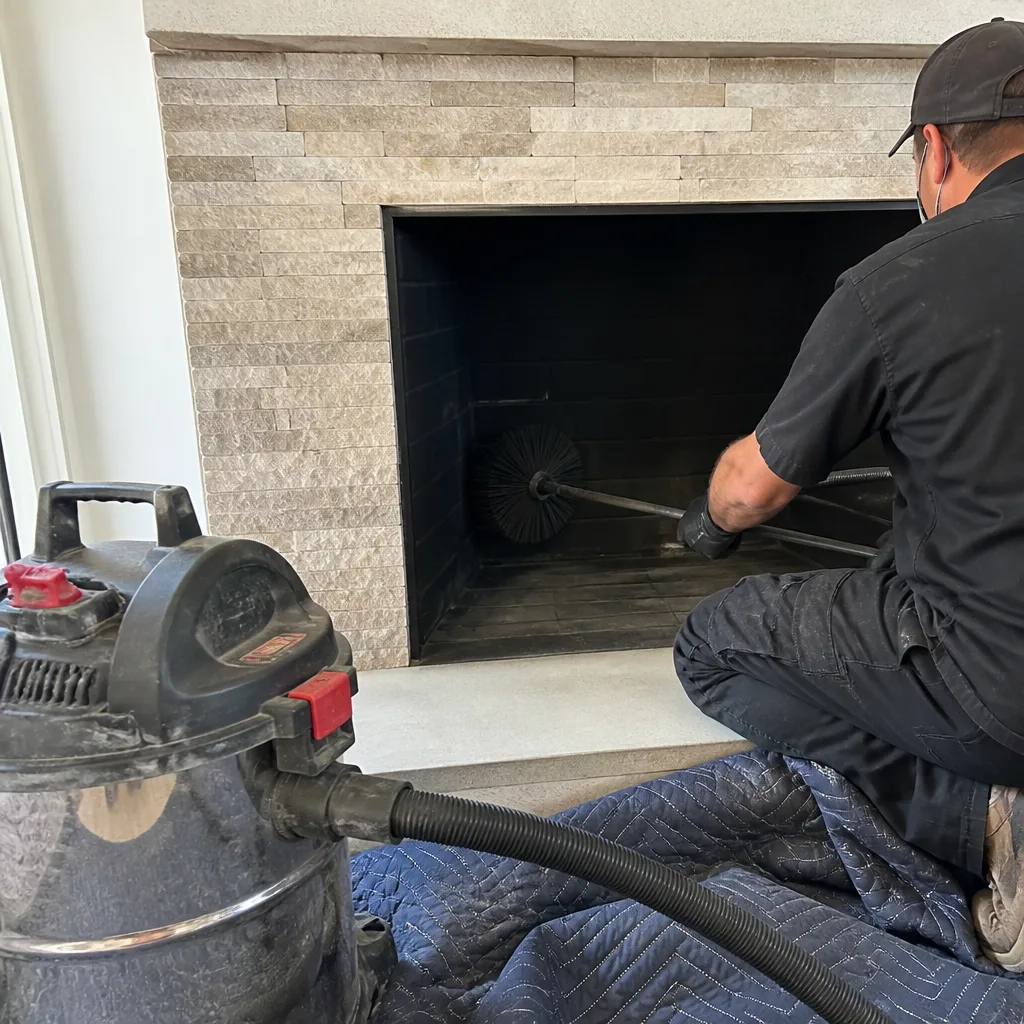
- Site preparation: Drop cloths or floor protection laid inside the home, plastic sheeting or tarps placed around the fireplace opening, and HEPA vacuum equipment set up to capture dust before it enters your living space.
- Firebox cleaning: Removal of all loose soot, ash, and debris from the firebox floor and walls. The firebox is the brick or stone box where the fire burns, and it should be clean enough to eat off of – well, almost.
- Smoke chamber and smoke shelf cleaning: This is the transition area above the firebox where the smoke funnels up into the flue. Crews hand-brush and vacuum this area thoroughly. Amateur sweeps often skip this entirely because it requires reaching up past the damper.
- Damper inspection and cleaning: The damper is checked for free movement, proper seating, and corrosion. A sticky or rusted damper is removed, cleaned, and lubricated or repaired as needed.
- Flue sweeping: The full length of the flue is swept using brushes sized to the flue dimensions, typically attached to flexible rods or a rotary cleaning system. Creosote is mechanically loosened and removed, not just knocked loose to fall back down.
- Flue inspection: After sweeping, the flue interior is inspected – ideally with a camera – for cracked tiles, deteriorated mortar, gaps, blockages, or damaged liners. Any findings are photographed and documented.
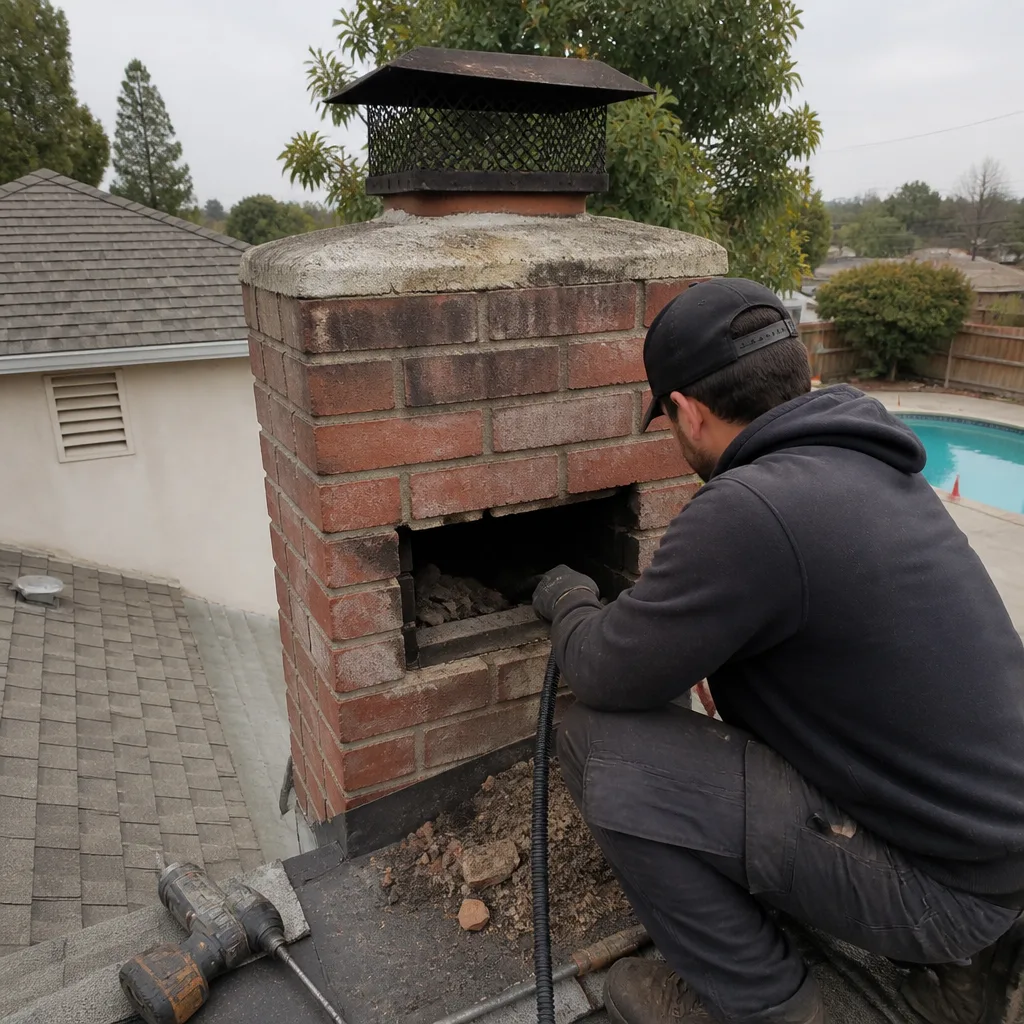
- Chimney crown and cap inspection: The top of the chimney is inspected for cracks in the crown, missing or damaged rain caps, and animal entry points. A chimney without a cap in Pocket is a standing invitation to squirrels and raccoons, which is a story for another day.
- Exterior masonry check: The visible exterior brick or stone is checked for spalling, loose mortar joints, and water damage. In Sacramento’s wet winters and bone-dry summers, exterior masonry takes a beating.
- Cleanup and final vacuuming: All equipment is removed, the work area is vacuumed, and the homeowner is walked through the findings with photos in hand.
- Written report delivery: A detailed report with photos should be delivered before the technician leaves, not emailed three days later when you’ve already forgotten the conversation.
That is what a $249 chimney cleaning in Pocket should look like. If you’re paying $79, you’re getting maybe items 1, 2, and 5 – and item 5 is probably being done with a brush that doesn’t fit your flue. The economics simply don’t work any other way. A two-hour job with professional equipment and a trained technician cannot be delivered for the price of a pizza delivery and a haircut.
What Chimney Cleaning Costs in Pocket: A Realistic Breakdown
Chimney cleaning prices in the Sacramento area, including Pocket, typically fall between $180 and $340 for a standard wood-burning fireplace cleaning and inspection. Gas fireplace service runs slightly lower, usually $150 to $250, because gas produces less creosote and the service is more inspection-focused. Prices rise if the chimney has not been cleaned in many years, if there are significant creosote deposits (stage 2 or 3), or if animals have built nests inside the flue. For detailed pricing information, see our Chimney Cleaning Cost Breakdown: The Pocket Homeowner’s Reference for 2026.
| Service Item | Typical Range in Pocket | What’s Included |
|---|---|---|
| Standard chimney sweep (wood fireplace) | $180 – $280 | Full flue sweep, smoke chamber cleaning, basic inspection |
| Chimney sweep with camera inspection | $249 – $340 | Everything above plus full flue camera scan with photos |
| Gas fireplace service and inspection | $150 – $250 | Cleaning, log and burner inspection, vent check |
| Dryer vent cleaning | $90 – $150 | Vent line cleaning from dryer to exterior termination |
| Heavy creosote removal (stage 2 or 3) | Add $75 – $150 | Chemical treatments, rotary removal, longer service time |
| Chimney cap replacement | $150 – $400 installed | Standard stainless cap, custom sizes higher |
Pocket’s housing stock skews older than many Sacramento neighborhoods. A significant number of homes built in the 1970s through 1990s feature masonry chimneys with clay tile liners, and clay liners have a finite life. When a camera inspection reveals cracked or spalled tiles, the repair conversation begins. That repair might be a flue resurfacing with a product like HeatShield, a cast-in-place resurfacing system, or it might be a full stainless steel liner installation using a brand like DuraFlex. These are not handyman repairs, and they are not cheap – but they are the difference between a safe chimney and a house fire waiting for the right conditions. Chimney Repair in Pocket from a specialist means one call covers both the diagnosis and the fix, not a referral to a third party.
Red Flags in How a Company Answers the Phone
You can learn a lot about a chimney company before they ever set foot on your property. The initial phone call is a diagnostic tool if you know what to listen for. These are the red flags we’d want any homeowner in Pocket to recognize.
- Quotes a price before asking about your chimney: A company that gives you a firm price before asking whether you have a wood or gas fireplace, when it was last cleaned, or whether you’ve had any issues is pricing a generic service, not your chimney. That’s the model of volume, not quality.
- Cannot explain what the cleaning actually includes: Ask for a line-item description of the service. If the person on the phone stumbles, repeats “we sweep it out,” or puts you on hold to ask someone else, you’re talking to a sales dispatcher, not a chimney operation.
- Upsells before seeing the chimney: If the company pushes a “premium package” or a “deluxe cleaning” before anyone has looked at your flue, hang up. Reputable companies diagnose first, recommend second, and quote third.
- No mention of inspection: A chimney cleaning without an inspection is a tire change without a tread check. Any company that doesn’t bring up inspection as part of the standard scope is selling a partial service.
- Vague about certification: “Our technicians are highly trained” is not an answer to “Are your technicians CSIA-certified?” Listen for the actual word “certified” followed by an offer to provide certification numbers.
- Charges extra for before-and-after photos: Documentation of service work is not a premium add-on. It’s the minimum standard of accountability.
- No address, no local presence: A company that cannot tell you where they’re based or how long they’ve served the Pocket area is likely a lead-generation front that will subcontract your job to whoever picks up the phone.
One pattern we see often in Pocket: a homeowner calls a company from a direct mailer, gets transferred three times, receives a quote that’s 40% below market, and then a technician shows up in an unmarked van with a pressure washer in the back. Pressure washers have no place in chimney cleaning. If you see one on the truck, you know you’ve hired a generalist. Your chimney isn’t a driveway.
How to Evaluate Before-and-After Photos as Proof of Work
Before-and-after photos are the single best piece of evidence that a chimney cleaning was done properly. But photos can be misleading if you don’t know what to look for. Understanding how to read these images is a skill worth developing before you hire anyone in Pocket.
The before photo should look dirty. That sounds obvious, but it’s the first check. A legitimate before photo of a wood-burning chimney should show dark, glossy or flaky creosote deposits on the flue walls. If the “before” photo looks clean, the chimney either didn’t need cleaning (in which case you shouldn’t have paid for a full sweep) or the photo was taken after the cleaning started. Ask for the time stamp or the photo metadata.
The after photo should show bare flue material. After a proper cleaning, a clay tile flue should show the terracotta color of the tile itself, not a blackened remnant. A stainless liner should show silver-gray metal. If the after photo still shows significant dark patches, the cleaning was incomplete or the creosote was too advanced for mechanical removal alone (which is a finding that should have been reported to you, not ignored).
Look for photo consistency. The angle should be the same in both photos. A before photo from the bottom and an after photo from the top prove nothing. Legitimate before-and-after documentation uses the same camera position, typically a downward-firing flue camera or a fixed position from the firebox looking up.
Ask to see the smoke chamber. The most commonly skipped area in chimney cleaning is the smoke chamber, the transition zone above the firebox. If the photos only show the flue and the firebox, ask why the smoke chamber wasn’t photographed. A company that skips the photo probably skipped the cleaning.
Multi-angle coverage matters. A professional camera inspection should capture the full length of the flue: top, middle, and bottom. If you receive three photos of the same six-inch section of flue, you’re looking at a highlight reel, not an inspection. Request the full set. Any company confident in their work will send every photo they took, not cherry-pick the cleanest slice.
Pocket-Specific Considerations: Climate, Fuel, and Fireplace Culture
Pocket has a fireplace culture shaped by its climate and its housing stock. We don’t burn wood every night from October through March the way homeowners in Minnesota or Maine do. We burn in bursts: a few cozy nights when the winter fog settles in over the Sacramento River, then weeks of no fire at all. That intermittent use pattern affects how creosote builds up and how often you need a chimney cleaning, as explained in our Seasonal Chimney Cleaning Care for Pocket: Year-Round Homeowner’s Guide.
Creosote forms when wood smoke cools and condenses on the flue walls. In a part-time burning climate like Pocket’s, chimneys go through more heating-cooling cycles per fire than they do in colder regions. Each cycle leaves a thin deposit. Over a season, those deposits layer up just as effectively as they would with heavier use in a colder climate – sometimes more so, because the chimney never gets hot enough for long enough to burn off early-stage creosote naturally. The practical takeaway: even if you only burn fires twice a month, your chimney still needs an annual inspection. Frequency of use does not equal frequency of buildup in a straightforward way.
Pocket’s proximity to the Sacramento River also means humidity levels run higher than in neighborhoods further east toward Elk Grove or Rancho Cordova. Moist air affects chimneys in two ways. First, creosote that absorbs moisture becomes stickier and harder to remove mechanically. Second, moisture accelerates the deterioration of clay tile liners and mortar joints. A hairline crack that forms in a Pocket chimney during a dry August can widen noticeably after a damp January. This is one reason camera inspection matters more here than in drier climates: what you can’t see is doing more damage in our humidity than it would in, say, Folsom or Roseville.
Housing stock in Pocket is largely single-family homes built between the late 1960s and the early 2000s, with a mix of masonry chimneys and factory-built fireplace systems. Older masonry chimneys with clay liners are the ones most likely to show cracked tile or deteriorated mortar on a camera inspection. Newer factory-built fireplaces have metal flues that corrode rather than crack, and they tend to fail at the joints. Neither type is problem-free, and both types benefit from annual expert inspection.
One more Pocket-specific note: bird and squirrel entry is a real problem in this neighborhood. The mature tree canopy that gives Pocket its character also gives local wildlife a highway straight to your chimney crown. A missing or damaged chimney cap means nesting material inside your flue, and nesting material inside your flue means a chimney fire risk that has nothing to do with how often you burn. Every professional chimney cleaning in Pocket should include a cap and crown check as standard procedure.
Common Mistakes to Avoid
- Hiring on price alone: The cheapest chimney sweep in Pocket is cheap for a reason, and that reason is usually the scope of work being cut. A $79 sweep is a brush through the flue and a wave goodbye, not a cleaning and inspection.
- Assuming a handyman can handle chimney work: Chimney systems involve clearances, drafting dynamics, and fire code requirements that general handymen rarely understand. A generalist with a brush is not a chimney specialist.
- Skipping the CSIA verification: It takes 30 seconds to check certification status on the CSIA website, and that 30 seconds tells you more than any review site or coupon mailer. Do the check. Every time.
- Not asking for before-and-after photos: If you don’t receive photographic proof of the cleaning, you don’t actually know the cleaning happened. Verbal assurances don’t hold up in insurance claims.
- Ignoring fireplace type: Gas fireplaces need different service than wood-burning ones, and some chimneys in Pocket have been converted from wood to gas. Make sure the company knows what fuel type you’re burning and services it appropriately.
- Waiting until the first fire of the season to schedule: Every chimney company in the Sacramento area gets slammed in October and November. Scheduling a spring or summer cleaning means better availability, more time for a thorough job, and a fireplace that’s ready the first cold night without a six-week wait.
- Assuming the previous owner maintained the chimney: Even if the seller told you the chimney was “recently cleaned,” you have no documentary proof unless they handed you a service report with photos. Most don’t. Start your chimney maintenance history from day one with your own inspection.
See the difference
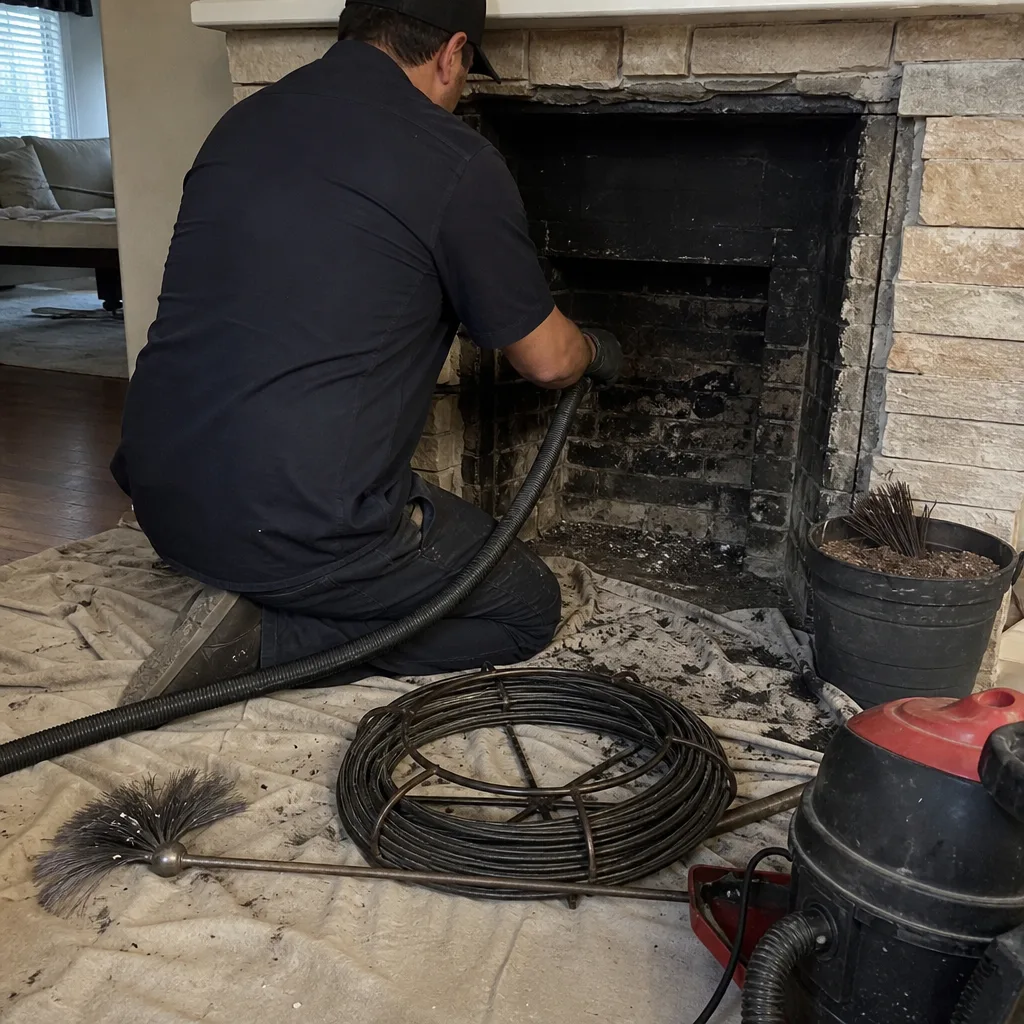 Before
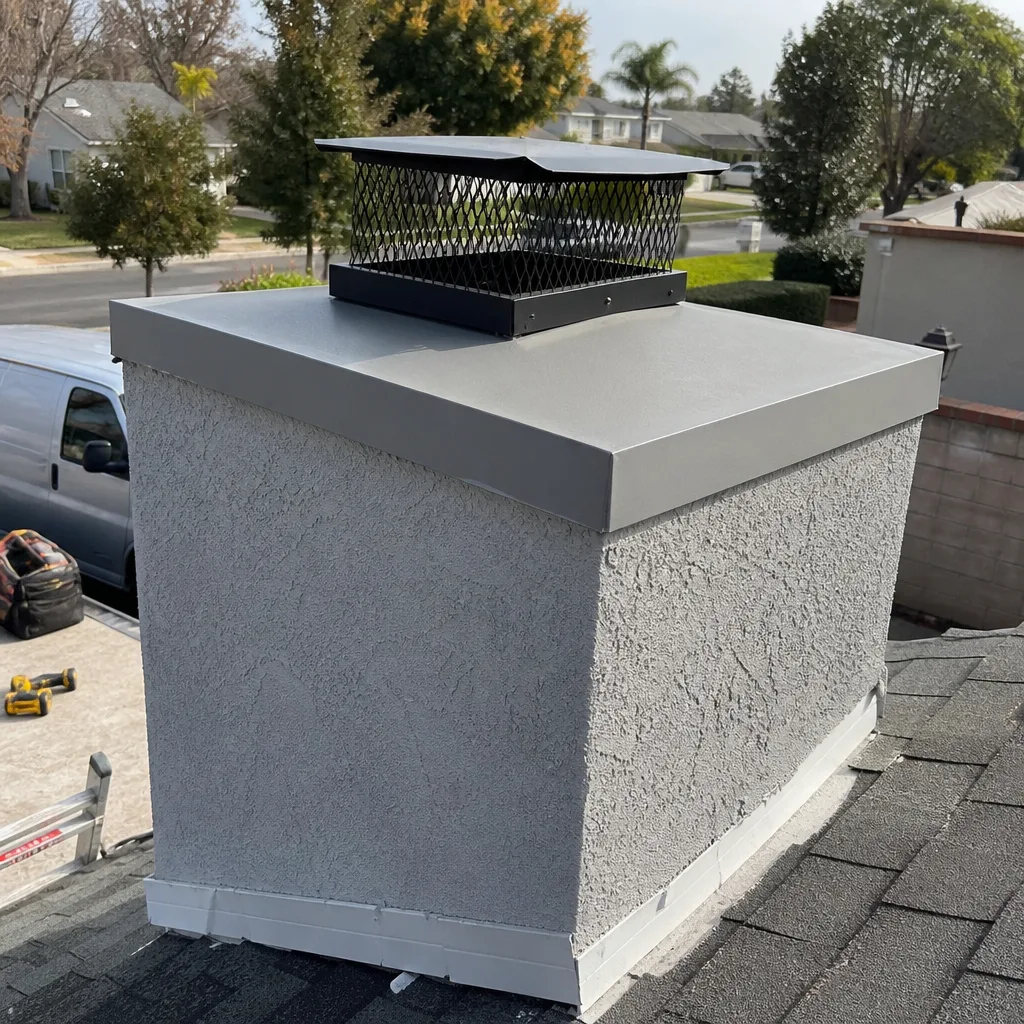 After
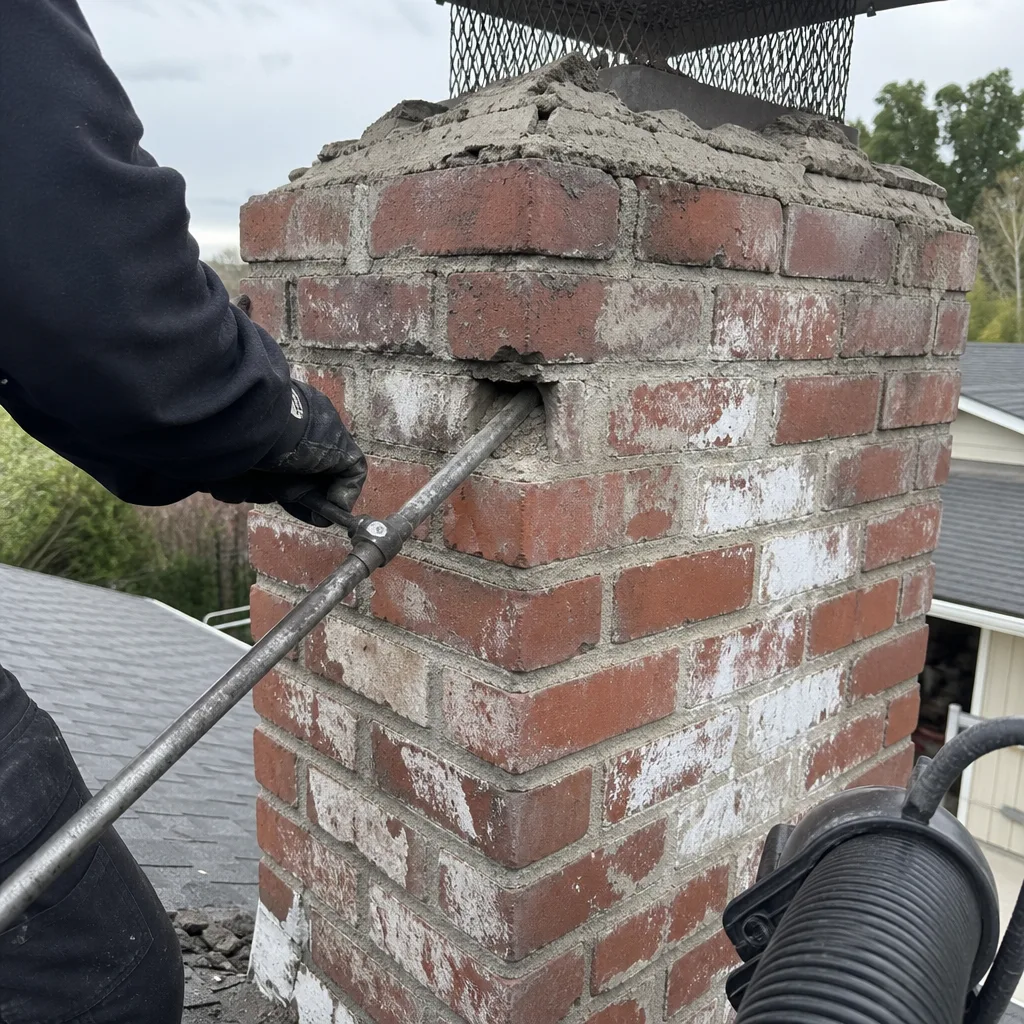 Before
 After
 Before
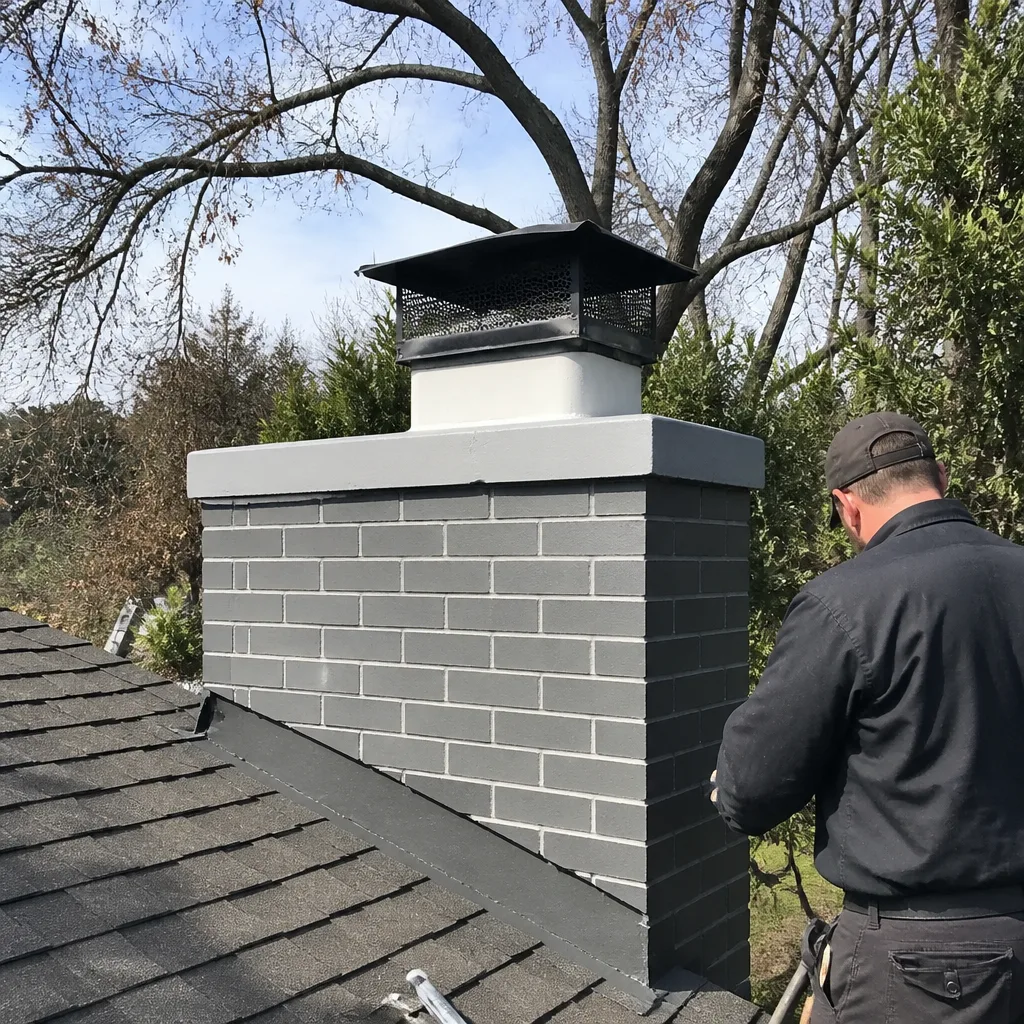 After
When to Call a Professional
Certain situations leave no room for a DIY approach. If you see black, tar-like buildup inside your fireplace that won’t brush away easily, you’re looking at stage 2 or stage 3 creosote, and that requires chemical treatment plus professional rotary cleaning equipment. If your chimney cap is missing or damaged, wildlife entry is not a matter of if but when. If you smell smoke in the house when the fireplace is not in use, you may have a drafting or liner problem that requires camera diagnosis. If it has been 18 months or more since your last cleaning, you’re overdue regardless of how little you’ve burned. And if you’re buying a home in Pocket with an existing fireplace, an inspection should be part of your due diligence before your first fire. Dryer Vent Cleaning in Pocket is also part of a complete home-venting picture, since the same neglect that builds creosote in chimneys builds lint in dryer vents. Meadow Chimney Sweep offers free estimates in Pocket – call (855) 943-1461 to schedule.
Frequently Asked Questions
A standard chimney sweep in Pocket costs between $180 and $280, while a sweep with full camera inspection runs $249 to $340. Factors that raise the price include heavy creosote buildup, animal nests, and chimneys that haven’t been cleaned in several years. Call (855) 943-1461 for a free estimate based on your specific chimney.
Annual cleaning and inspection is the standard recommendation from the CSIA and the National Fire Protection Association, even in Pocket’s part-time burning climate. Intermittent use creates layered creosote deposits that are just as hazardous as heavy use in colder regions, and the humidity near the Sacramento River accelerates liner deterioration. Call (855) 943-1461 to get on an annual schedule.
A camera inspection catches problems a visual check misses: hairline cracks in clay tiles, gaps in mortar joints, corrosion behind the damper, and creosote pockets in the smoke chamber. In Pocket’s older housing stock, these hidden defects are common. Insist on camera documentation as part of any professional chimney cleaning. Call (855) 943-1461 to schedule a camera-included sweep.
Creosote accumulates in stages, and stage 3 creosote is a thick, tar-like glaze that burns at high temperature and is the primary fuel for chimney fires. Skipping cleaning also means missed opportunities to catch cracked liners and damaged caps before they require major repairs. The annual cleaning is cheap insurance against a five-figure chimney rebuild. Call (855) 943-1461 to schedule a catch-up cleaning.
No. A $79 chimney sweep in the Sacramento market is not doing the full job: it typically covers a basic flue brushing and little else, skipping the smoke chamber, the inspection, the documentation, and the cap check. The economics don’t allow it. If the price seems too good to be true, the scope is the thing that’s being cut. Call (855) 943-1461 to understand what a complete cleaning includes.
Only some can. Many chimney cleaning companies are sweep-only operations and will refer any repair work to a third party. A specialist like Meadow Chimney Sweep handles cleaning and repair under one roof, meaning a cracked liner or damaged cap found during your sweep can be quoted and repaired without a second contractor. That’s the advantage of hiring a full-service chimney operation. Call (855) 943-1461 to schedule your cleaning and inspection.
The Bottom Line
Hiring a chimney cleaning contractor in Pocket comes down to one principle: verify, don’t assume. California won’t license a chimney sweep, so you have to check CSIA certification yourself. A proper cleaning includes far more than a brush through the flue, and the cheapest quote is almost never for the same scope of work as a professional quote. Ask about camera inspection, documentation, and materials before you book. Demand before-and-after photos after the job. In a neighborhood with Pocket’s mix of older masonry chimneys, river humidity, and intermittent fire use, annual inspection is the cheapest fire insurance you’ll ever buy. The right company will be able to answer every question in this guide without hesitation.
Written by the team at Meadow Chimney Sweep, serving Pocket since 2018.