
Last updated November 2, 2026
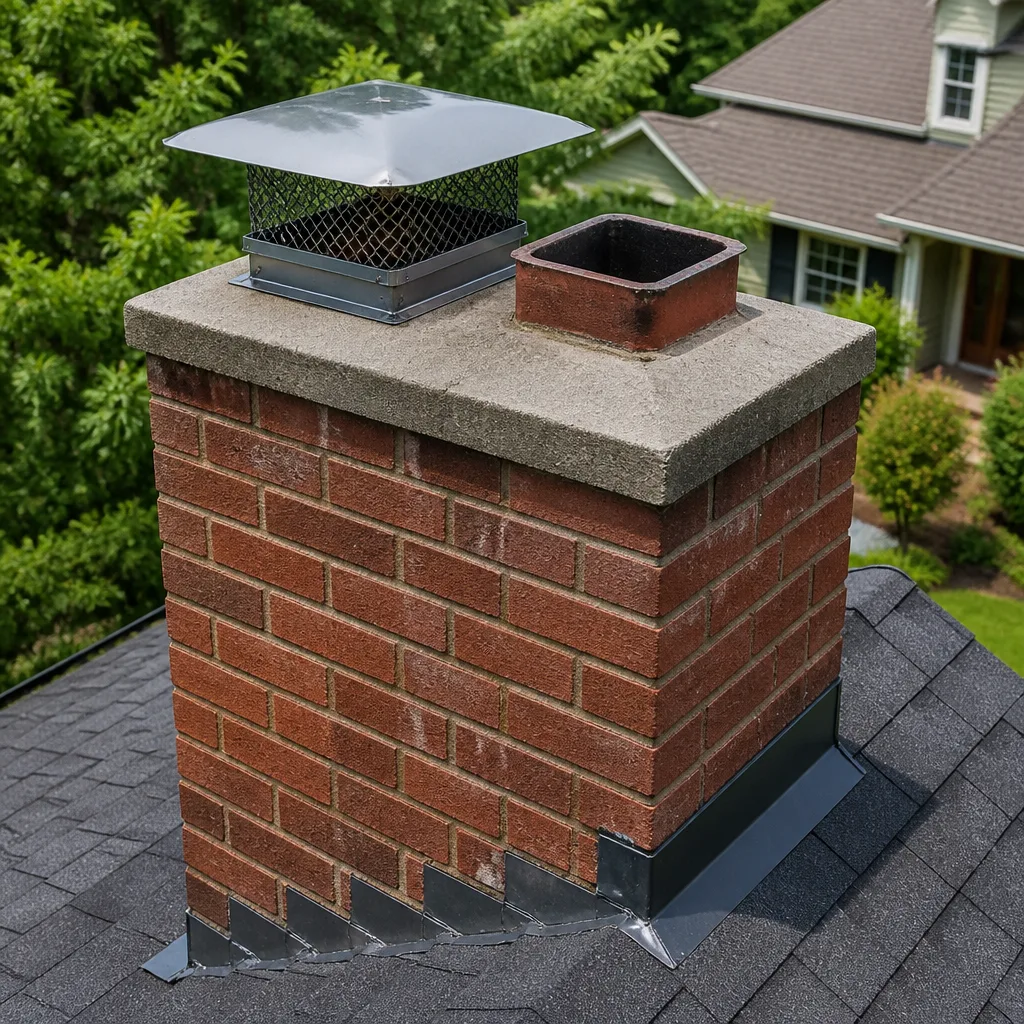 Sweep & inspection
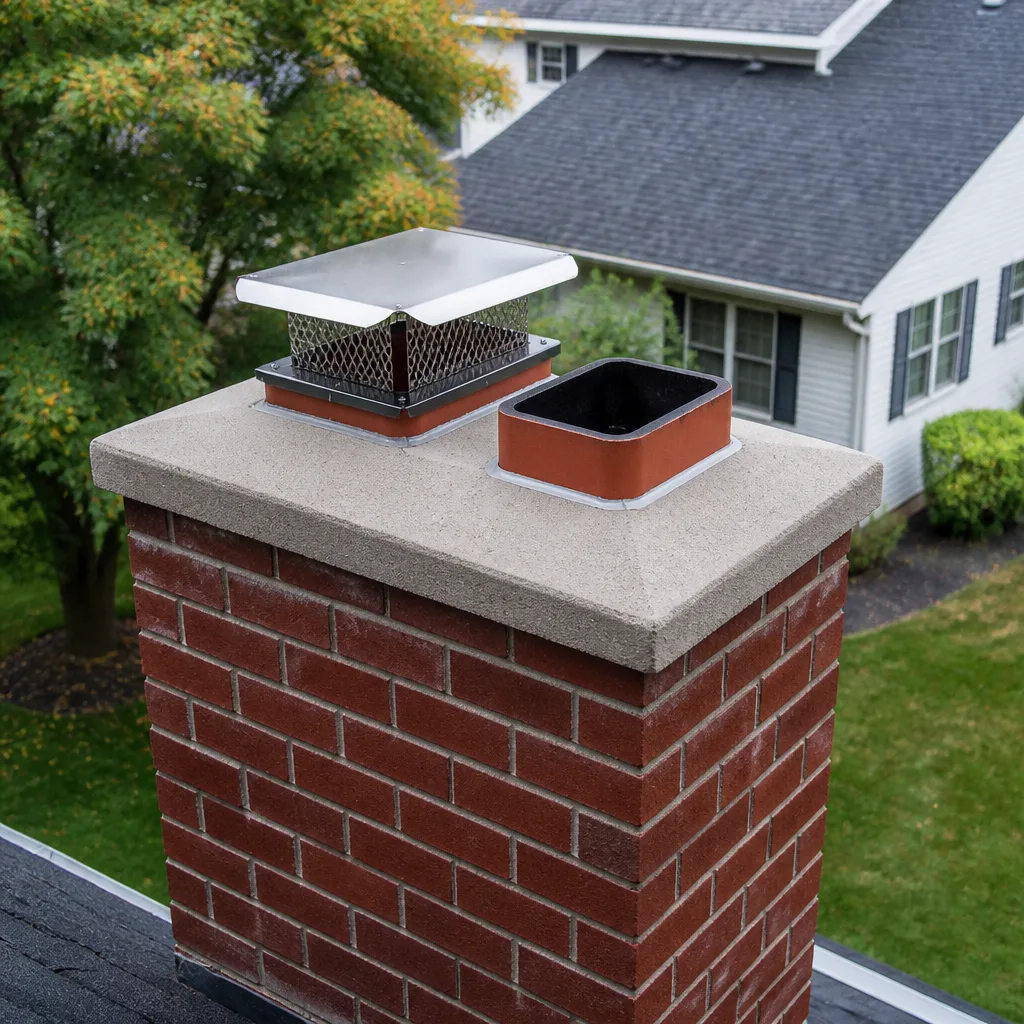 Caps & crowns
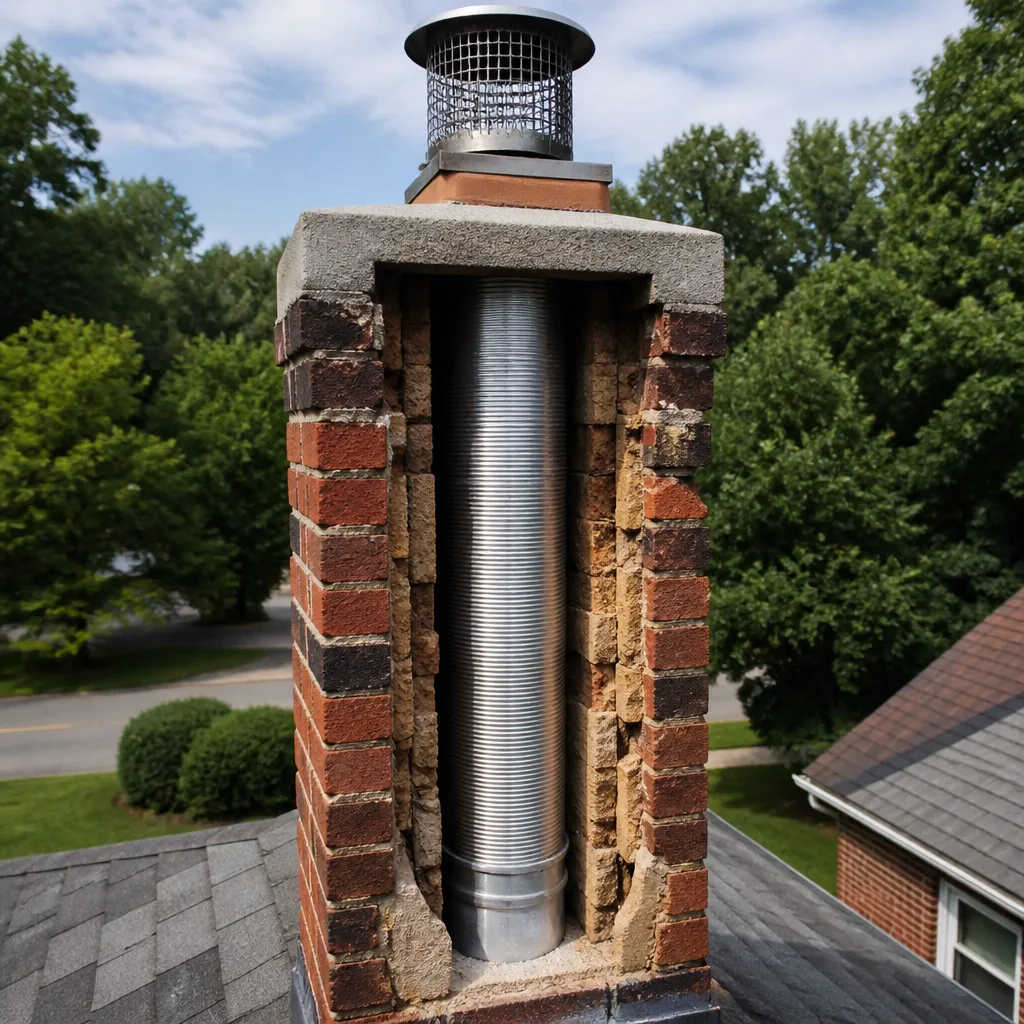 Flue relining
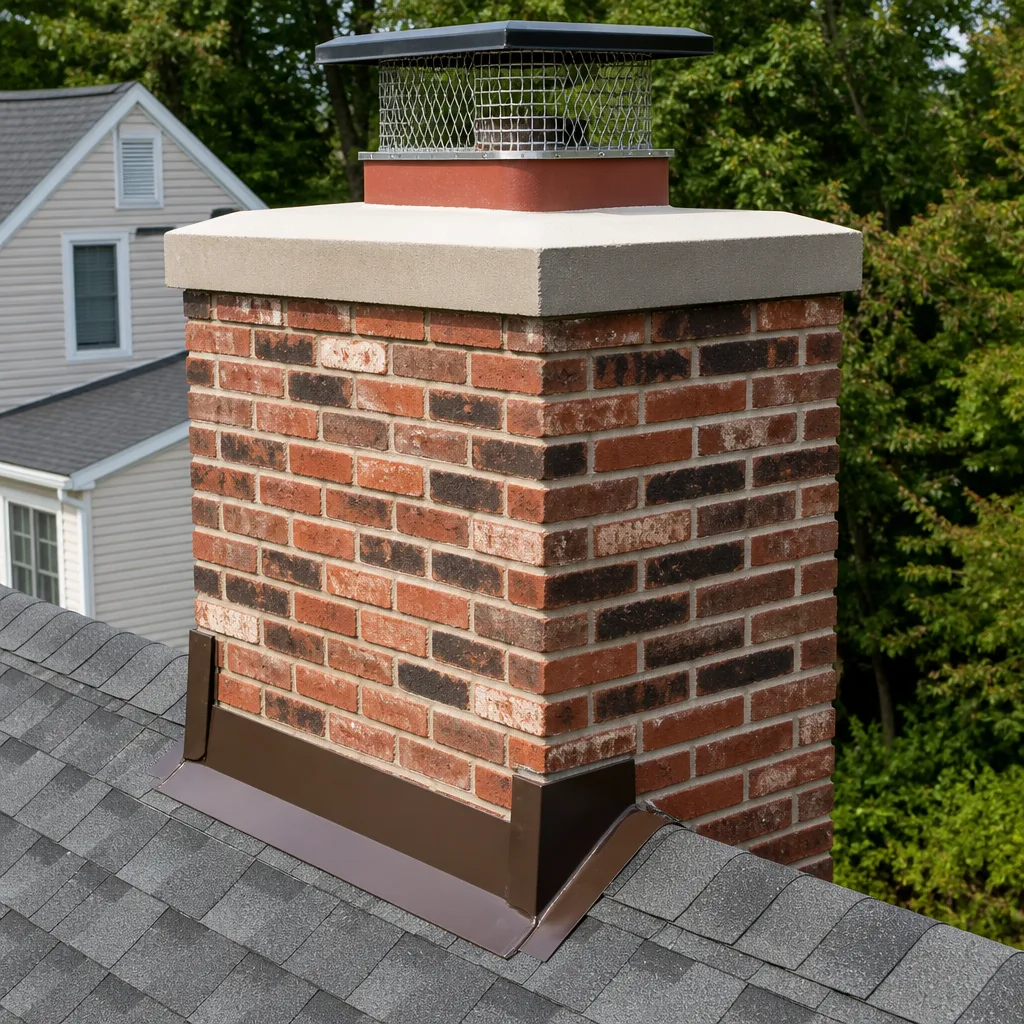 Masonry repair
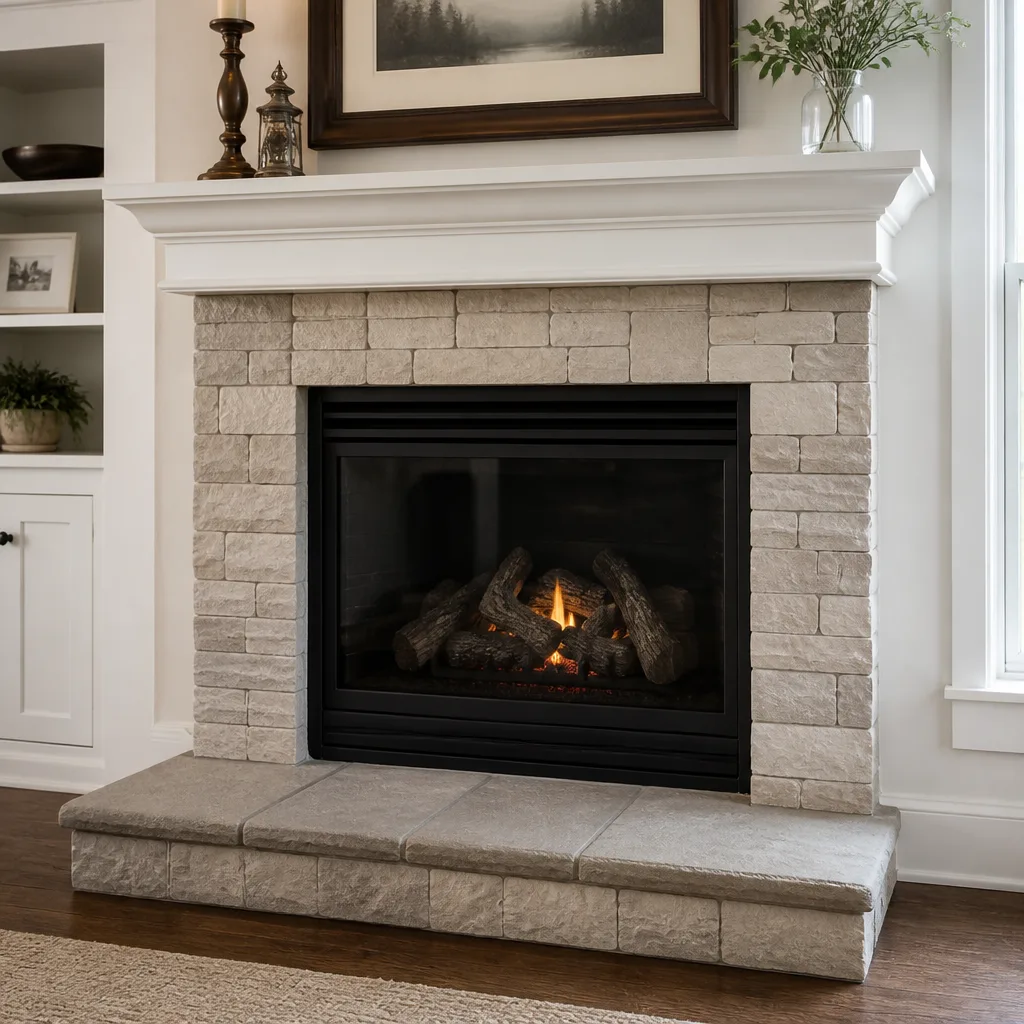 Gas fireplace service
Level 1 sweep and inspection to the NFPA 211 annual standard - flue, crown, cap, and flashing checked and photographed
Chimney sweep logs do not sweep chimneys. They loosen some creosote - which then falls where a brush and vacuum still have to collect it.
DIY vs Professional Chimney Cleaning: The Pocket Homeowner’s Decision Guide
The problem with DIY chimney cleaning isn’t the brushing. It’s that you can successfully remove every visible trace of soot from your firebox and flue walls, stand back satisfied, and still have a stage-2 creosote glaze baked onto the liner that a retail brush won’t touch and a flashlight won’t catch. That residue is precisely what burns at 2,000 degrees Fahrenheit during a chimney fire. This guide draws the real line between what a Pocket homeowner can reasonably handle on a Saturday morning and what deserves a trained specialist with equipment you won’t find at a hardware store. For a deeper dive into finding that specialist, see our How to Hire a Chimney Cleaning Contractor in Pocket: A Step-by-Step Guide. We’ll cover the tools, the hidden risks, the insurance implications, and how to do a legitimate pre-season self-check that makes your professional sweep in Pocket faster and cheaper without ever replacing it.
Styles & brands we work with
- Sweep & inspection
- Caps & crowns
- Flue relining
- Masonry repair
- Gas fireplace service
Quick Answer
DIY chimney maintenance in Pocket is reasonable for three specific tasks: removing loose ash from the firebox, checking the damper’s basic operation, and doing a visual inspection of the exterior chimney structure. Actual flue cleaning, creosote removal, and safety inspection should be handled by a professional, because the compounds that cause chimney fires are often invisible to the untrained eye and require professional rotary equipment plus staging knowledge to address properly. If you burn wood more than a dozen times per season in Pocket, a professional sweep is not optional maintenance, it’s the minimum responsible standard.
Table of Contents
- What DIY Can Actually Handle (And What It Can’t)
- The Creosote Staging Problem: Why Clean Isn’t Clean
- The Equipment Difference: Consumer Kits vs Professional Rotary Systems
- The Insurance and Liability Dimension
- How to Do a Legitimate Pre-Season Self-Check
- Pocket-Specific Considerations: Climate, Codes, and Real-World Conditions
- Common Mistakes to Avoid
- When to Call a Professional
- Frequently Asked Questions
- The Bottom Line
What DIY Can Actually Handle (And What It Can’t)
Let’s be direct about this. There are a handful of maintenance tasks around a wood-burning fireplace in Pocket that a homeowner can do safely and correctly with basic tools. These tasks prevent problems and make professional service more efficient. They do not replace professional cleaning, and pretending otherwise is how fires start.
Here’s the honest list of DIY-appropriate tasks:
- Ash removal from the firebox: Wait at least 72 hours after the last fire. Scoop cool ash into a metal container with a tight-fitting lid. Store that container outside, away from the house and any combustible material. Never use a paper bag or plastic bucket. Ash can retain heat for days and coals can smolder for over a week.
- Damper operation check: Open and close the damper fully. You’re checking for smooth movement, not forcing it. If it sticks, grinds, or won’t seal, note it for a professional. Don’t lubricate it yourself with spray oils, which attract soot and can make the problem worse.
- Exterior visual inspection from the ground: Walk around the outside of your home in Pocket and look up at the chimney. Check for visible cracks in the masonry, missing mortar joints, a leaning stack, or a chimney cap that’s missing or damaged. Use binoculars if you have them. Do not get on the roof for this.
- Smoke test on a cold flue: On a day when the fireplace hasn’t been used, light a small rolled-up piece of newspaper in the firebox while the damper is open. Watch where the smoke goes. It should rise cleanly up the flue. If it spills back into the room, something is wrong with the draft, and that’s a professional diagnosis.
What DIY cannot handle is everything that involves the flue interior above the fireplace opening. That means actual creosote removal, liner inspection, smoke chamber access, and any repair work. The tools required to do those jobs properly are not sold at home centers, and the knowledge to interpret what you find inside a flue takes years to develop. In our experience serving Pocket, the most common call we get from a homeowner who tried a DIY sweep is not “I can’t get it clean.” It’s “I cleaned it and it still doesn’t draft right,” which means the underlying problem was never visible to them in the first place.
For the full scope of what a professional chimney sweep covers in Pocket, see our Chimney Sweep in Pocket guide.
The Creosote Staging Problem: Why Clean Isn’t Clean
Creosote forms in three stages, and a homeowner with a brush kit can typically remove stage one. Stage two and stage three are different substances entirely, and this is where the DIY argument collapses.
Stage one creosote is a fine, dusty, dark brown or gray powder. It brushes off flue walls with moderate effort. A consumer chimney brush can handle this in a straight, round flue with no obstructions.
Stage two is a glaze. It looks like shiny black tar or hardened dark glass, and it forms when creosote is repeatedly heated and re-condensed without being completely removed. A wire brush skates across the surface without breaking it. Chemical creosote removers sold at hardware stores alter the top layer at best. Removing stage two properly requires a professional rotary cleaning system with hardened chains or aggressive wire heads spinning at high speed, and even then, it typically takes several passes. This is also the stage where a chimney fire becomes a matter of time, because stage two glazed creosote is essentially concentrated fuel adhering to your flue walls.
Stage three is a hardened, curled, honeycomb-like accumulation that can restrict airflow and is nearly impossible to remove without professional intervention. Stage three often means a liner is compromised and replacement may be necessary. If your chimney has reached this point, cleaning alone won’t save it. This is where companies like Meadow Chimney Sweep differ from a sweep-only operation: we can identify stage three damage and repair the liner in the same service cycle, using professional-grade materials like DuraFlex stainless liners or HeatShield cerfractory sealant, rather than referring you to a second contractor who doesn’t know the chimney’s history.
The point is not that homeowners are careless. The point is that creosote staging is invisible without training. A flashlight shows you black walls. Black walls can be stage one dust or stage three destruction. The untrained eye cannot tell the difference, and the stakes for getting it wrong in a Pocket home are a chimney fire that spreads into the attic framing faster than the fire department can arrive from Station 43 on Pocket Road.
The Equipment Difference: Consumer Kits vs Professional Rotary Systems
The chimney brush kit you buy for $60 at a hardware store is not a smaller version of professional equipment. It’s a fundamentally different tool designed for a fundamentally different job, and understanding the difference will save you from a false sense of security.
A consumer brush kit typically includes:
- A polypropylene or thin steel wire brush sized to your flue diameter
- Fiberglass or thin metal rods that screw together
- A drop cloth and maybe a pair of cheap gloves
- Instructions that assume a straight, round, unobstructed flue
A professional rotary cleaning system includes:
- A motorized rotary head with hardened steel chains or aggressive wire loops that spin at several hundred RPM
- Flexible drive shafts that follow the actual contour of the flue, including offsets and bends
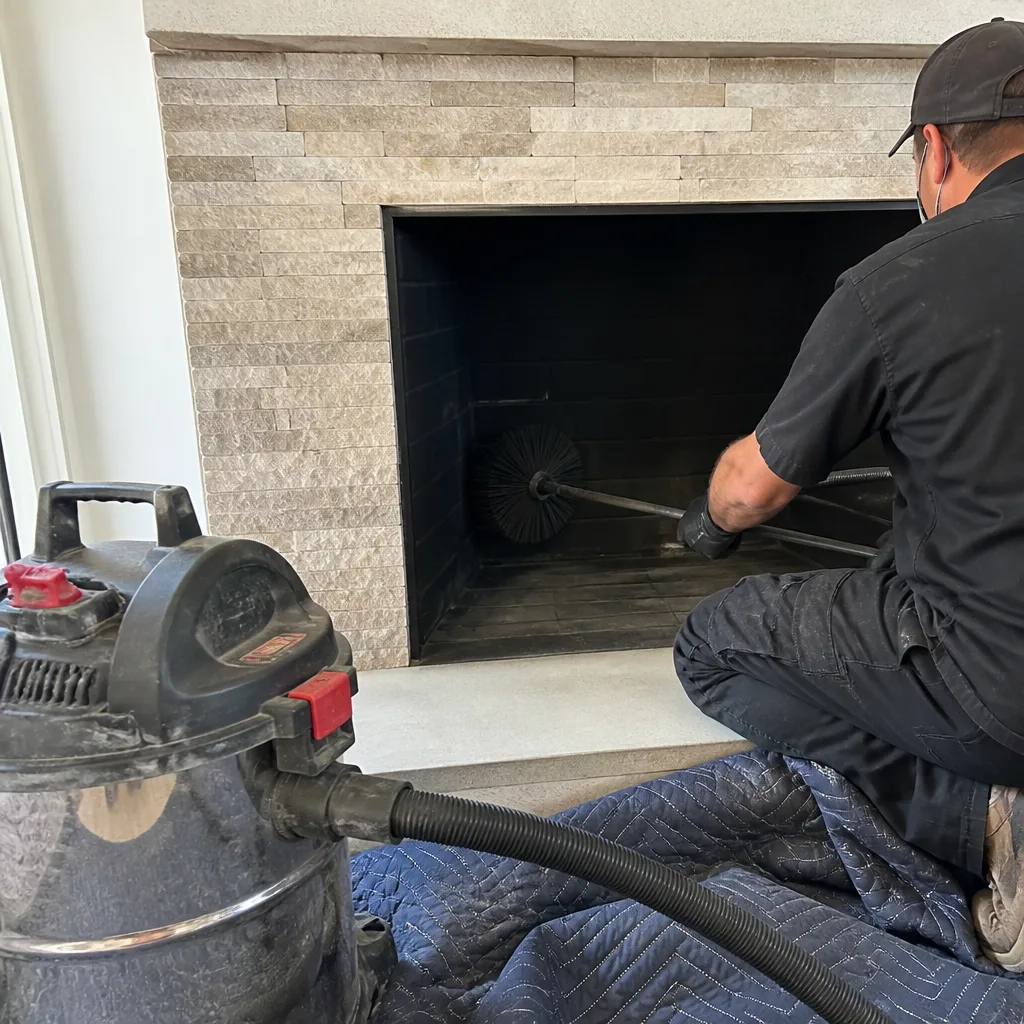
- HEPA-filtered vacuum systems that maintain negative pressure throughout the cleaning, which keeps soot and creosote dust out of your living room
- Inspection cameras that record the flue interior before, during, and after cleaning
- Brushes sized and selected for the specific liner material, whether clay tile, stainless steel like Copperfield products, or cast-in-place
The consumer kit works in a straight, round clay tile flue with stage one creosote and no prior damage. That describes a minority of chimneys in Pocket, where homes range from 1970s construction near Parkway Estates to newer builds along the river. Many older chimneys have terra cotta liners with cracked or spalled tiles, offsets in the smoke chamber, or deteriorating mortar joints that a retail brush will catch on or fail to reach entirely. A brush that snags a cracked tile can dislodge it, creating a blockage you didn’t know existed.
Professional equipment also includes the one thing a DIY kit can never provide: verification. We don’t clean a chimney and call it done. We clean it, then inspect it with a camera, then show you what we found. That photo report is your documentation. It’s the difference between “I swept it and assume it’s clean” and “Here’s a timestamped image of your flue interior, and here’s what it looked like last year for comparison.”
The Insurance and Liability Dimension
Here’s the part of the DIY conversation that almost no one discusses, and it matters more in Pocket than homeowners realize. If a chimney fire occurs and there’s no record of professional inspection or cleaning, your insurance provider has a defensible reason to question the claim. Most homeowner policies in California require reasonable maintenance of all fire-related systems. A chimney that hasn’t been professionally inspected in five years is not reasonable maintenance, even if you swept it yourself every season.
We’re not alarmists about this. The majority of chimney fires never result in an insurance claim because they’re contained within the flue. But the ones that do spread are catastrophic, and the minute an adjuster asks for maintenance records, a homeowner who says “I cleaned it myself with a brush kit from the hardware store” has no documentation, no staging assessment, and no professional verification that the system was safe before the fire. You don’t need a signed contract from a chimney company to satisfy your insurer, but a professional inspection report with photos is the strongest evidence you can produce.
There’s also the liability that runs the other direction. If you damage a liner during a DIY cleaning attempt, say by dislodging a cracked tile or forcing a brush through a bend, that damage is now a defect in your home that you created. When you sell the house in Pocket, the buyer’s inspector will likely flag the chimney. If a fire occurs later, even after the sale, the paper trail may lead back to you. A professional chimney company carries its own insurance for damage caused during service. A homeowner does not.
This is why the decision to involve a professional isn’t really about the 90 minutes of brushing. It’s about creating a documented, defensible maintenance history for the single most fire-adjacent system in your home. If you need repairs that a sweep uncovers, see our guide to Chimney Repair in Pocket for what those repairs typically involve and cost.
How to Do a Legitimate Pre-Season Self-Check
We believe homeowners in Pocket should do this every fall, whether they burn wood regularly or not. It takes 20 minutes, costs nothing, and it makes the professional sweep more efficient when you schedule one. What it does not do is replace the professional sweep. Think of it as the same relationship as changing your car’s oil versus having a mechanic inspect the engine. You do the simple, visible stuff. We do the diagnostic, safety-critical work.
Here’s the step-by-step self-check we recommend to every Pocket homeowner:
- Clear the firebox of old ash and debris. Use the 72-hour rule. Ash that’s been sitting for weeks still needs to go in a metal container, not your garden waste bin. Sacrament County waste guidelines prohibit hot or warm ash in standard trash, and Pocket’s collection routes follow the same rules as the rest of the county.
- Open the damper fully and note its position. You should hear or feel a distinct stop at both open and closed. If the damper plate wobbles or feels loose, make a note. That’s fixable, but not by you.
- Shine a bright flashlight up the flue from inside the firebox. You’re looking for three things: obvious blockages (nests, debris, a missing cap that let rain in), large sections of cracked or missing tile, and heavy, shiny black buildup on the walls. If you see shiny black, that’s stage two or three creosote. Do not burn again until a professional has evaluated it.
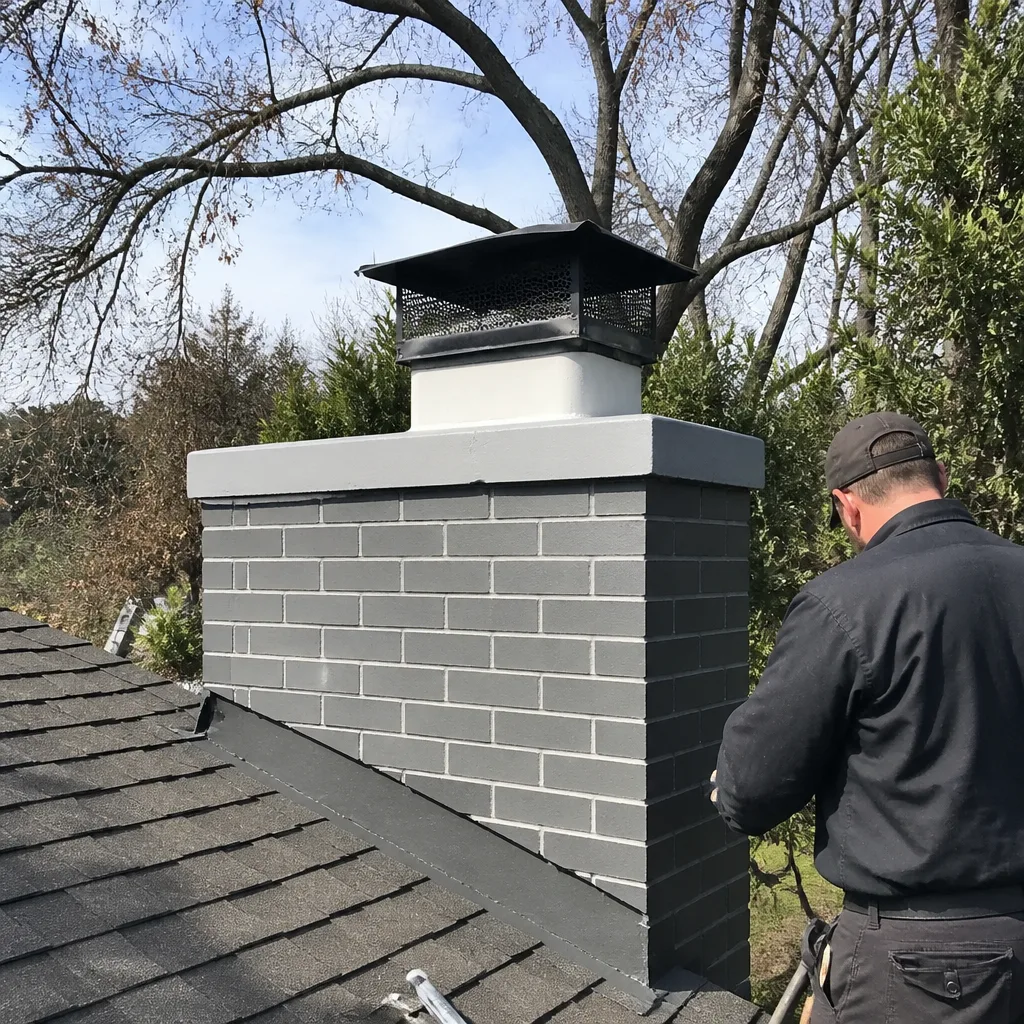
- Inspect the chimney exterior from the ground. Look for cracks in the crown (the concrete top), missing mortar joints, spalling brick, rust on the cap or chase cover, and any visible leaning. Use binoculars for a better look. Pocket’s freeze-thaw cycle is mild compared to the Sierra foothills, but the river influence still causes expansion and contraction on older masonry.
- Check for water intrusion signs indoors. Look at the ceiling around the chimney chase, the walls adjacent to the fireplace, and the attic if accessible. Water stains, peeling paint, or a musty smell near the chimney all point to crown or flashing failure, not a cleaning issue. That’s a repair, not a sweep.
- Test the smoke draw on a cold flue. As described earlier, light a small roll of newspaper and watch the smoke. If it drafts up, good. If it rolls into the room, close the damper and call a professional. Draft failures in Pocket homes are often caused by negative air pressure from modern HVAC systems, and that’s not a problem any brush kit can solve.
If all six steps pass, your chimney is a good candidate for a standard professional sweep, which will take less time and cost less because you’ve already removed the loose material and identified no obvious red flags. If any step fails, you’ve just saved yourself the cost of buying a brush kit for a chimney that needs professional intervention anyway.
Pocket-Specific Considerations: Climate, Codes, and Real-World Conditions
Pocket sits in the Sacramento Valley, which means mild winters, hot dry summers, and a fire season that now extends well beyond the traditional October-to-March burning window. The climate matters for chimney maintenance in ways that aren’t obvious until you understand how creosote forms.
The biggest factor is burn frequency. Pocket homeowners don’t burn wood every day from November through February the way someone in Truckee or South Lake Tahoe does. Most wood fires in Pocket are recreational: weekend fires, holiday gatherings, the occasional cold December evening when the Delta breeze cuts through. That intermittent burn pattern is actually worse for creosote formation than consistent daily burning, because the firebox and flue never fully stabilize at a clean-burning temperature. Fires are started, burn for two or three hours, then smolder out. That smoldering phase, when the firewood is not fully combusted, produces the most creosote per pound of wood burned. Pocket’s burn pattern, comfortable as it is, is a creosote factory.
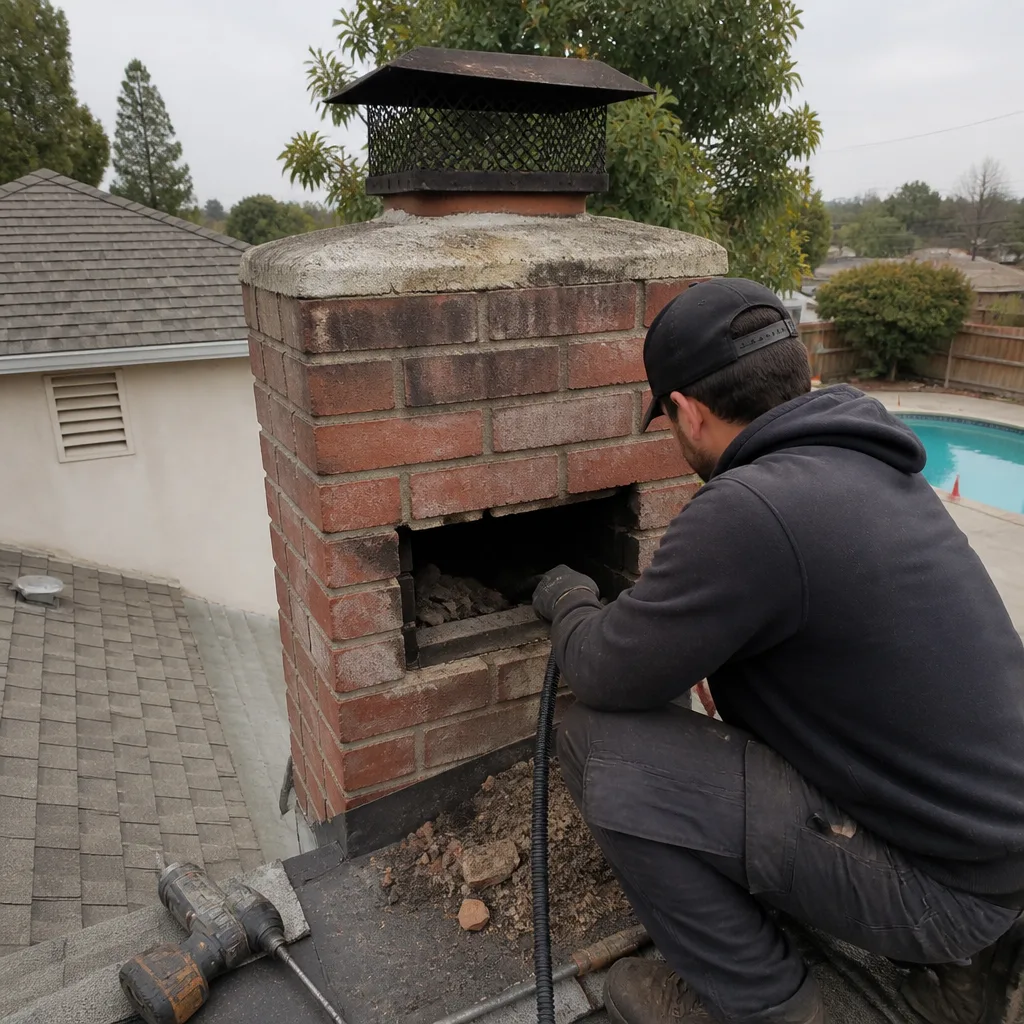
The second Pocket-specific factor is the greenbelt. Homes near Garcia Bend Park, the Pocket Canal Parkway, and the Sacramento River have more mature trees in close proximity. That means more leaves, pine needles, and airborne debris landing on the chimney cap and finding their way into the flue. It also means more squirrels and birds looking for nesting sites. A chimney without a proper cap and spark arrestor is an open invitation, and a nest built during the spring becomes a fire hazard or a carbon monoxide blockage by fall. We see this constantly in the neighborhoods south of Pocket Road and around Didion Drive.
Code-wise, Pocket falls under Sacramento County jurisdiction, which adopts the California Residential Code with local amendments. The CRC requires that all newly constructed or relined chimneys meet UL listing standards, and any repair work must be done to current code, not the code that existed when the house was built. This matters for homeowners because a chimney that was “fine for 40 years” is still held to current standards the moment repairs are made. If you have an unlined or poorly lined chimney, a professional can explain what current code requires before any work begins. For a full overview of what a professional sweep includes and costs in this area, our Chimney Sweep in Pocket page covers the specifics.
Common Mistakes to Avoid
- Sweeping with a brush kit designed for a different flue size. If your flue is 8×8 inches and your brush is 6 inches round, you’re polishing a stripe down the middle and leaving the corners loaded with creosote. You haven’t cleaned the chimney, you’ve rearranged the soot.
- Using chemical creosote removers as a substitute for mechanical cleaning. Those products alter the chemical composition of the creosote surface, which can make it easier to remove or can bake it into a harder glaze. They do not “clean” the chimney. We’ve had Pocket homeowners bring us a chimney they treated with a remover for three seasons straight, and the stage two glaze was worse than untreated chimneys of the same age.
- Burning pine or other softwoods because “that’s what’s available.” Pine and fir are fine when fully seasoned and burned hot, but the resin content produces more creosote per cord than hardwood. If you’re in Pocket and your firewood comes from a grocery store bundle that’s been sitting in the sun and rain, you’re burning wet wood, and wet wood is the single largest creosote producer there is.
- Ignoring a slow draft and compensating by opening a window. If your fireplace only drafts when you open a window or door, you have a negative air pressure problem. The open window is a band-aid that masks a potentially dangerous situation. This is especially common in newer Pocket homes with tight building envelopes and modern HVAC systems.
- Getting on the roof to inspect the chimney cap without proper equipment. The roof pitch on many Pocket homes is steep enough that a fall is life-altering. Professionals use harnesses and roof anchors. Your homeowner’s insurance does not cover the cost of a broken back from a DIY chimney inspection.
- Assuming a gas fireplace doesn’t need chimney service. Gas inserts and gas logs produce different combustion byproducts, but they still vent through the same flue and still suffer from blockages, water damage, and animal intrusion. A gas chimney that’s blocked can silently pump carbon monoxide into your living room. In Pocket, we recommend an annual inspection for gas units, even if cleaning is less frequent than with wood.
- Using a vacuum cleaner meant for household dust to clean up chimney soot. Household vacuums lack the HEPA filtration required to contain fine creosote particles. You’ll blow soot through the exhaust and coat your living room in a fine black film. This is one of the most common DIY mistakes we see in Pocket homes, and the cleanup is worse than the original problem.
When to Call a Professional
You should call a professional chimney sweep in Pocket if any of the following applies: you see shiny black glaze on the flue walls, you smell a campfire odor in the house when the fireplace isn’t in use, you’ve had a chimney fire even a small one, you’ve burned more than a cord of wood since the last professional cleaning, you notice water stains near the chimney, your damper won’t seal or operate smoothly, you hear animal sounds from the flue, or you simply can’t remember the last time anyone looked at the system with a camera. None of these conditions improve with time, and most of them get more expensive the longer they’re ignored. Meadow Chimney Sweep offers free estimates in Pocket. Call (855) 943-1461 and we’ll schedule a time that works for you.
Frequently Asked Questions
A standard chimney sweep in Pocket typically costs between $180 and $350 depending on the flue type, the level of creosote buildup, and whether any repairs are needed during the same visit. For detailed pricing factors, see our Chimney Cleaning Cost Breakdown: The Pocket Homeowner’s Reference for 2026. Gas fireplace inspections are usually on the lower end, while wood-burning chimneys with stage two creosote or animal removal run higher. Call (855) 943-1461 for an exact quote because estimates are free and we give you a number before any work begins.
The National Fire Protection Association standard, which applies to Pocket homes, recommends a professional inspection every year and cleaning whenever creosote reaches 1/8 inch of accumulation. For most Pocket homeowners who burn wood recreationally, that means a sweep every one to two years. If you burn daily in winter, sweep annually, no exceptions.
You can remove loose stage one creosote from a straight, round, unimpeded flue with a consumer brush kit, but you cannot verify the results, assess creosote staging, or reach bends and offsets. What feels like a successful DIY cleaning often leaves stage two glaze intact, and that glaze is what causes chimney fires. The safer approach is a professional sweep with camera verification.
Creosote accumulates in stages, and each stage is harder to remove than the last. After two or three years of skipped cleanings in a wood-burning fireplace, stage two glaze is likely, and the risk of a chimney fire climbs sharply. If a fire does occur, the flue liner can crack, and then you’re looking at a liner replacement that costs thousands of dollars, not a $250 sweep. The math doesn’t favor skipping maintenance.
Yes, and in some ways a rarely used fireplace needs inspection more than a daily burner, because animal nests and debris blockages accumulate during long idle periods. A fireplace that sits unused for nine months is a convenient nesting site for birds and squirrels in Pocket’s greenbelt neighborhoods. An annual inspection catches those blockages before they become carbon monoxide or fire hazards.
Yes, dryer vent cleaning is a core part of our service menu, not an afterthought. Lint-clogged dryer vents are a leading cause of house fires, and in Pocket, where many homes have larger laundry rooms with longer vent runs, the risk compounds. For more details, see our guide to Dryer Vent Cleaning in Pocket.
The Bottom Line
DIY chimney maintenance in Pocket has a legitimate, narrow place: ash removal, damper checks, ground-level visual inspection, and pre-season smoke tests. Those tasks make you a responsible homeowner and make professional service faster when it happens. But the core work of creosote removal and flue inspection belongs with a specialist who has the equipment to actually verify safety, not just make the flue look cleaner. We stock and work with professional-grade materials like DuraFlex, Copperfield, and HeatShield, the same brands certified chimney technicians rely on nationwide, because when repairs are needed, the fix should last the life of the chimney, not a season. Explore more guides & resources for keeping your Pocket home safe year-round. The decision isn’t really about pride or saving money. It’s about whether you want your fireplace to be safe or just to look safe. In our experience, Pocket homeowners want the first one.
Written by the team at Meadow Chimney Sweep, serving Pocket since 2018.
See the difference
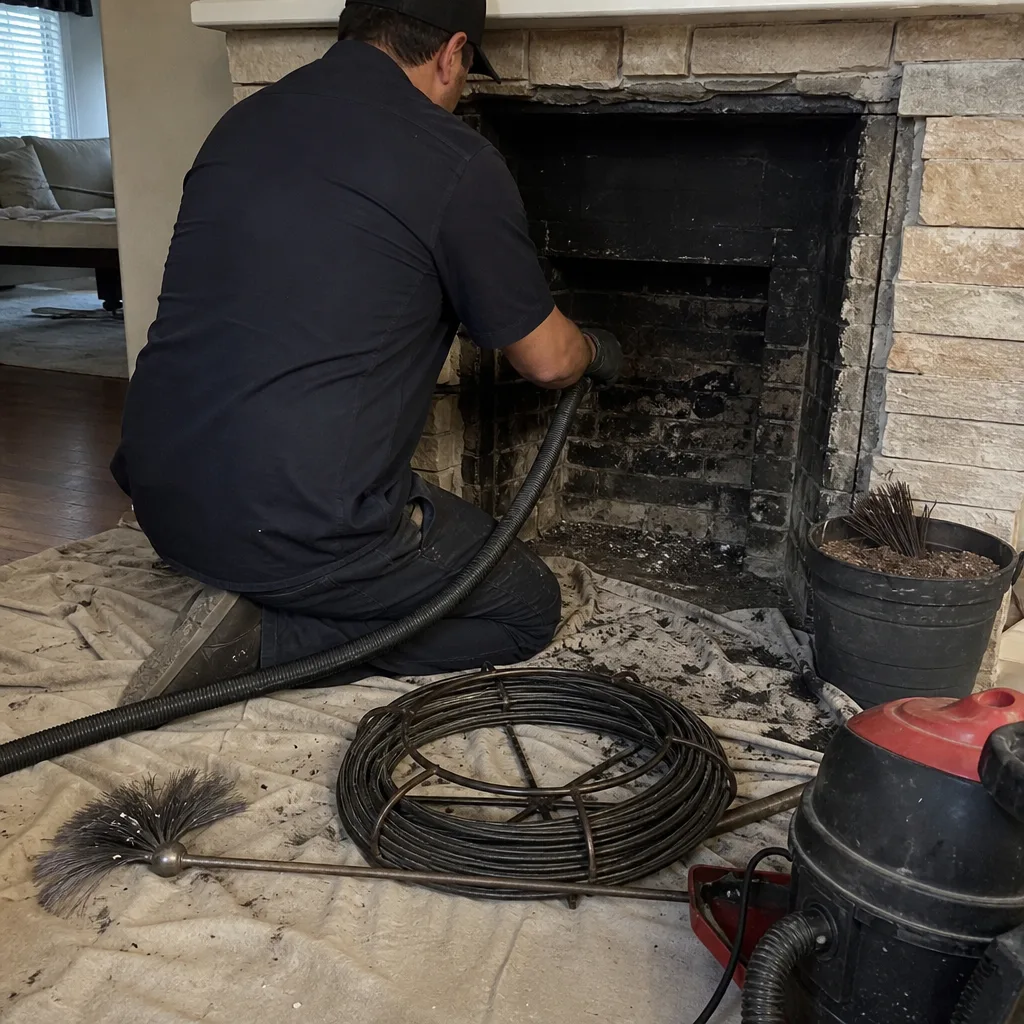 Before
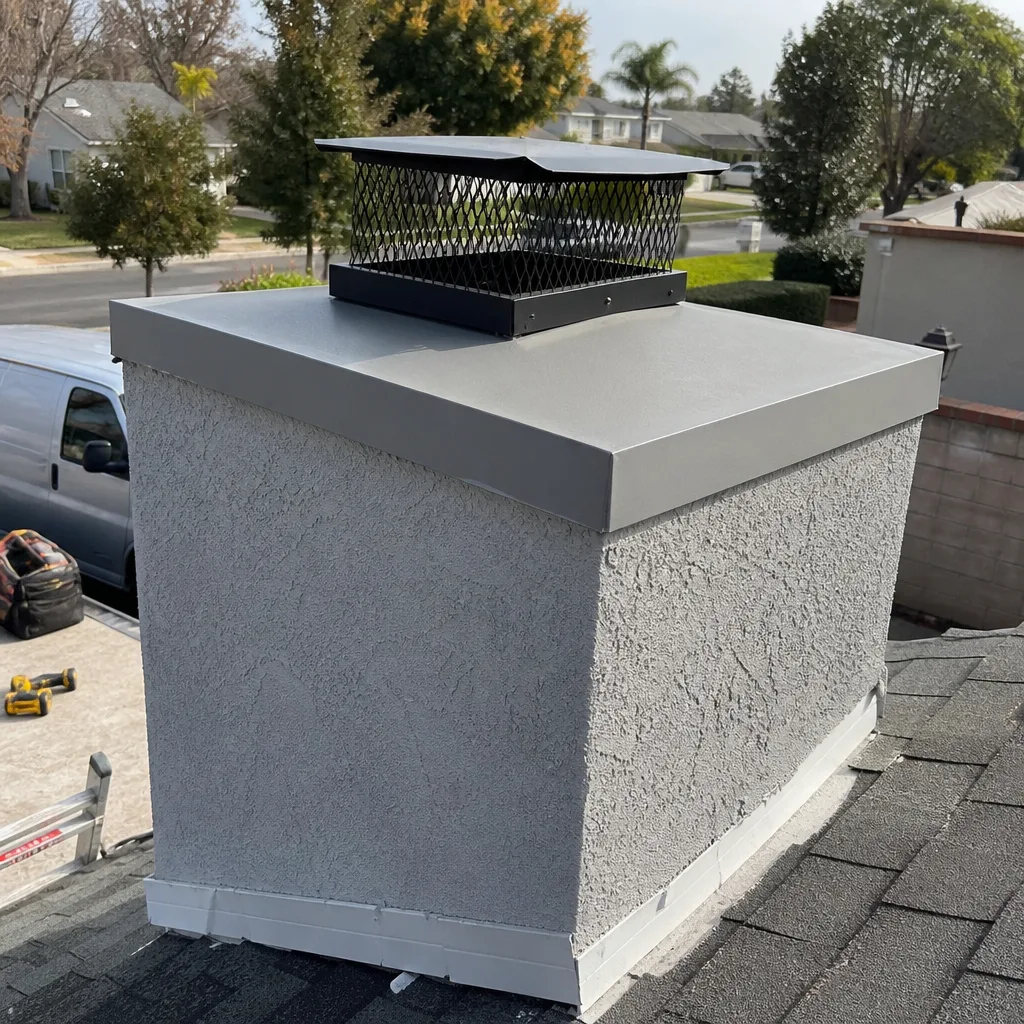 After
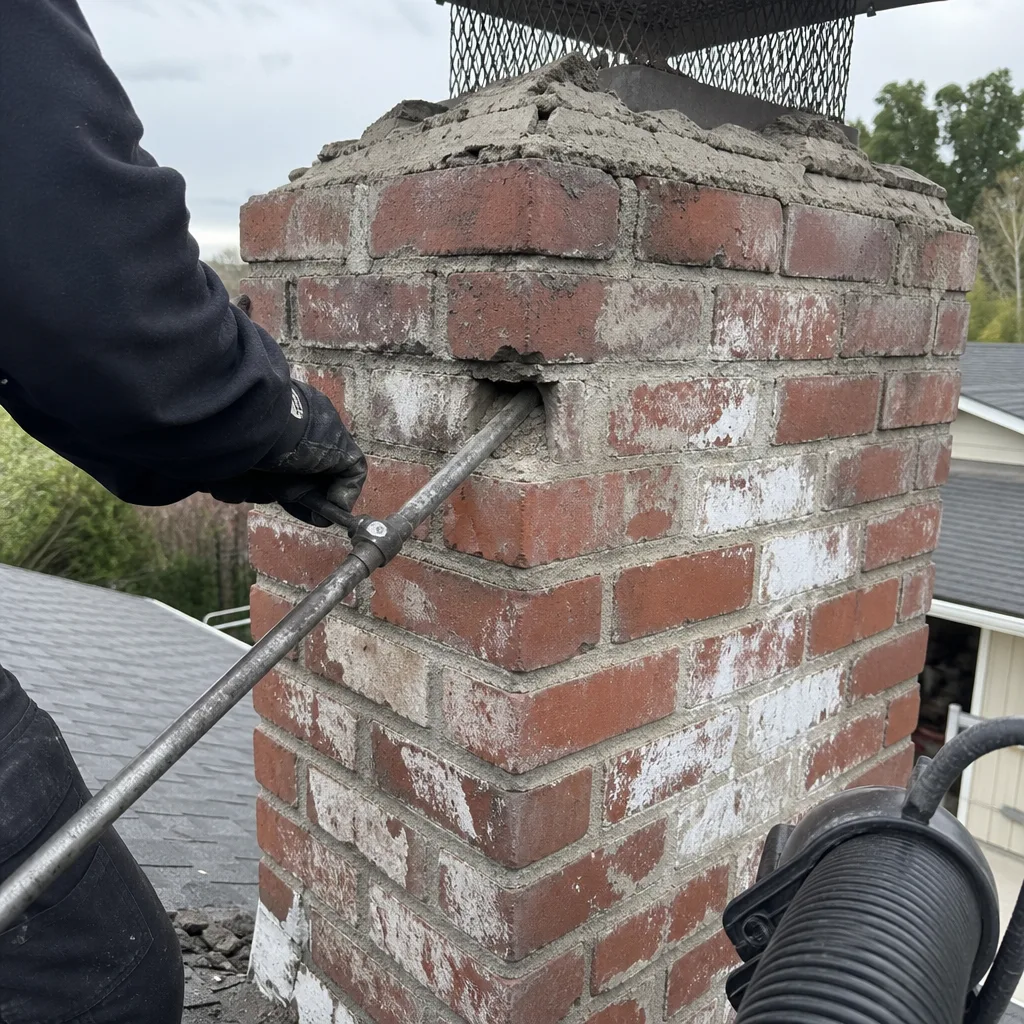 Before
 After
 Before
 After